U.S. commuter rail systems, primarily designed to bring workers to and from central business districts, must adapt to serve a broader population as the traditional workday changes.


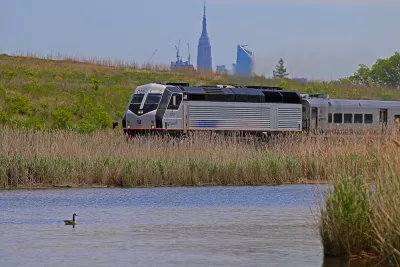
"The future of America’s commuter rail model, including its heavy staff levels, is in doubt because of COVID-19," writes Jake Blumgart in Governing. "U.S. regional rail systems," which "have long been oriented toward suburban white-collar commuters," suffered massive revenue losses as commuting slowed to a trickle. "In the long term, it is projected that remote work will remain much more common, even after the pandemic eases. That means the core demographic for commuter rail could either continue to work from home or only come into the office a few days per week."
To adapt, commuter rail systems have started adding more frequent non-peak hour service and greater frequencies, but agencies are hindered by high labor and infrastructure costs. "One of the biggest is inefficiently allocated labor costs. American commuter rail systems operate on an antiquated model, employing not just engineers who drive the train but multiple conductors who punch tickets and help passengers on from platforms that are (in many cases) much lower than the train doors. For example, the staffing levels on the Berlin S-Bahn, the German capital city’s regional rail network, are about one-third the size of the Long Island Rail Road (America’s busiest commuter rail system), which in turn serves only about a third of the passengers." Other problems include the "antiquated practices" such as inefficient diesel locomotives, "low-level platforms that don’t allow for easy boarding," and a much higher per-kilometer cost than European rail systems.
"But advocates of enhanced service argue that these infrastructural challenges are not as big as transit agencies are claiming. In an era when the federal government has been providing unprecedented support to mass transit and Congress is debating the largest infrastructure spending initiative in modern memory, there may be fiscal room to maneuver."
FULL STORY: Commuter Rail Reform Faces High Labor, Infrastructure Costs

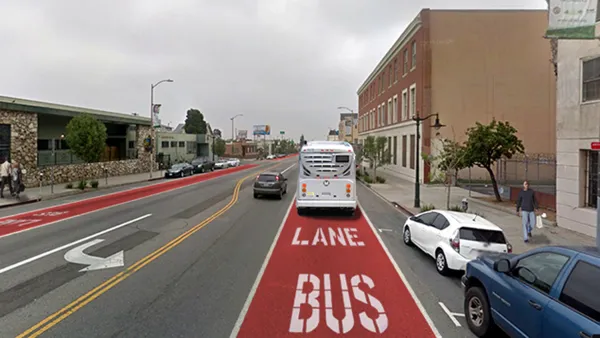
To Regain Transit Ridership, Policymakers Must Address Land Use and Housing
More buses and trains alone won't bring back riders; other incentives are needed to boost ridership and encourage new users.
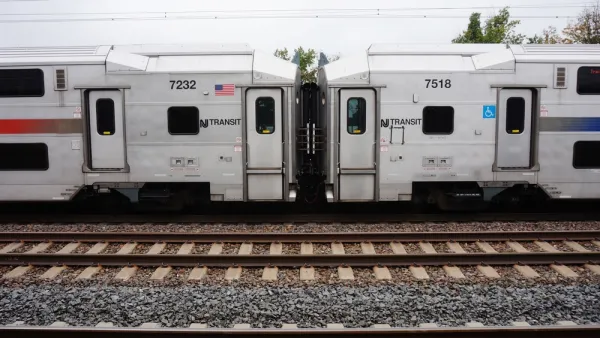
Opinion: 'Commuter Rail' Must Adapt to the New Commute
The sharp historic division between commuter rail and other forms of transit has limited the ability of regional rail systems to serve more users.
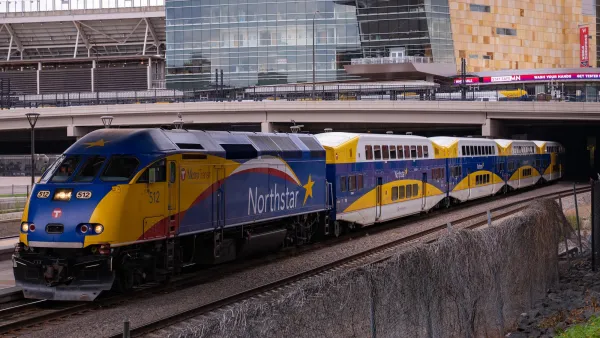
Minnesota's Northstar Train Ends Service
Elsewhere in the state, Amtrak’s new Borealis line is exceeding ridership predictions.

The state-sanctioned urbicide of Austin
People don’t kill cities. Freeways do.

US to reduce Colorado River water deliveries to Mexico
A new Colorado Treaty amendment reduces Mexico’s Colorado River water allocation by 250,000 acre feet.

New Jersey’s second-largest city bans standalone data centers
Jersey City will continue to allow co-location facilities, such as those meant for research institutions that store their own data.

Amtrak not solely to blame for New Jersey commuter rail's unreliability, report finds
A new study from the Garden State Initiative found that NJ Transit’s budget grew 20% across a 4 year period, but reliability declined significantly over the same period.

EPA erases limits on planet-warming pollution from power plants
Under Monday’s plan, power plants would still have some limits on how much mercury, arsenic and other contaminants they can emit.

Phoenix announces new on-demand transit service, more frequent RAPID buses
Both new services will launch in October, and are part of Phoenix's Project Effective Access Solutions for Easing Congestion.

FREE Course: Walkable City 1: Why Walkability?
After describing his path towards focusing on walkability as the essence of good planning, Jeff Speck marches through his five principal reasons for making more walkable places.
Reinventing Malls: Planning Alchemy—Turning Gray Fields Into Gold
The course focuses on the opportunities and imperatives that shape reinvention of mall sites.

Eagle County Government
Harvard University Graduate School of Design
Nashville Planning Department
The Architects Foundation
University of Cincinnati Online
The Pocatello Development Authority
The Urban Renewal Agency of the City of Pocatello
Journal of the American Planning Association