Restaurants in areas designated as "slow streets" during the pandemic saw a boost in consumer interest.


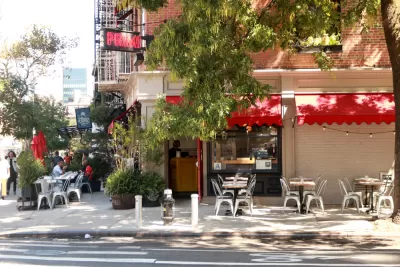
As the country moves toward adjusting to a post-COVID reality, the debate over what to do with pandemic-era installations and programs such as "slow streets" and expanded outdoor dining is heating up. The urgency of the pandemic, writes Laura Bliss for Bloomberg CityLab, gave us a glimpse into "how readily urban space can be repurposed for mobility and play, and how quickly human activity can surge back when cars are removed." In a survey of 43 member cities, "the National Association of City Transportation Officials found that 22 were planning on making Covid-era traffic changes permanent, while 16 more were considering it."
Research from Yelp shows that "slow streets" and car-free zones have had a positive impact on local restaurants. Their study "measured the difference in the share of consumer interest between the sample of restaurants in each slow street zone and all restaurants across each respective city, comparing the start of the pandemic (using March 15, 2020 as a proxy), when these programs weren’t yet in place, to the various time periods when the programs were in swing." According to Yelp, "[e]ateries in car-free areas saw more consumer interest (based on the amount of views, posted photos and user reviews on Yelp listings) when their streets were strictly limited to pedestrians and cyclists."
Justin Norman, Yelp’s vice president of data science, said he hopes their research will help inform the future of car-free streets programs. "As local governments and policymakers carve out policies that enact safer streets, we hope this information adds value to that."
FULL STORY: Where Covid’s Car-Free Streets Boosted Business

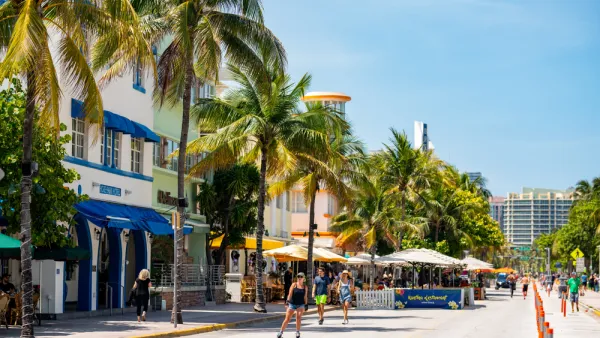
Miami Beach to Reopen Ocean Drive to Cars
The famous cruising strip was off-limits to cars during the pandemic. Now, the city is letting vehicles return with some pedestrian-oriented compromises.
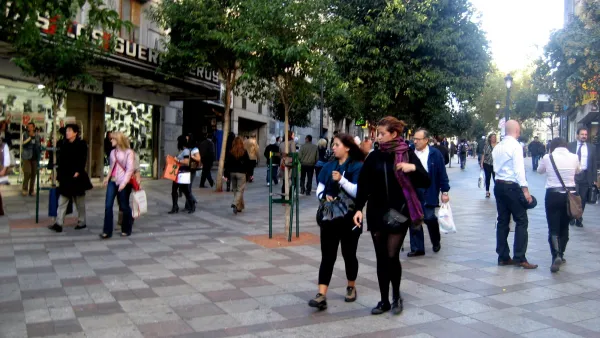
Pedestrian Malls in the 21st Century
The successes and failures of past pedestrian malls can inform the future of pandemic-induced "open streets" programs.
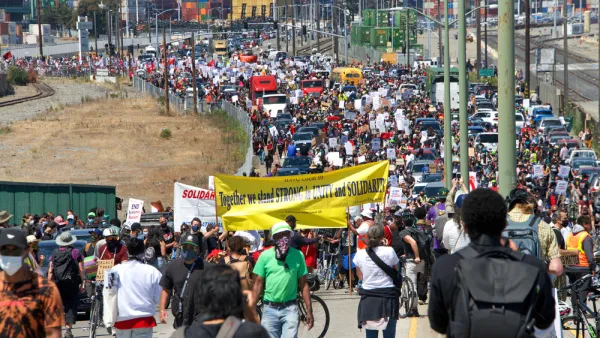
How Oakland Is Fixing its Pandemic Planning Equity Problem
The Oakland Slow Streets program, one of the most controversial developments of the early pandemic, has evolved to become the Essential Places initiative, thanks to new planning practices and a commitment to equity in Oakland, California.

The state-sanctioned urbicide of Austin
People don’t kill cities. Freeways do.

US to reduce Colorado River water deliveries to Mexico
A new Colorado Treaty amendment reduces Mexico’s Colorado River water allocation by 250,000 acre feet.

New Jersey’s second-largest city bans standalone data centers
Jersey City will continue to allow co-location facilities, such as those meant for research institutions that store their own data.

Amtrak not solely to blame for New Jersey commuter rail's unreliability, report finds
A new study from the Garden State Initiative found that NJ Transit’s budget grew 20% across a 4 year period, but reliability declined significantly over the same period.

EPA erases limits on planet-warming pollution from power plants
Under Monday’s plan, power plants would still have some limits on how much mercury, arsenic and other contaminants they can emit.

Phoenix announces new on-demand transit service, more frequent RAPID buses
Both new services will launch in October, and are part of Phoenix's Project Effective Access Solutions for Easing Congestion.

FREE Course: Walkable City 1: Why Walkability?
After describing his path towards focusing on walkability as the essence of good planning, Jeff Speck marches through his five principal reasons for making more walkable places.
Reinventing Malls: Planning Alchemy—Turning Gray Fields Into Gold
The course focuses on the opportunities and imperatives that shape reinvention of mall sites.

Eagle County Government
Harvard University Graduate School of Design
Nashville Planning Department
The Architects Foundation
University of Cincinnati Online
The Pocatello Development Authority
The Urban Renewal Agency of the City of Pocatello
Journal of the American Planning Association