Two options for significant parking reforms are under consideration in St. Paul. The City Council could decide to eliminate parking requirements entirely as soon as this summer.


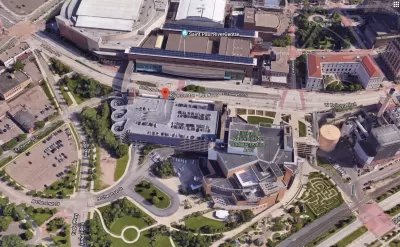
Frederick Melo reports on the ongoing efforts to relax parking requirements in the Twin Cities—where both cities have already relaxed parking requirements along transit corridors.
Efforts to reduce parking requirements in Minneapolis in keeping with the vision of the Minneapolis 2040 Comprehensive Plan were documented by Planetizen in April 2021. The cities have a history of working together on planning efforts, most recently when both cities acted simultaneously to lower speed limits.
Melo's article offers more details about the effort to reduce parking requirements in St. Paul. "Senior St. Paul city planner Tony Johnson has been shopping a presentation on a city parking study to neighborhood district councils, and recently presented the same materials to the St. Paul Planning Commission, which will consider how to adjust the zoning rules in the weeks ahead." The St. Paul City Council is likely to consider the parking reform package this summer.
As for the details of the parking reforms under consideration in St. Paul, two options are in play. According to Melo, "the first option recommended by the parking study would reduce minimum parking requirements for developers, and allow for further reductions if they invest in alternatives to vehicular travel, such as subsidizing transit passes."
"The second option would eliminate parking minimums entirely, though it would not prevent developers from building parking if they wish."
In addition to breaking the news about the status of St. Paul's parking reform effort, the article also serves to introduce the concept, providing a recent history of cities that have achieved parking reforms and the math on how much costs to provide off-street parking for developments in St. Paul.
Read the full story: For new development, St. Paul weighs reducing (or ditching) parking minimums

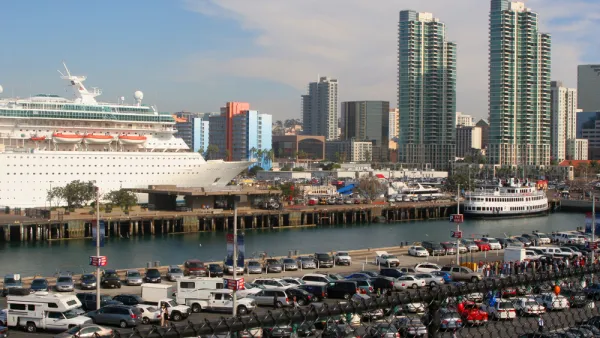
San Diego Could Expand Parking Reforms to Non-Residential Land Uses
A proposed code amendment would expand parking reforms implemented by San Diego in 2019.
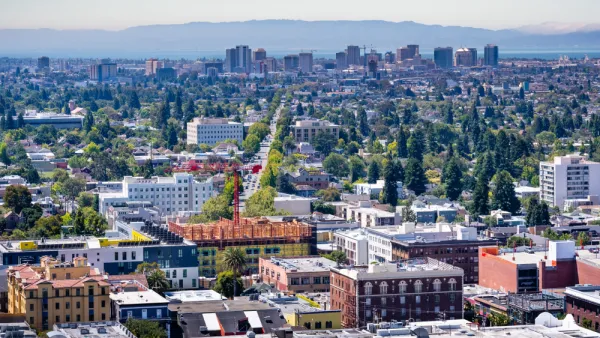
Berkeley to Remove Parking Requirements for Residential Properties
Berkeley is the second city in Northern California to approve landmark zoning reforms so far in 2021.
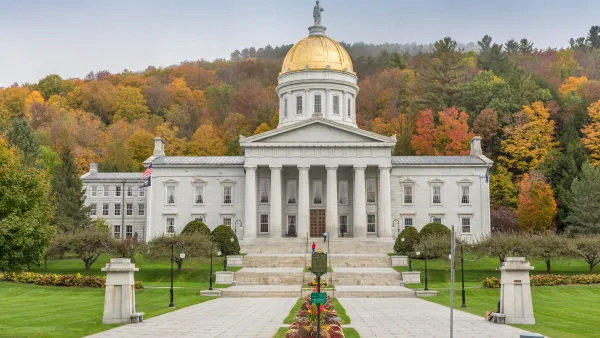
Vermont Next State in Line to End Single-Family Zoning, Ease Parking Requirements
Both houses in the Vermont Legislature have approved legislation to preempt local land use regulations by rescinding single-family zoning and easing parking requirements throughout the state.

Planetizen Federal Action Tracker
A weekly monitor of how Trump’s orders and actions are impacting planners and planning in America.

Amtrak, CN end decades-long dispute with eight-year agreement
The new operating agreement establishes an updated framework for the companies to work together, including processes to resolve disputes.

Northwest rail fans eager for Sept. 30 debut of Amtrak’s Airo fleet
Get ready for that new train smell and more seats. But they won’t go faster or run more frequently on the Cascades route in Washington and Oregon.

Trump administration unlawfully slashed $7 billion in clean energy grants, judge rules
The Environmental Protection Agency ended the Solar For All program, which provided the grants, after President Donald Trump’s inauguration.

Record-breaking wildlife overpass in Colorado brings 91% reduction in animal collisions
Prior to the overpass, vehicles were hitting one deer per day on Colorado’s Interstate 25.

California lawmakers approve just 5% of much-needed LA28 transportation funding
State legislators appear just as unwilling as Trump to pay for Olympics-related transportation projects.

FREE Course: Walkable City 1: Why Walkability?
After describing his path towards focusing on walkability as the essence of good planning, Jeff Speck marches through his five principal reasons for making more walkable places.
Reinventing Malls: Planning Alchemy—Turning Gray Fields Into Gold
The course focuses on the opportunities and imperatives that shape reinvention of mall sites.

City of Thousand Oaks
City of Wisconsin Rapids
Harvard University Graduate School of Design
The Architects Foundation
University of Cincinnati Online
The Pocatello Development Authority
The Urban Renewal Agency of the City of Pocatello