The effects of climate change are already cutting deeply into the lifeblood of the U.S. West—the Colorado River.


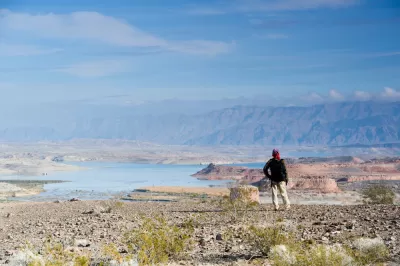
Ian James reports on the state of the Colorado River after more than two decades of scientists have decided is a "megadrought." The water level of Lake Mead has fallen 130 feet since 2000, and the reservoir is at 39 percent of capacity. The reservoir will soon have less water than any time since the Hoover Dam started filling the lake in the 1930s.
"The latest projections from the federal government show the reservoir will soon fall more feet to cross the trigger point for a shortage in 2022, forcing the largest mandatory water cutbacks yet in Arizona, Nevada and Mexico," reports James The lack of rainfall throughout the West and a meager snowpack in the Rocky Mountains could cause even more severe shortages and water supply cuts the next year, too, according to James.
James has more frightening details to share:
While the Southwest has always cycled through wet and dry periods, some scientists suggest the word "drought" is no longer entirely adequate and that the Colorado River watershed is undergoing “aridification” driven by human-caused warming — a long-term trend of more intense dry spells that’s here for good and will complicate water management for generations to come.
The article also includes coverage of the ongoing efforts to manage the Colorado River as it changes due to climate change, including the Drought Contingency Plan (DCP), signed by seven states along the river in 2019. "Arizona and Nevada agreed to take the first cuts to help prop up Lake Mead, while California agreed to participate at lower shortage levels if the reservoir continues to drop," reports James. Arizona is in line for the largest cuts under the DCP.
The Biden administration also recently announced an interagency working group to support farmers, tribes, and other communities most impacted by water shortages.
Technology is also being deployed in the effort, reports James, including the use of artificial intelligence for scenario planning in the Colorado River Basin, led by Laura Condon, an assistant professor of hydrology and atmospheric sciences at the University of Arizona.
FULL STORY: As a hotter, drier climate grips the Colorado River, water risks grow across the Southwest

New Drought Contingencies Triggered for Upper Colorado River States
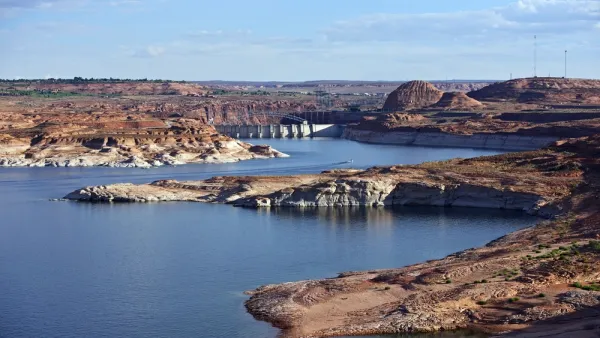
The latest Bureau of Reclamation report on water levels in Lake Powell and Lake Mead trigger new drought contingencies in Colorado, New Mexico, Utah, and Wyoming.
Department of the Interior Forced to Intervene on the Colorado River
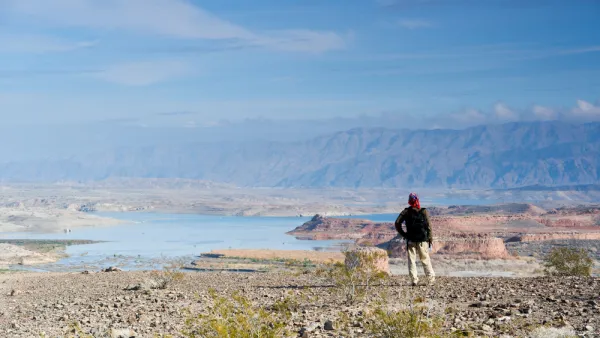
More questions than answers on the Colorado River this week as the federal government failed to deliver on threats to force Southwest states to cut back on water use.
Drought Takes Hold of the American West
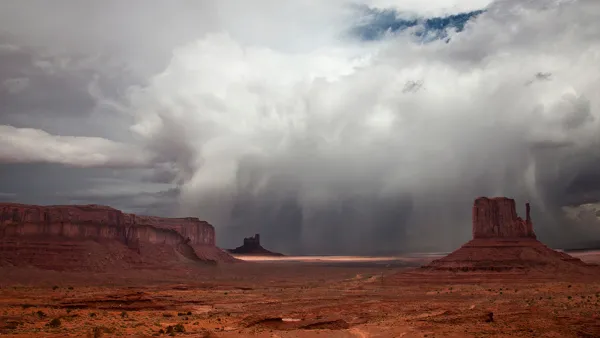
The megadrought continues, with contingency plans differing by location.

Planetizen Federal Action Tracker
A weekly monitor of how Trump’s orders and actions are impacting planners and planning in America.

The state-sanctioned urbicide of Austin
People don’t kill cities. Freeways do.

US to reduce Colorado River water deliveries to Mexico
A new Colorado Treaty amendment reduces Mexico’s Colorado River water allocation by 250,000 acre feet.

Mamdani overhauls NYC's Vision Zero plan with 100 new policy goals
The overhaul aims to reduce traffic deaths and make streets safer for pedestrians, cyclists and drivers through lower speed limits, new safety infrastructure and more.

Amtrak not solely to blame for New Jersey commuter rail's unreliability, report finds
A new study from the Garden State Initiative found that NJ Transit’s budget grew 20% across a 4 year period, but reliability declined significantly over the same period.

EPA erases limits on planet-warming pollution from power plants
Under Monday’s plan, power plants would still have some limits on how much mercury, arsenic and other contaminants they can emit.

FREE Course: Walkable City 1: Why Walkability?
After describing his path towards focusing on walkability as the essence of good planning, Jeff Speck marches through his five principal reasons for making more walkable places.
Reinventing Malls: Planning Alchemy—Turning Gray Fields Into Gold
The course focuses on the opportunities and imperatives that shape reinvention of mall sites.

Eagle County Government
Harvard University Graduate School of Design
Nashville Planning Department
The Architects Foundation
University of Cincinnati Online
The Pocatello Development Authority
The Urban Renewal Agency of the City of Pocatello
Journal of the American Planning Association