One of the most hopeful days for public transit in New York City in...well, a year.


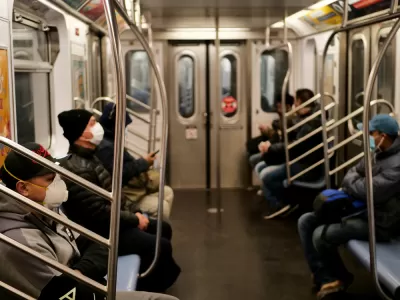
The New York Metropolitan Transportation Authority (MTA) reported its highest total daily ridership of the pandemic on Friday, March 12, with 1,863,962 paid trips, breaking the previous pandemic record of 1,857,822 trips on October 15. "The bus system, too, saw a spike of approximately 1.13 million additional daily trips recorded Friday, bringing trips taken systemwide to just under 3 million for the day," reports Diane Pham.
The MTA still hasn't reopened overnight service, which it closed for overnight cleaning, in a highly controversial decision, in May 2020, and ridership is still well below pre-pandemic norms. But the recent ridership improvements, coupled with news about $6.5 billion in direct funding support on the way from the federal government, are offering some long-awaited notes of optimism for transit in the nation's most populous city.
According to Pham, the MTA is spending the interim months and weeks providing support for vaccination services, recently releasing a new map that includes vaccination sites among other actions.
FULL STORY: Subway ridership sees highest single-day figure since start of pandemic

New York MTA Cuts Bus Service
The transit crisis continues.
Tracking the New York Subway's Uneven Recovery
Ridership on the New York Subway has a long way to go to return to pre-pandemic normal, and the setbacks of recent months haven't helped the cause.
Overnight Subway Service Returning in New York City
A big piece of the process of reopening New York City for business is scheduled for May 17, but numerous challenges remain in getting the city that never sleeps back on track.

Planetizen Federal Action Tracker
A weekly monitor of how Trump’s orders and actions are impacting planners and planning in America.

The state-sanctioned urbicide of Austin
People don’t kill cities. Freeways do.

US to reduce Colorado River water deliveries to Mexico
A new Colorado Treaty amendment reduces Mexico’s Colorado River water allocation by 250,000 acre feet.

Mamdani overhauls NYC's Vision Zero plan with 100 new policy goals
The overhaul aims to reduce traffic deaths and make streets safer for pedestrians, cyclists and drivers through lower speed limits, new safety infrastructure and more.

Amtrak not solely to blame for New Jersey commuter rail's unreliability, report finds
A new study from the Garden State Initiative found that NJ Transit’s budget grew 20% across a 4 year period, but reliability declined significantly over the same period.

EPA erases limits on planet-warming pollution from power plants
Under Monday’s plan, power plants would still have some limits on how much mercury, arsenic and other contaminants they can emit.

FREE Course: Walkable City 1: Why Walkability?
After describing his path towards focusing on walkability as the essence of good planning, Jeff Speck marches through his five principal reasons for making more walkable places.
Reinventing Malls: Planning Alchemy—Turning Gray Fields Into Gold
The course focuses on the opportunities and imperatives that shape reinvention of mall sites.

Eagle County Government
Harvard University Graduate School of Design
Nashville Planning Department
The Architects Foundation
University of Cincinnati Online
The Pocatello Development Authority
The Urban Renewal Agency of the City of Pocatello
Journal of the American Planning Association