Funding cuts and uneven investment in rural areas have left millions of Americans trapped without adequate transportation.


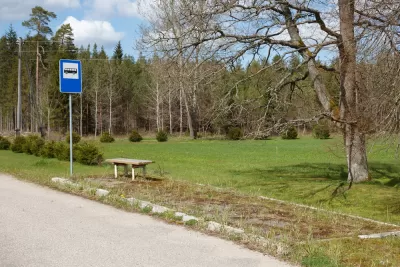
Dwindling funding for transit systems, particularly those in less dense, non-urban areas, is having a major impact on rural Americans who don't own cars or are unable to drive.
While conversation around public transit tends to focus on big cities, many people in small towns and rural communities also depend on it. "For many Americans, public transit is the only option to get to work, school, the grocery store, or doctor’s appointments. But nearly half of us have no access to public transit. And those that do are now confronting limited routes, slashed service times, and limited disability accommodations," writes Kayla Soren. For people with disabilities, the burden of reduced transit is even greater. "Over 80 percent of young adults with disabilities are prevented from doing daily activities due to a lack of transportation," and overstretched transit agencies often don't have the resources to accommodate riders with disabilities.
With millions of Americans lacking access to public transit and many more forced to depend on inadequate transportation, Soren argues that Congress should step in with emergency relief and increased federal funding to public transit agencies, including an adjustment to "the '80-20' split that’s plagued federal transit funding since the Reagan era — with 80 percent going to highways and less than 20 percent to public transit." Although commonly justified by the belief that only residents of big cities use transit, "this is upside-down logic. The hearings reveal that when people don’t use transit, it’s because it is nonexistent, unreliable, or inaccessible."
FULL STORY: Small Towns And Rural Communities Need Transit, Too

Congress Hears Rural Transportation Challenges
A Congressional subcommittee heard testimony from rural transportation officials, transit providers, and lawmakers.
Minnesota, Vermont Experiment With Rural Trip Planning Websites
Pilot programs in the two states aimed to make transit information more accessible for riders in rural areas, where on-demand and microtransit services make trip planning more complex.
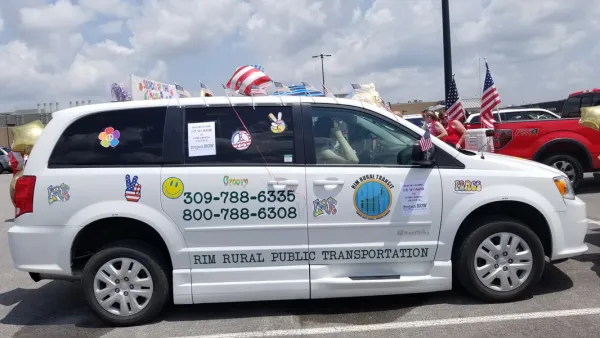
Rural Illinois Transit Brings $4 in Economic Benefits for Every Dollar Spent
Chronically underfunded rural public transit systems are key lifelines are economic engines for rural communities.

Planetizen Federal Action Tracker
A weekly monitor of how Trump’s orders and actions are impacting planners and planning in America.

The state-sanctioned urbicide of Austin
People don’t kill cities. Freeways do.

US to reduce Colorado River water deliveries to Mexico
A new Colorado Treaty amendment reduces Mexico’s Colorado River water allocation by 250,000 acre feet.

5 New England states march closer to 800 megawatt wind energy project
Securing federal approval for the project may be complicated under the Trump administration, which has historically been hostile towards domestic wind power.

Baltimore to break ground on $50 million Transit Priority Project
The project will bring faster bus trips, safer streets and better bike connections to Baltimore.

Airbnb launches $250 million 'last-dollar financing' housing accelerator, makes first investment in Austin
The company will put $6.4 million towards affordable housing development in Texas’ capital.

FREE Course: Walkable City 1: Why Walkability?
After describing his path towards focusing on walkability as the essence of good planning, Jeff Speck marches through his five principal reasons for making more walkable places.
Reinventing Malls: Planning Alchemy—Turning Gray Fields Into Gold
The course focuses on the opportunities and imperatives that shape reinvention of mall sites.

Eagle County Government
Harvard University Graduate School of Design
Nashville Planning Department
The Architects Foundation
University of Cincinnati Online
The Pocatello Development Authority
The Urban Renewal Agency of the City of Pocatello
Journal of the American Planning Association