While we're still far from a Jetsons-style reality, understated autonomous features could be the key to safer transportation.


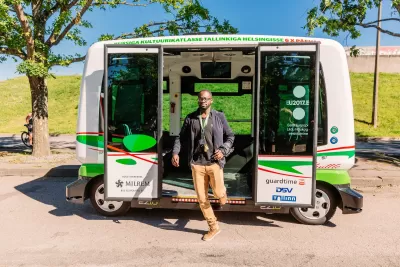
With billions of dollars invested in autonomous vehicles and federal policy undergoing revision to accommodate them, Allison Arieff, writing in City Monitor, takes stock of the industry and its actual achievements and potential.
Arieff starts with the basic questions about the role of autonomous vehicles in our lives. "What problem are they going to solve? Is the goal to end car ownership? Kill public transit? Rescue public transit? Normalise super-commutes? Eliminate the need for parking lots?" With 2020 making every industry reevaluate its priorities, AV developers and investors are shifting the discussion to focus on the realistic ways that autonomous vehicles can craft their niche, looking at avenues such as "buses, transit and last-mile goods delivery."
Whereas autonomous cars once promised safety as a top feature, the advances being implemented in human-driven cars have the potential to make that advantage obsolete. "By 2022, just about every new vehicle sold in the world’s wealthy nations will have at least automatic emergency braking, which is expected to reduce injury-related crashes by 56% and reduce rear-end crashes by half." And, Arieff argues, "too much focus on tech that may or may not be as deployable or as transformative runs the risk of crowding out more important transportation conversations about low-hanging fruit like reduced speed limits, road diets and congestion pricing."
Autonomous vehicles seek to separate the driver from the driving, but they're not out to remove them from the car altogether. "Startups are focusing on what you can be doing during your trip, whether in an AV or on mass transit," but not on reducing the number of cars on the road. "Instead of exploring more effective solutions that could carry more people from one destination to the next, the driverless vehicle, by definition, keeps the car as the number one choice for getting from A to B."
Recent changes, however, point to a renewed focus on integration with transit, last-mile solutions, and goods movement. "The integration of AV technology into public transport networks and delivery systems presents new opportunities to develop multimodal systems for equitable, accessible and sustainable urban mobility." As Arieff writes, the future of autonomous vehicles may not be flying taxis, but safer and more reliable buses—and that's not a bad thing.
FULL STORY: The underwhelming reality of driverless cars

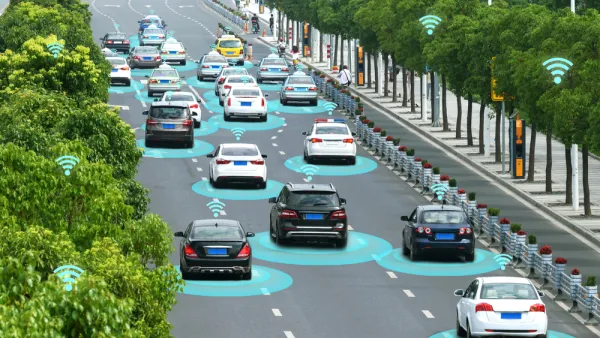
Autonomous Vehicles and Urban Contexts: It's Time to Engage All Stakeholders
At the 2017 Autonomous Vehicle Symposium, a group of experts were asked to predict the effects of autonomous vehicles in two case study communities, and to generate a list of proposed policy actions to prepare for a future of autonomous vehicles.
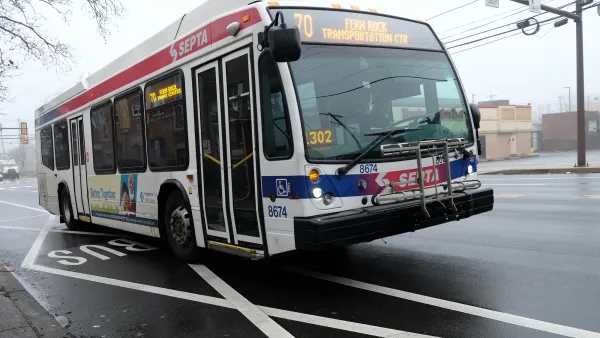
Pennsylvania lawmaker wants to ban fully self-driving buses
State Rep. Ben Waxman's proposed bill would require autonomous buses to have a licensed driver on board.
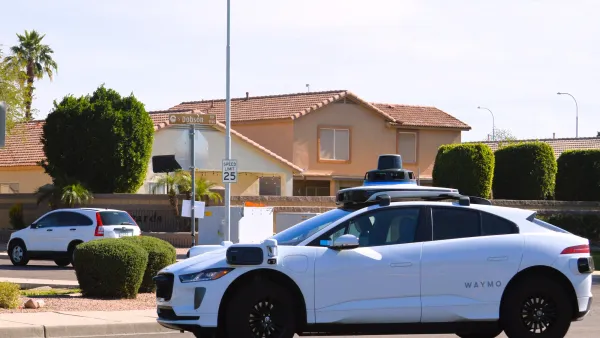
Uber and Waymo part ways in Phoenix
The companies ended a three-year pilot program, with Waymo saying it plans to keep its Phoenix robotaxi fleet available through its own app.

Planetizen Federal Action Tracker
A weekly monitor of how Trump’s orders and actions are impacting planners and planning in America.

The state-sanctioned urbicide of Austin
People don’t kill cities. Freeways do.

US to reduce Colorado River water deliveries to Mexico
A new Colorado Treaty amendment reduces Mexico’s Colorado River water allocation by 250,000 acre feet.

5 New England states march closer to 800 megawatt wind energy project
Securing federal approval for the project may be complicated under the Trump administration, which has historically been hostile towards domestic wind power.

Baltimore to break ground on $50 million Transit Priority Project
The project will bring faster bus trips, safer streets and better bike connections to Baltimore.

Airbnb launches $250 million 'last-dollar financing' housing accelerator, makes first investment in Austin
The company will put $6.4 million towards affordable housing development in Texas’ capital.

FREE Course: Walkable City 1: Why Walkability?
After describing his path towards focusing on walkability as the essence of good planning, Jeff Speck marches through his five principal reasons for making more walkable places.
Reinventing Malls: Planning Alchemy—Turning Gray Fields Into Gold
The course focuses on the opportunities and imperatives that shape reinvention of mall sites.

.jpg)
Eagle County Government
Harvard University Graduate School of Design
Nashville Planning Department
The Architects Foundation
University of Cincinnati Online
The Pocatello Development Authority
The Urban Renewal Agency of the City of Pocatello
Journal of the American Planning Association