Two pieces of legislation signed by Gov. DeWine promote investment in "legacy" cities.



Two state senate bills recently signed by Ohio's Governor Mike DeWine incentivize investment and development in urban cores. Senate Bill 39 creates a tax credit for insurance companies that invest in Transformational Mixed Use Development projects, and Senate Bill 312 authorizes raising up to $5 million through intrastate equity crowdfunding for new businesses. Legislators hope the new laws will spur development in Ohio's downtowns and revitalize stagnant cities with new construction and new business ventures.
To benefit from SB 39's new tax credit, capped at 10%, projects must "have the potential to have a significant economic impact on the project site and surrounding communities," cost over $50 million, and include mixed uses. HB 312 lets Ohio-based businesses crowdfund from small investors in the state, with investments capped at $10,000.
The Greater Ohio Policy Center praised the bills as a useful step for "assisting Ohio’s legacy cities rebound from decades of decline," expressing optimism that the new legislation will help create jobs and bring new industries to the state. With new incentives to redevelop fading downtown cores, writes Mary Vanac, Ohio's skylines could see drastic changes in the next few years.
Read the full story: Cincinnati's skyline could dramatically change under legislation signed by DeWine

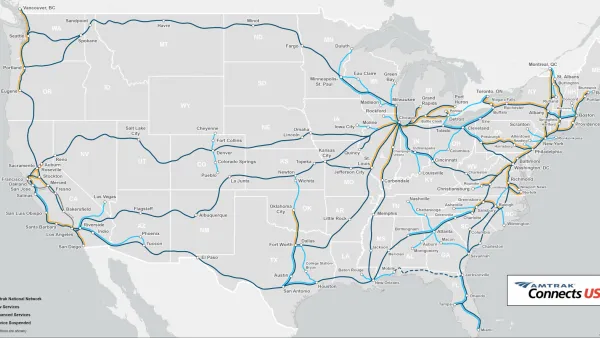
Political Support for Amtrak’s All Aboard Ohio Plans Follows Federal Infrastructure Funding
Gov. Mike DeWine’s sudden interest in working with Amtrak might have something to do with $66 billion in Infrastructure Investment and Jobs Act funding recently announced by the Federal Railroad Administration.
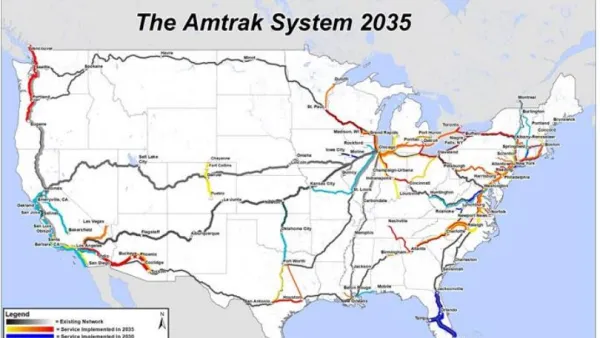
Amtrak Proposes Five New Routes in Ohio
The nation’s most populous state without an intercity passenger rail program could be the benefit of ambitions to expand the network of Amtrak service around the country.
Another State (Ohio) Gets It Right
Washington and California have been praised for early efforts to mitigate community spread of the novel coronavirus, resulting in relatively low rates of infection, hospitalization, and ultimately, death. Add Ohio to the bunch.

Planetizen Federal Action Tracker
A weekly monitor of how Trump’s orders and actions are impacting planners and planning in America.

California plans to bury El Niño’s downpour
If the state plays its cards right, it may be able to store a billion acre-feet of El Niño’s water in aquifers.

Chicago breaks ground on $3 billion megadevelopment
The new neighborhood, titled Foundry Park, will one day host 3,700 residences.

Satanic place names
From streams and lakes to valleys and canyons, I mapped more than 1,000 places named after the Devil.

California High-Speed Rail Authority CEO resigns after $600,000 scandal
Under Ian Choudri, the authority used taxpayer dollars to fund first class flights and trips to nightclubs.

Want to study the Missouri River? Soon, you may need unanimous approval from 10 states
Legislation would require 10 governors’ permission to study or build projects moving water outside the basin.

FREE Course: Walkable City 1: Why Walkability?
After describing his path towards focusing on walkability as the essence of good planning, Jeff Speck marches through his five principal reasons for making more walkable places.
Reinventing Malls: Planning Alchemy—Turning Gray Fields Into Gold
The course focuses on the opportunities and imperatives that shape reinvention of mall sites.

City of Rosemead
Rutgers University, Edward J. Bloustein School of Planning and Public Policy
One Hundred Miles
Hunter College, City University of New York (CUNY)
The Architects Foundation
University of Cincinnati Online
City of Cambridge
Montrose County
The Pocatello Development Authority