The effects of climate change will vary depending on geographic location, so it's incumbent on states to prepare in their own, specific way. Not all states are taking that responsibility seriously, according to a new report.


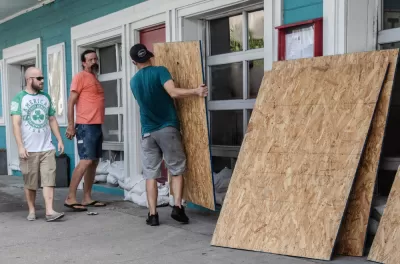
Kate Elizabeth shares the details of a new report by the Trust for America's Health that finds the states most vulnerable to the effects of climate change are also the least prepared to deal with effects of climate change.
The report, a collaboration between the nonprofit and the John Hopkins Bloomberg School of Public Health, examines states’ ability to address the health effects of climate change based on their vulnerability, public health preparedness and existing climate-related adaptations. The results, researchers wrote, indicate that every state and the District of Columbia had done some sort of planning, but “there was significant variation and, in many places, a great deal of room for improvement.”
Of the 17 states deemed by the report to be most vulnerable to climate change, only two—North Carolina and Arizona—are also ranked among the most prepared. "Eight of the remaining 15—Tennessee, Georgia, Kentucky, South Carolina, Texas, Mississippi, Oklahoma and West Virginia—ranked among the states least prepared to handle the negative health effects associated with climate change," according to Elizabeth.
[Ed's note: Even "most prepared" is relative, and probably not enough for the coming changes, as exemplified by North Carolina.]
The report lists the most prepared states in the country as Colorado, Maine, Maryland, New Hampshire, Utah, Vermont and Wisconsin, along with the District of Columbia.
FULL STORY: Report: States Most Vulnerable to Climate Change Are Among the Least Prepared

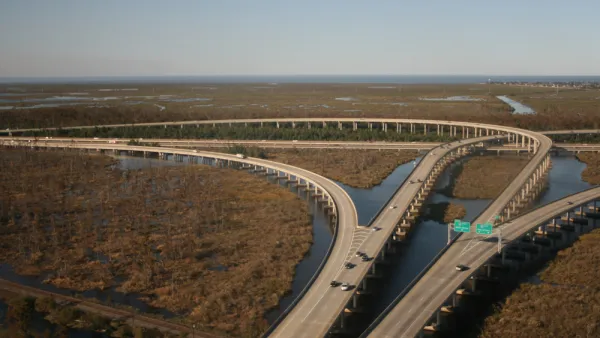
$50 Billion Coastal Master Plan Updated in Louisiana
Louisiana is losing coastal lands, quickly, along with the habitat and economic resources located there. A Coastal Master Plan plots $50 billion in spending to protect the coast.
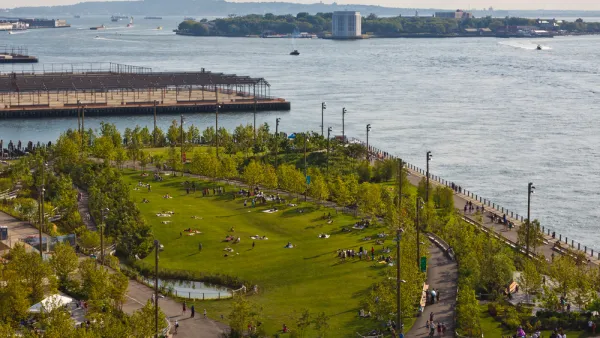
New York Updating its Comprehensive Waterfront Plan
Vision 2030 will update the award winning Vision 2020 New York City Comprehensive Waterfront Plan.
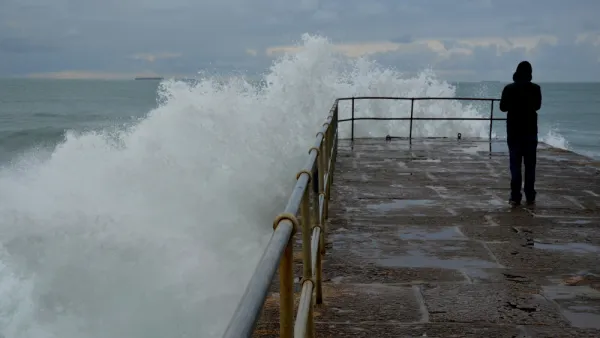
Mapping the Effects of Climate Change in the United States
A new mapping project from researchers at the University of Pennsylvania illustrates the consequences of inaction on climate change.

Planetizen Federal Action Tracker
A weekly monitor of how Trump’s orders and actions are impacting planners and planning in America.

The state-sanctioned urbicide of Austin
People don’t kill cities. Freeways do.

US to reduce Colorado River water deliveries to Mexico
A new Colorado Treaty amendment reduces Mexico’s Colorado River water allocation by 250,000 acre feet.

5 New England states march closer to 800 megawatt wind energy project
Securing federal approval for the project may be complicated under the Trump administration, which has historically been hostile towards domestic wind power.

Baltimore to break ground on $50 million Transit Priority Project
The project will bring faster bus trips, safer streets and better bike connections to Baltimore.

Airbnb launches $250 million 'last-dollar financing' housing accelerator, makes first investment in Austin
The company will put $6.4 million towards affordable housing development in Texas’ capital.

FREE Course: Walkable City 1: Why Walkability?
After describing his path towards focusing on walkability as the essence of good planning, Jeff Speck marches through his five principal reasons for making more walkable places.
Reinventing Malls: Planning Alchemy—Turning Gray Fields Into Gold
The course focuses on the opportunities and imperatives that shape reinvention of mall sites.

Eagle County Government
Harvard University Graduate School of Design
Nashville Planning Department
The Architects Foundation
University of Cincinnati Online
The Pocatello Development Authority
The Urban Renewal Agency of the City of Pocatello
Journal of the American Planning Association