Utah finds itself in a unique situation, with money to spend on expanding transit capacity at a time when many transit agencies are plotting layoffs and service reductions.


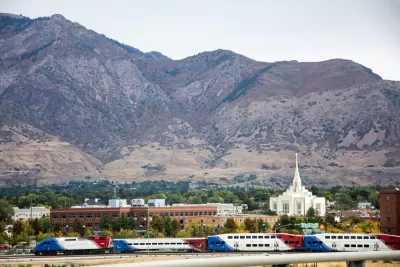
Bryan Schott report from Utah, where officials from the State Legislature are planning a spate of bond-financed capital investments into transit, including a project to double-track the FrontRunner line that connects Ogden and Provo. The double tracking would allow trains to run every 15 minutes during peak hours, reports Schott. FrontRunner trains now arrive every 30 minutes, at most.
"About 70% of the 90-mile FrontRunner system from Provo to Ogden now runs on a single, shared track, so trains may pass each other only at stations and a few sidings. A delay at one station, for example, can cause a ripple effect of delays down the entire line," according to Schott.
According to the article, the state of Utah was flush with cash because of "booming income tax collections and healthy sales tax revenue," but budget cuts due to the coronavirus in June are now paying off, with the state finding money for investments in transit and the state's education system.
FULL STORY: FrontRunner double-tracking could see big infusion of state funding

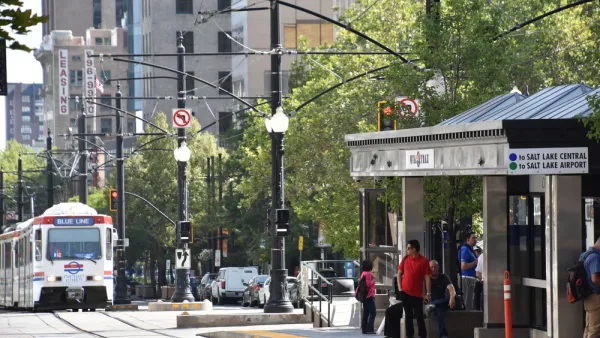
'Free Fare February' a Huge Boost for Ridership in Utah
Early returns from Utah Transit Authority's fare-free transit experiment.
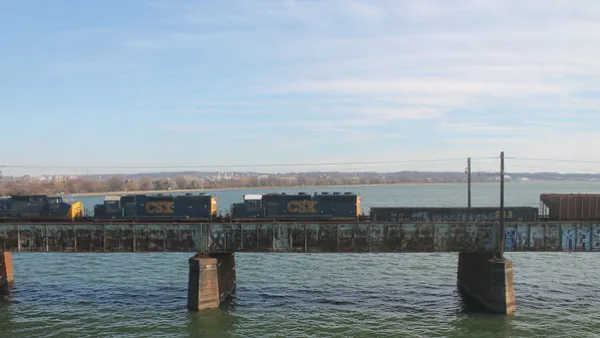
Virginia Passenger Rail Sets Ridership Records, Seeks More Wins
Virginia’s commitment to intercity rail is paying off in record ridership numbers, but more work will be necessary to achieve the state’s ambitions for passenger rail.
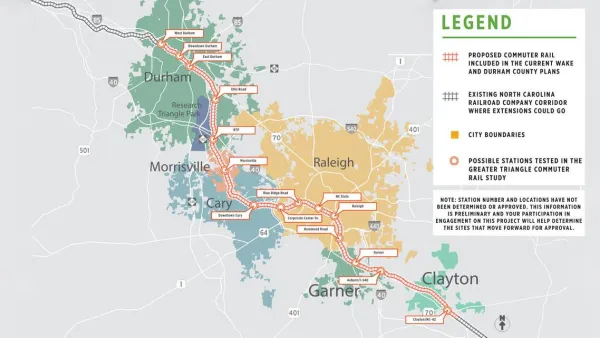
FTA Rejects North Carolina Commuter Rail Funding
As commuter patterns shift, so too do the transit funding preferences of the federal government.

Planetizen Federal Action Tracker
A weekly monitor of how Trump’s orders and actions are impacting planners and planning in America.

The state-sanctioned urbicide of Austin
People don’t kill cities. Freeways do.

US to reduce Colorado River water deliveries to Mexico
A new Colorado Treaty amendment reduces Mexico’s Colorado River water allocation by 250,000 acre feet.

Mamdani overhauls NYC's Vision Zero plan with 100 new policy goals
The overhaul aims to reduce traffic deaths and make streets safer for pedestrians, cyclists and drivers through lower speed limits, new safety infrastructure and more.

Amtrak not solely to blame for New Jersey commuter rail's unreliability, report finds
A new study from the Garden State Initiative found that NJ Transit’s budget grew 20% across a 4 year period, but reliability declined significantly over the same period.

EPA erases limits on planet-warming pollution from power plants
Under Monday’s plan, power plants would still have some limits on how much mercury, arsenic and other contaminants they can emit.

FREE Course: Walkable City 1: Why Walkability?
After describing his path towards focusing on walkability as the essence of good planning, Jeff Speck marches through his five principal reasons for making more walkable places.
Reinventing Malls: Planning Alchemy—Turning Gray Fields Into Gold
The course focuses on the opportunities and imperatives that shape reinvention of mall sites.

Eagle County Government
Harvard University Graduate School of Design
Nashville Planning Department
The Architects Foundation
University of Cincinnati Online
The Pocatello Development Authority
The Urban Renewal Agency of the City of Pocatello
Journal of the American Planning Association