The Arizona Department of Transportation has selected a developer for the Broadway Curve Improvement Project, which would widen Interstate 10, spanning multiple jurisdictions adjacent to Phoenix.


"The Arizona Department of Transportation has selected a preferred developer for a project to reconstruct a portion of Interstate 10 in Phoenix," reports Eleanor Lamb. That developer is a joint venture comprising Pulice Construction Inc., FNF Construction Inc., Flatiron Constructors and T.Y. Lin International.
According to ADOT, I-10's role as a key commercial corridor, linking the West Coast to the East Coast, necessitates the expansion of the freeway. Lamb provides more details about what ADOT is envisioning:
Proposed improvements include widening I-10 to six general-purpose lanes and two high-occupancy vehicle lanes and building a collector-distributor road system, which is meant to separate local and through traffic. The project also will include modifying I-10’s connections with state Route 143, Broadway Road and U.S. Route 60, as well as adding three pedestrian bridges to connect communities.
The stretch of I-10 targeted for the project runs for 11 miles between I-17 and State Route 2020. "Located southeast of downtown Phoenix, the project zone runs from the Salt River to Chandler and encompasses Tempe and Guadalupe," adds Lamb.
Phoenix Mayor Kate Gallego is quoted in the article touting the safety benefits of the proposed project, along with its potential economic benefits. On that latter score, Mayor Gallego cites the potential for $658 million in new economic activity.
"The project will be partially funded by the Maricopa Association of Governments’ Proposition 400, which is a sales tax dedicated to transportation purposes. Maricopa County voters approved Proposition 400 in 2004," according to the article.
FULL STORY: Arizona DOT Names Preferred Developer for I-10 Project in Phoenix Area


Arizona Governor Vetoes Phoenix-Area Transportation Tax Vote, Shocking Local Leaders
Arizona state law requires Maricopa County to request approval from the state before it can send a transportation tax to the voters for approval.
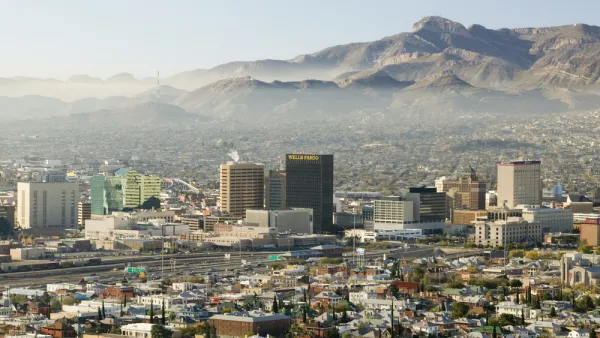
Report Criticizes El Paso Interstate Expansion Plan
An independent review of TxDOT's proposed expansion of I-10 through downtown El Paso highlights several flaws and a price tag close to $800 million.
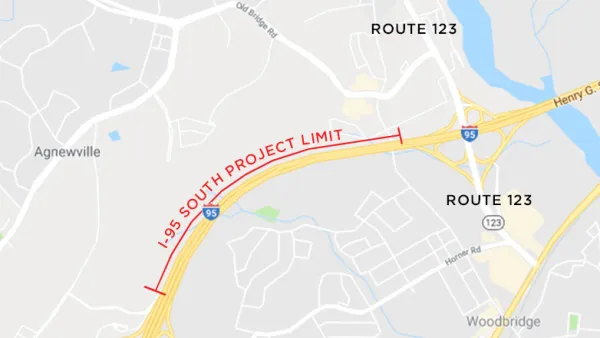
I-95 Widening Breaks Ground in Virginia
A mile-and-a-half-long section of Interstate 95, which handles 80,000 vehicle trips a day, will be expanded in Virginia. The project includes a new shoulder, lighting, and noise walls.

The state-sanctioned urbicide of Austin
People don’t kill cities. Freeways do.

US to reduce Colorado River water deliveries to Mexico
A new Colorado Treaty amendment reduces Mexico’s Colorado River water allocation by 250,000 acre feet.

New Jersey’s second-largest city bans standalone data centers
Jersey City will continue to allow co-location facilities, such as those meant for research institutions that store their own data.

Amtrak not solely to blame for New Jersey commuter rail's unreliability, report finds
A new study from the Garden State Initiative found that NJ Transit’s budget grew 20% across a 4 year period, but reliability declined significantly over the same period.

EPA erases limits on planet-warming pollution from power plants
Under Monday’s plan, power plants would still have some limits on how much mercury, arsenic and other contaminants they can emit.

Phoenix announces new on-demand transit service, more frequent RAPID buses
Both new services will launch in October, and are part of Phoenix's Project Effective Access Solutions for Easing Congestion.

FREE Course: Walkable City 1: Why Walkability?
After describing his path towards focusing on walkability as the essence of good planning, Jeff Speck marches through his five principal reasons for making more walkable places.
Reinventing Malls: Planning Alchemy—Turning Gray Fields Into Gold
The course focuses on the opportunities and imperatives that shape reinvention of mall sites.

Eagle County Government
Harvard University Graduate School of Design
Nashville Planning Department
The Architects Foundation
University of Cincinnati Online
The Pocatello Development Authority
The Urban Renewal Agency of the City of Pocatello
Journal of the American Planning Association