Infrastructure investment tops the list of common priorities for COVID recovery among mayors surveyed.


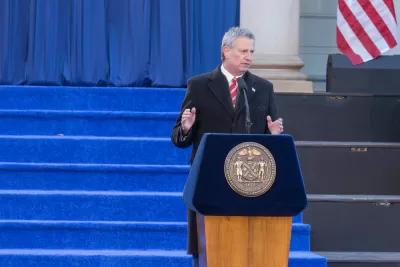
A new survey of 124 mayors found that "while nearly all mayors expect drops in their operating budgets in the next 12-18 months due to COVID-19, most mayors also believe investing in infrastructure and technology can spur an economic recovery," reports Chris Teale.
Conducted by the U.S. Conference of Mayors (USCM) and Siemens USA, the survey found 69% of participant mayors cited infrastructure as the investment priority as a top of mind means spur economic growth.
"As cities look to the post-COVID future, many leaders have emphasized that investing in transportation infrastructure is one major way to not only stimulate economic growth and get people back to work, but also improve residents’ lives and rebuild what the vast majority have agreed is crumbling infrastructure," writes Teale. Teale reports that 67% of mayors opine that it's time to invest in transit infrastructure as a way of contributing to long-term goals.
As Teale points out, "the $2 trillion Coronavirus Aid, Relief, and Economic Security (CARES) Act included $25 billion in emergency federal funding for public transportation systems, but so far no further help has been forthcoming." Something all 124 mayors agreed upon: corporations can help in recovery through capital investments.
FULL STORY: Mayors to prioritize infrastructure, tech investments in COVID recovery: survey

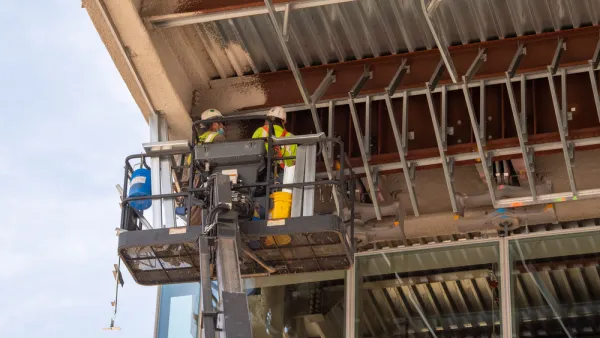
Delta Variant Slowing the Construction Industry
The spike in Covid-19 caused by the highly contagious Delta Variant is slowing the economic recovery in numerous sectors of the economy—case in point the construction industry.
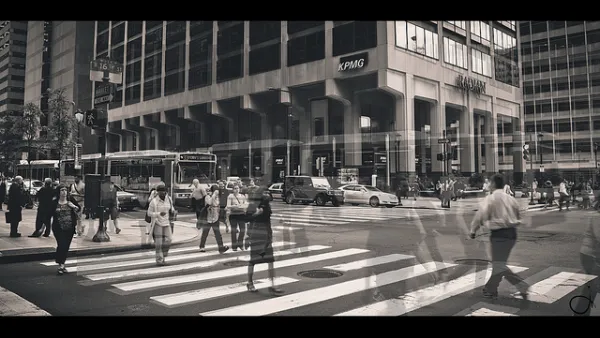
The Future of Downtowns Still Hangs in the Balance
Center City in Philadelphia offers a case study for one of the largest and potentially most consequential contingencies of the pandemic: What happens to downtowns is most workers never come back to the office?
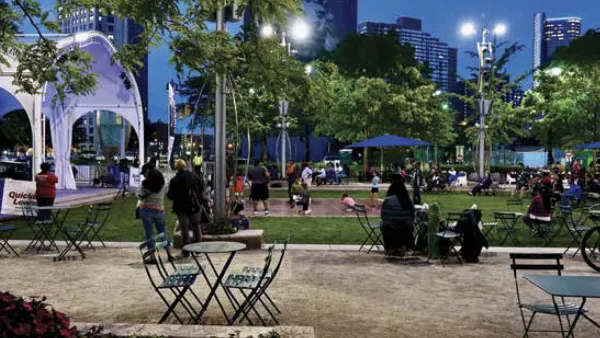
Detroit as a Model for 'Building Back Better'
Cities have more experience, and examples, than they might realize when it comes to reinventing systems of investment and governance to recover from the economic ravages of the COVID-19 pandemic.

Planetizen Federal Action Tracker
A weekly monitor of how Trump’s orders and actions are impacting planners and planning in America.

The state-sanctioned urbicide of Austin
People don’t kill cities. Freeways do.

US to reduce Colorado River water deliveries to Mexico
A new Colorado Treaty amendment reduces Mexico’s Colorado River water allocation by 250,000 acre feet.

5 New England states march closer to 800 megawatt wind energy project
Securing federal approval for the project may be complicated under the Trump administration, which has historically been hostile towards domestic wind power.

Baltimore to break ground on $50 million Transit Priority Project
The project will bring faster bus trips, safer streets and better bike connections to Baltimore.

Airbnb launches $250 million 'last-dollar financing' housing accelerator, makes first investment in Austin
The company will put $6.4 million towards affordable housing development in Texas’ capital.

FREE Course: Walkable City 1: Why Walkability?
After describing his path towards focusing on walkability as the essence of good planning, Jeff Speck marches through his five principal reasons for making more walkable places.
Reinventing Malls: Planning Alchemy—Turning Gray Fields Into Gold
The course focuses on the opportunities and imperatives that shape reinvention of mall sites.

Eagle County Government
Harvard University Graduate School of Design
Nashville Planning Department
The Architects Foundation
University of Cincinnati Online
The Pocatello Development Authority
The Urban Renewal Agency of the City of Pocatello
Journal of the American Planning Association