Despite a huge drop in vehicle miles traveled, there have been more traffic fatalities in the first six months of 2020 than the same period in 2019.


"Car drivers are killing people — pedestrians, cyclists, their own passengers, themselves — at a much higher rate this year compared to last, even though total travel is down dramatically because of the COVID-19 pandemic, a new report shows," writes Gersh Kuntzman about the findings of data released by Sam Schwarts, a traffic engineering firm.
According to the data set, in the first 6 months of 2020, the death rate per million VMT has increased by 12.7% year-over-year from 1.02 to 1.15. Sam Schwartz National Practice Leader for Safety and Research Richard Retting says that while total fatalities decreased by 5% from January to June 2020, that number should be much lower given vehicle miles traveled during that time.
In New York City, a drip of 40% fewer VMT per day did not equate to a proportionate dip in fatalities. DOT Commissioner Polly Trottenberg thinks that "serial speeders" may be to blame.
"The increase in deaths per vehicle miles traveled has been discussed widely on a piecemeal basis, with most experts attributing the increase to rampant speeding in which drivers have engaged thanks to the fewer cars on the road," notes Kuntzman.
Read the full story: Roadway Deaths in U.S. are Way Higher Than Normal — And in NYC, Too

Philly Speed Camera Program Cuts Fatalities in Half
Excessive speeding along dangerous segments of Roosevelt Boulevard dropped by 90 percent after the city installed automated enforcement cameras.
Acceptable Deaths
What can we learn from our Covid response?
Opinion: Road Safety Data Should Include Close Calls
Even in the absence of lethal collisions, the experience of repeated near-misses can discourage pedestrians from walking and degrade public perception of road safety.

Planetizen Federal Action Tracker
A weekly monitor of how Trump’s orders and actions are impacting planners and planning in America.

Northwest rail fans eager for Sept. 30 debut of Amtrak’s Airo fleet
Get ready for that new train smell and more seats. But they won’t go faster or run more frequently on the Cascades route in Washington and Oregon.
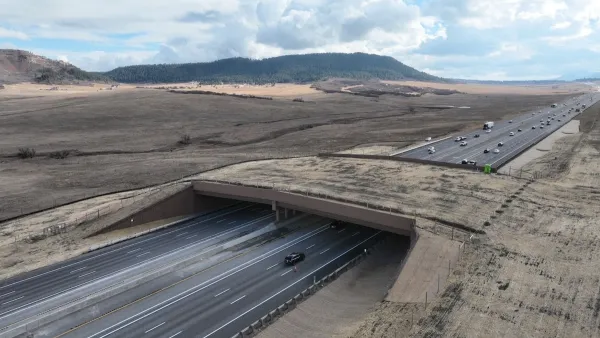
Record-breaking wildlife overpass in Colorado brings 91% reduction in animal collisions
Prior to the overpass, vehicles were hitting one deer per day on Colorado’s Interstate 25.

Detroit to transform waterfront with $2.2 billion investment
Developers will convert about 18 acres of unused parking lot space into civic spaces.

‘Going backwards:’ Baltimore mayor, students rally against state's transit funding plan
Maryland's proposed six-year plan provides no funding for Baltimore’s BMORE bus program and reduces its road maintenance funding.

Trump wants to cancel nearly 98% of funding for HUD housing support program
Multiple housing groups are suing the administration in an effort to preserve the funding.

FREE Course: Walkable City 1: Why Walkability?
After describing his path towards focusing on walkability as the essence of good planning, Jeff Speck marches through his five principal reasons for making more walkable places.
Reinventing Malls: Planning Alchemy—Turning Gray Fields Into Gold
The course focuses on the opportunities and imperatives that shape reinvention of mall sites.

City of Thousand Oaks
City of Wisconsin Rapids
Harvard University Graduate School of Design
The Architects Foundation
University of Cincinnati Online
Northern Illinois Transit Authority (NITA)
The Pocatello Development Authority
The Urban Renewal Agency of the City of Pocatello