SB 1120 is the latest law proposed in the California Legislature to preempt restrictive local zoning.



The Terner Center for Housing Innovation has published a detailed analysis of SB 1120, a law proposed in California as the latest attempt to ease development restrictions and spur housing development in the infamously expensive state.
The effect of SB 1120 would be similar to similar planning innovations in the cities of Minneapolis and Portland, as well as the state of Oregon: to end the exclusionary regulations of vast swaths of single-family zoning.
As written, SB 1120 affects single-family parcels in two ways that could ultimately lead to up to four homes on lots where currently only one exists. First, the proposed legislation would allow existing single-family homes to be converted into duplexes. Second, the proposed legislation would allow single-family parcels to be subdivided into two lots, while also allowing for a new, two-unit building to be constructed on the newly formed lot.
While the paper predicts the potential for the proposed law to facilitate the construction of a significant number of new units in the state, the final total would be determined by local regulations and financing opportunities.
The analysis includes an assessment of the number of parcels statewide that would be eligible to split as defined by the bill's current language. According to the paper, millions of parcels would be eligible to split— 5,977,061 to be exact. In a state with about 12.5 million parcels in total, that would be a significant amount of potential change.
Read the full story: Single-Family Zoning Reform: An Analysis of SB 1120


The 'Most Pro-Housing Reform in U.S. History' Expected for Approval Today in Portland
The Portland Residential Infill Project is expected for approval by the Portland City Council today, culminating a six year process that became more and more ambitious with every iteration.

'Housing Choice' Approved in Massachusetts
The Housing Choice initiative, one of the country's most sweeping planning and development reforms to date, was included in a large economic development package approved by the Massachusetts Legislature earlier this week.
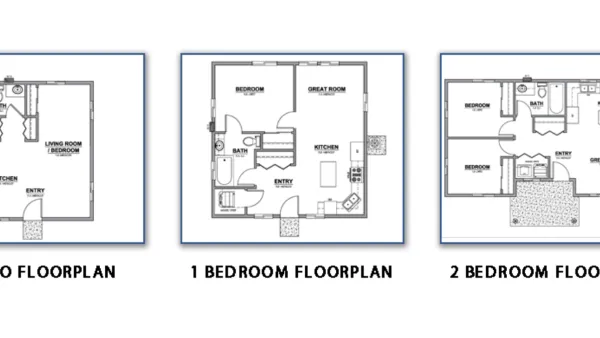
'Permit Ready Plans' for ADUs Published in Stockton, California
Cities looking to provide incentive for the construction of accessory dwelling units are increasingly released "permit ready plans" to help the cause.

Planetizen Federal Action Tracker
A weekly monitor of how Trump’s orders and actions are impacting planners and planning in America.

The state-sanctioned urbicide of Austin
People don’t kill cities. Freeways do.

US to reduce Colorado River water deliveries to Mexico
A new Colorado Treaty amendment reduces Mexico’s Colorado River water allocation by 250,000 acre feet.

Nation's most wind-powered state turns to coal as data centers increase energy demand
For the first time in decades, Iowa has increased its generation of coal power.

NYC cools commuters with city's first rain garden above a bus stop
New York City officials say the plants in the rain garden can absorb 16 gallons of rainwater during heavy storms.

Brightline West’s future may rely on $6 billion federal loan
The company has until Nov. 2 to make a $400 million equity investment into its proposed high-speed rail line.

FREE Course: Walkable City 1: Why Walkability?
After describing his path towards focusing on walkability as the essence of good planning, Jeff Speck marches through his five principal reasons for making more walkable places.
Reinventing Malls: Planning Alchemy—Turning Gray Fields Into Gold
The course focuses on the opportunities and imperatives that shape reinvention of mall sites.

Eagle County Government
Harvard University Graduate School of Design
Nashville Planning Department
The Architects Foundation
University of Cincinnati Online
The Pocatello Development Authority
The Urban Renewal Agency of the City of Pocatello
Journal of the American Planning Association