Pandemic induced lockdown kept Parisians within 1 km of their homes during lockdown, benefiting urban farmers and advocates for a diversified local food supply.



As the coronavirus spread in the month of March, traditional food supply chains in Paris were interrupted by lockdown. "Fearing seeing fruit and vegetables rot in the fields, the government told businesses and consumers to focus on stocking and buying French food products. In Paris, where residents weren’t allowed to go further than 1km from their homes, some local producers thrived," writes Catherine Bennett.
Paris Mayor Anne Hidalgo, a longtime proponent of urban farms and believer in the principle that Parisians should live within a 15-minute walk of any given service, hopes to make locally grown produce more accessible, reports Bennett. "Although the Covid-19 crisis didn’t entirely rupture traditional supply chains, urban agriculture professionals are hoping that the last few months have proved the importance of a diversified local food supply," Bennett says. While urban farmers may not be able to make up for the entire yield of the traditional food supply system, they hope to show that urban farms and gardens have their own place within the city.
Read the full story: In Paris, the pandemic gave a boost to urban farms

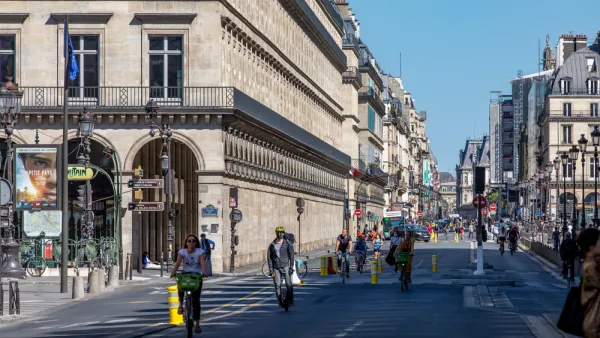
Paris Plans to Become a '100 Percent Cyclable' City
Mayor Anne Hidalgo continues her commitment to making Paris more bikeable with a new plan that will improve bike parking and facilities in the French capital.
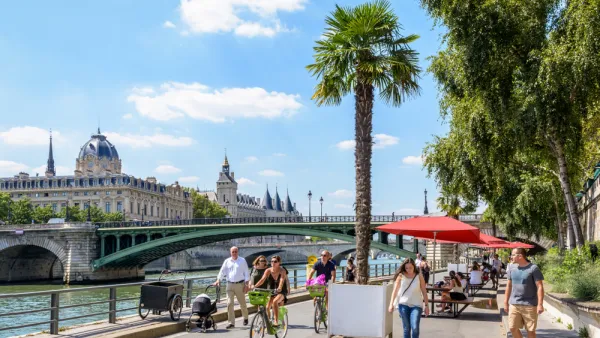
The Car-Free Revolution Continues in Paris
The city continues to reclaim space for pedestrians and cyclists.

From Paris to Portland: The 15-Minute City Goes Mainstream
Raising the bar on the 20-minute neighborhood model, cities around the world are embracing the appeal of the 15-minute city during the coronavirus pandemic.

Planetizen Federal Action Tracker
A weekly monitor of how Trump’s orders and actions are impacting planners and planning in America.

The state-sanctioned urbicide of Austin
People don’t kill cities. Freeways do.

US to reduce Colorado River water deliveries to Mexico
A new Colorado Treaty amendment reduces Mexico’s Colorado River water allocation by 250,000 acre feet.

Nation's most wind-powered state turns to coal as data centers increase energy demand
For the first time in decades, Iowa has increased its generation of coal power.

NYC cools commuters with city's first rain garden above a bus stop
New York City officials say the plants in the rain garden can absorb 16 gallons of rainwater during heavy storms.

Brightline West’s future may rely on $6 billion federal loan
The company has until Nov. 2 to make a $400 million equity investment into its proposed high-speed rail line.

FREE Course: Walkable City 1: Why Walkability?
After describing his path towards focusing on walkability as the essence of good planning, Jeff Speck marches through his five principal reasons for making more walkable places.
Reinventing Malls: Planning Alchemy—Turning Gray Fields Into Gold
The course focuses on the opportunities and imperatives that shape reinvention of mall sites.

Greater Baltimore Committee
Eagle County Government
Harvard University Graduate School of Design
The Architects Foundation
University of Cincinnati Online
The Pocatello Development Authority
The Urban Renewal Agency of the City of Pocatello
Journal of the American Planning Association