The worsening housing crisis shows that we must develop comprehensive tools and programs to keep families housed and their assets preserved.


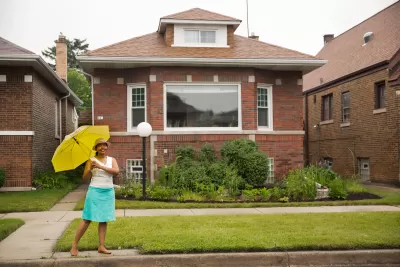
We must confront the connection between homeownership and inequality, and the centuries of systemic racism that have enabled it. The pandemic has put a spotlight on the connection between health and stable housing. The disparate impact of COVID-19 on Black and Latino families, who are more vulnerable to job and income disruptions, will result in waves of evictions and foreclosures. (This report paints a grim picture—it estimates that up to 22 million renters and 15 million homeowners are at risk.) The protests against police violence and discriminatory enforcement have mainstreamed an understanding that unequal treatment under the law has persisted. Much of that unequal treatment has been carried out through our housing policy and practice. Well-known is redlining, the practice in which, starting in the 1930s, the federal Home Owners’ Loan Corporation (HOLC) graded communities so that some were eligible for lower-cost, federally insured mortgages. Borrowers in other communities were excluded. The HOLC described entire communities in my hometown of Stamford, Connecticut, as “now given over to the city’s undesirable element.” In case there was any confusion, the official form included the percentage of residents who were “foreign-born” or “Negro,” and whether these percentages amounted to an “infiltration.” These practices poisoned the housing market, and their impacts remain with us today, in our community planning and in our political discourse.
Traditional redlining is just the best known of our intentional policies that discriminated against families of color; steering, predatory inclusion, exclusionary zoning, and appraisal and insurance redlining, among others, have also played a part. Those policies (and their legacies) aggravated and enforced segregation, tamped down home appreciation, and limited intergenerational transfers of wealth between Black families. Because of these policies, the homeownership gap between Black and white households remains where it was when Lyndon Johnson signed the Fair Housing Act in 1968. Today, 73 percent of white families are homeowners; just 44 percent of Black families own their homes.
Most Americans would reject ...
Read the full story: This Moment Calls for Finally Making Homeownership Access Fair


Debating the Future of Cities After the Coronavirus, Volume 3
The third installment of an ongoing, curated list of a particularly contemporary genre of urbanism punditry.
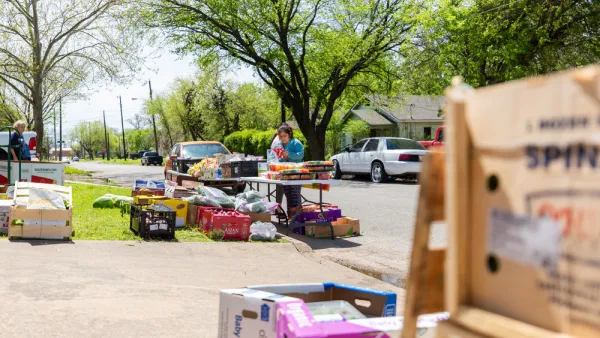
An Antiracist Planning and Policy Response to the Coronavirus
What would a crisis response that finally overcomes the history of slavery and structural racism in the United States look like?

Survey Data on Coronavirus Effects Reveal Racial Lines
The economic and health effects of coronavirus have spread unevenly across racial lines in the United States, as further revealed by new research from the Pew Research Center.

Planetizen Federal Action Tracker
A weekly monitor of how Trump’s orders and actions are impacting planners and planning in America.

The state-sanctioned urbicide of Austin
People don’t kill cities. Freeways do.

US to reduce Colorado River water deliveries to Mexico
A new Colorado Treaty amendment reduces Mexico’s Colorado River water allocation by 250,000 acre feet.

Brightline West’s future may rely on $6 billion federal loan
The company has until Nov. 2 to make a $400 million equity investment into its proposed high-speed rail line.

LA Metro’s ultimatum: no extra buses for LA28 if federal funding isn’t imminently secured
If Metro does not provide additional buses, LA28 organizers will have to find a new way to manage Olympic traffic. LA28’s budget does not include a line item for transit.

Colorado’s Largest Data Center Could Rise Next to Homes — Without a Public Hearing
The proposed campus would consume 11 times the power of Denver International Airport; as it has across the country, opposition mounts.

FREE Course: Walkable City 1: Why Walkability?
After describing his path towards focusing on walkability as the essence of good planning, Jeff Speck marches through his five principal reasons for making more walkable places.
Reinventing Malls: Planning Alchemy—Turning Gray Fields Into Gold
The course focuses on the opportunities and imperatives that shape reinvention of mall sites.

Eagle County Government
Harvard University Graduate School of Design
Nashville Planning Department
The Architects Foundation
University of Cincinnati Online
The Pocatello Development Authority
The Urban Renewal Agency of the City of Pocatello
Journal of the American Planning Association