A study finds that a third of workers would prefer to work remotely every day of the workweek, potentially removing nearly 50 million cars from U.S. roadways.


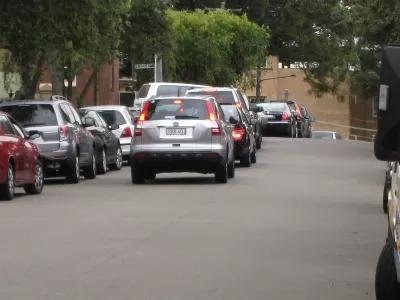
A massive pandemic-driven shift toward remote work environments has changed the attitude of U.S. workers. 75% of workers say they would prefer at least one workday from home per week moving forward, according to a study. Moreover, a third of workers reported a preference for daily remote work, reports Kea Wilson. Wilson describes the implications for the roadways: assuming each of a third of workers stopped commuting via car, allowing remote work for the group would remove "48.1 million cars from American roadways every single workday."
"And if employers give the workers what they want, they won’t just improve staff morale. They’ll be a part of ending not one, but three pandemics: the COVID-19 outbreak, the global climate change catastrophe, and the traffic violence crisis that has plagued our planet since the advent of the car," says Wilson.
Read the full story: A Third of U.S. Workers Want to Ditch Commutes and Work Remotely

Planning for Congestion Relief
The third and final installment of Planetizen's examination of the role of the planning profession in both perpetuating and solving traffic congestion.
Car Commutes and Congestion Are Back in D.C.
Low transit ridership and a more dispersed daytime workforce are creating new headaches for car commuters in the D.C. area—in a story likely to be repeated all over the country as work returns to the office.
San Diego Region Developing Long-Range Transportation Plan
The new plan, set to take effect in 2025, accounts for changes in mobility patterns brought on by remote work.

Planetizen Federal Action Tracker
A weekly monitor of how Trump’s orders and actions are impacting planners and planning in America.

‘Going backwards:’ Baltimore mayor, students rally against state's transit funding plan
Maryland's proposed six-year plan provides no funding for Baltimore’s BMORE bus program and reduces its road maintenance funding.

Detroit to transform waterfront with $2.2 billion investment
Developers will convert about 18 acres of unused parking lot space into civic spaces.

U.S.-Iran war may have ‘devastating’ impact on cost to warm homes
Vermont and Maine residents may see a 76% increase in the cost of warming their homes this winter.

Senate bill would ‘overhaul’ environmental permitting laws
Under the proposed act, government agencies would also not be able to suspend or rescind permits after granting them.

Exemption applications for NYC’s pied-à-terre tax see 55% success rate
The city sent nearly 40% of its initial pied-à-terre tax warnings erroneously.

FREE Course: Walkable City 1: Why Walkability?
After describing his path towards focusing on walkability as the essence of good planning, Jeff Speck marches through his five principal reasons for making more walkable places.
Reinventing Malls: Planning Alchemy—Turning Gray Fields Into Gold
The course focuses on the opportunities and imperatives that shape reinvention of mall sites.

One Hundred Miles
County of Mendocino
planning NEXT
The Architects Foundation
University of Cincinnati Online
Montrose County
Northern Illinois Transit Authority (NITA)
The Pocatello Development Authority