Big cities suffered the worst economic effects if the pandemic as of March, according to April data from the U.S. Bureau of Labor Statistics.



"New data from the U.S. Bureau of Labor Statistics (BLS) offer the first comprehensive evidence of how responses to COVID-19’s spread began to affect metropolitan economies through mid-March," according to an article by Alan Berube.
"On April 3, that report indicated that the U.S. economy shed 701,000 jobs between mid-February and mid-March, and that the unemployment rate increased from 3.5% to 4.4%," according to Berube.
According to Berube, the primary takeaway from the new BLS data is of an unequal distribution of economic effects early in the pandemic. Job losses were concentrated in very large metropolitan areas—both in early hot spots of the disease (e.g., New York and Detroit) and in places under early, strict shot down requirements (e.g., San Francisco, Los Angeles, San Diego).
Earlier reporting on job losses at the local level noted that neighborhoods concentrating certain kinds of jobs (e.g., tourism and transportation) are experiencing the worst economic effects at the local level.
FULL STORY: Which city economies did COVID-19 damage first?

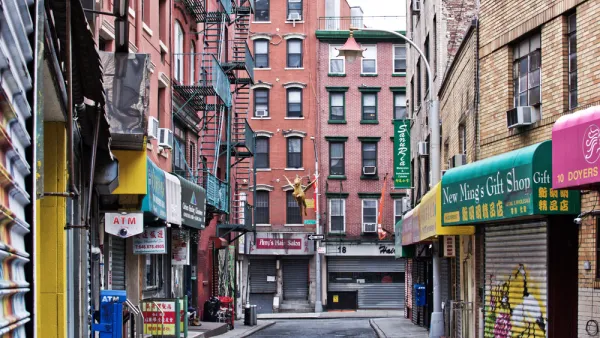
The Geography of Low-Income Job Losses
The historic job losses of the past two months have hit the most vulnerable workers harder than others, so far. The Urban Institute estimated and mapped where more low-income jobs have been lost.
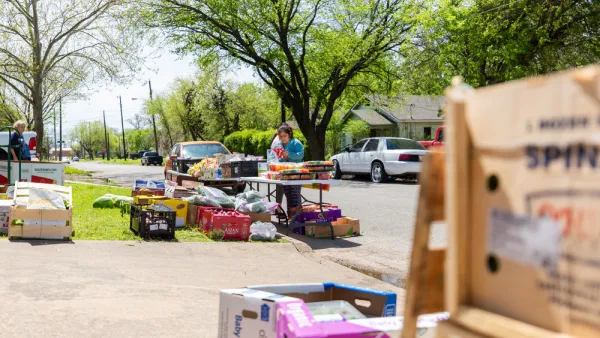
More Support Needed for Organizations Serving the Underserved
A new report details how policymakers and community leaders can improve California's efforts to advance an equitable recovery from COVID by supporting and empowering community-based organizations in underserved communities.
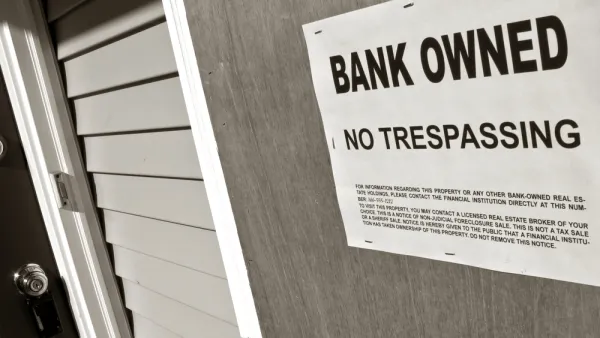
Federal Government Developing More Foreclosure Protections
Millions of American property owners are behind on mortgage payments and facing the prospect of foreclosure and eviction later this year.

Planetizen Federal Action Tracker
A weekly monitor of how Trump’s orders and actions are impacting planners and planning in America.

The state-sanctioned urbicide of Austin
People don’t kill cities. Freeways do.

US to reduce Colorado River water deliveries to Mexico
A new Colorado Treaty amendment reduces Mexico’s Colorado River water allocation by 250,000 acre feet.

5 New England states march closer to 800 megawatt wind energy project
Securing federal approval for the project may be complicated under the Trump administration, which has historically been hostile towards domestic wind power.

Baltimore to break ground on $50 million Transit Priority Project
The project will bring faster bus trips, safer streets and better bike connections to Baltimore.

Airbnb launches $250 million 'last-dollar financing' housing accelerator, makes first investment in Austin
The company will put $6.4 million towards affordable housing development in Texas’ capital.

FREE Course: Walkable City 1: Why Walkability?
After describing his path towards focusing on walkability as the essence of good planning, Jeff Speck marches through his five principal reasons for making more walkable places.
Reinventing Malls: Planning Alchemy—Turning Gray Fields Into Gold
The course focuses on the opportunities and imperatives that shape reinvention of mall sites.

Eagle County Government
Harvard University Graduate School of Design
Nashville Planning Department
The Architects Foundation
University of Cincinnati Online
The Pocatello Development Authority
The Urban Renewal Agency of the City of Pocatello
Journal of the American Planning Association