There is little evidence that the New York Subway is spreading the coronavirus, according to analysis by Alon Levy.


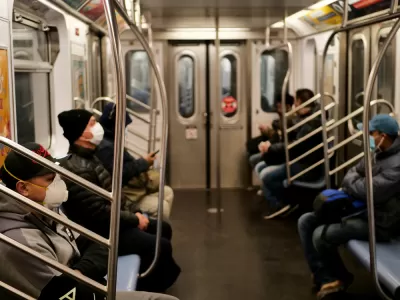
Alon Levy writes a rebuttal to arguments about the role of the New York Subway in spreading the coronavirus, especially a paper by MIT economist Jeffrey Harris, "claiming that the subways did in fact seed the Covid-19 epidemic in New York." According to Levy, however, Harris cites no evidence in building this argument, and so Levy debunks the paper.
After considering the low infection rates in other high-transit cities worldwide, Levy returns the focus to New York City:
So the question is not whether rapid transit systems are inherently unsafe for riders, which they are not. It’s whether New York, with all of its repeated failings killing tens of workers from exposure to the virus, has an unsafe rapid transit system. Nonetheless, the answer appears to be negative: no evidence exists that the subway is leading to higher infection rates, and the paper does not introduce any.
Levy takes on both of two central claims in the paper—one about infection rates in Manhattan relative to other boroughs and the second about high infection rates in neighborhoods adjacent to subway lines. According to Levy, "neither is even remotely correct."
The details of Levy's counterargument are best left to the source article, which is linked below, although other public health and transit experts also spoke out against the findings of Harris's paper, as evident in an article written by Aaron Gordon for Motherboard.
FULL STORY: The Subway is Probably not Why New York is a Disaster Zone

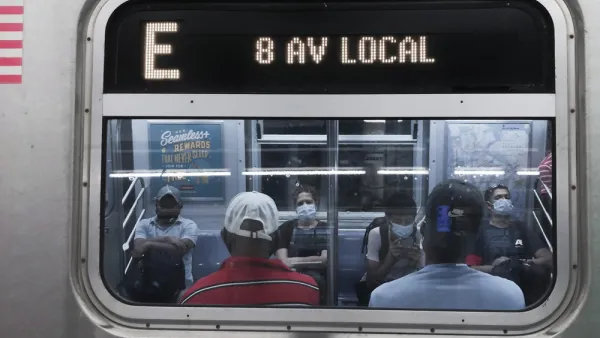
New York Subway Sets Pandemic Ridership Record
With school back in session and Broadway shows open to the public, subway ridership is surging in New York City, but still well below pre-pandemic levels.
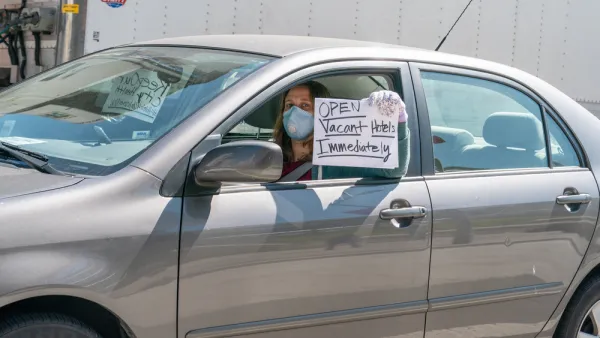
Hotels Could Play a Critical Role in Containing Coronavirus in Crowded Cities
Some cities are leasing entire hotels to provide rooms for people who have tested positive for COVID-19 or been exposed to infected people, to allow for safe and supportive isolation away from family or household members who risk being infected.

Will the Coronavirus Spare Rural America?
Many counties throughout the nation have recorded no deaths from COVID-19. A perception exists that population density is responsible for the massive death toll in New York and New Jersey and that exurban and rural counties may be spared.

The state-sanctioned urbicide of Austin
People don’t kill cities. Freeways do.

US to reduce Colorado River water deliveries to Mexico
A new Colorado Treaty amendment reduces Mexico’s Colorado River water allocation by 250,000 acre feet.

New Jersey’s second-largest city bans standalone data centers
Jersey City will continue to allow co-location facilities, such as those meant for research institutions that store their own data.

Amtrak not solely to blame for New Jersey commuter rail's unreliability, report finds
A new study from the Garden State Initiative found that NJ Transit’s budget grew 20% across a 4 year period, but reliability declined significantly over the same period.

EPA erases limits on planet-warming pollution from power plants
Under Monday’s plan, power plants would still have some limits on how much mercury, arsenic and other contaminants they can emit.

Phoenix announces new on-demand transit service, more frequent RAPID buses
Both new services will launch in October, and are part of Phoenix's Project Effective Access Solutions for Easing Congestion.

FREE Course: Walkable City 1: Why Walkability?
After describing his path towards focusing on walkability as the essence of good planning, Jeff Speck marches through his five principal reasons for making more walkable places.
Reinventing Malls: Planning Alchemy—Turning Gray Fields Into Gold
The course focuses on the opportunities and imperatives that shape reinvention of mall sites.

Eagle County Government
Harvard University Graduate School of Design
Nashville Planning Department
The Architects Foundation
University of Cincinnati Online
The Pocatello Development Authority
The Urban Renewal Agency of the City of Pocatello
Journal of the American Planning Association