Just as the original New Deal was in large part designed to address the dire challenges rural America faced in the 1930s, today's rural community economic development practitioners can learn from the Green New Deal.


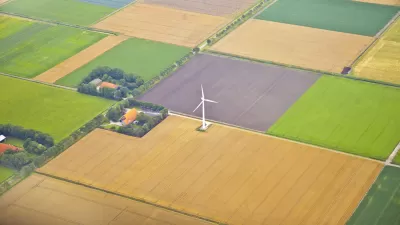
COVID-19 is a combined health and economic crisis poised to further devastate rural communities already suffering severe economic stress. Already, rural health care systems are strained by the outbreak, and workers across the country are facing increasing precarity as the crisis unfolds.
The COVID-19 outbreak exposes an already uneven geography of development. Large swaths of rural America had already been left behind by our last economic recovery: 86 percent of U.S. counties that are in persistent poverty are rural. While the overall population living in distressed zip codes has declined since 2007, it has increased in rural areas. This “ruralization of distress” has taken a tremendous human toll. Rural counties have higher rates of premature death, with one in five getting worse. Rural residents also incur higher healthcare costs, and nonwhite rural residents face even greater health disparities.
As we move into our new reality with the COVID-19 pandemic and its rippling economic effects, these disparities are on track to become even more stark. Clearly, we need new approaches to economic development to reverse these longstanding trends.
Fortunately, there is already a wide body of literature to draw from on rural revitalization.
Read the full story: We Need a Rural New Deal

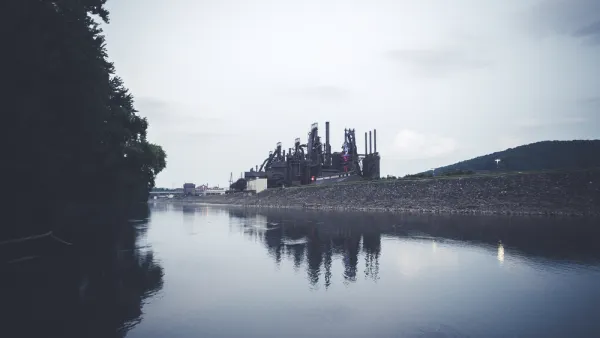
The 'Marshall Plan for Middle America' Plans $600 Million in Clean Energy Investments
A coalition of leaders in the Appalachian region recently released the "Marshall Plan for Middle America" to create jobs and transition the states of Pennsylvania, West Virginia, Ohio, and Kentucky away from fossil fuels.
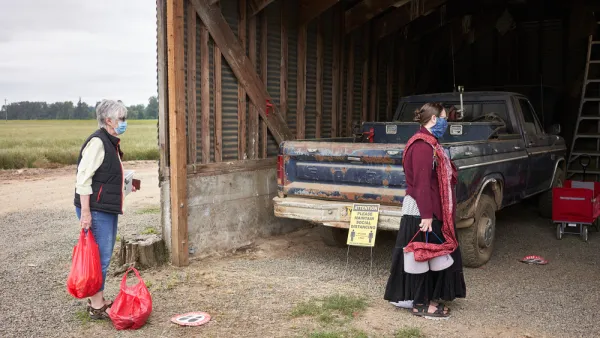
The Impact of COVID-19 on Rural Areas
As the coronavirus outbreak surges across the country, many rural communities are now seeing an unprecedented spike in infections and hospitalizations.
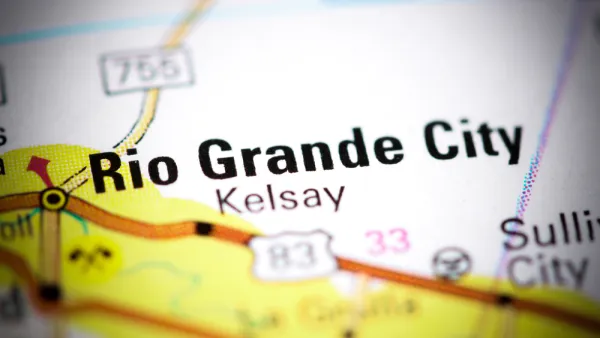
Beleaguered Texas Hospital to Ration Treatment of COVID Patients
A second county in the Rio Grande Valley has issued an unenforceable stay-at-home order to reduce transmission of the coronavirus. Its one overwhelmed hospital will implement a triage system to determine which patients to treat and whom to reject.

Planetizen Federal Action Tracker
A weekly monitor of how Trump’s orders and actions are impacting planners and planning in America.

Amtrak, CN end decades-long dispute with eight-year agreement
The new operating agreement establishes an updated framework for the companies to work together, including processes to resolve disputes.

Judges permit Denver to divert 77,000 acre feet from the Colorado River for reservoir expansion
Overuse and climate change have caused the Colorado River’s water levels to plummet.

NYC DOT wants faster, more permanent street upgrades
The city is examining ways to build more concrete infrastructure without getting entangled in 'decades-long' projects.

'Something we’ve never seen before:' rising utility rates could strain city finances nationwide
Data centers, climate change and other factors have caused utility rates in the United States to increase by 38% since 2020.

Trump to overrule local leaders, lease millions of acres of America’s Pacific Island territories’ seafloors to mining companies
International law says that the Indigenous people of America’s territories have a right to prior and informed consent regarding projects that impact their countries.

FREE Course: Walkable City 1: Why Walkability?
After describing his path towards focusing on walkability as the essence of good planning, Jeff Speck marches through his five principal reasons for making more walkable places.
Reinventing Malls: Planning Alchemy—Turning Gray Fields Into Gold
The course focuses on the opportunities and imperatives that shape reinvention of mall sites.

Harvard University Graduate School of Design
KFH Group Inc.
Greater Baltimore Committee
The Architects Foundation
University of Cincinnati Online
The Pocatello Development Authority
The Urban Renewal Agency of the City of Pocatello