It’s not "luxury" factors that make housing in Washington, D.C., extremely expensive.


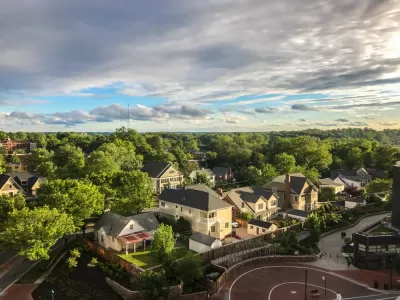
"High housing costs [in the Washington, D.C., area] have surprisingly little to do with marble countertops and things that go inside buildings. They have much more to do with what’s outside the building: land," reports Ally Schweitzer.
Land in the area averages $1.2 million an acre, and this is the main factor driving up housing costs in the region. And zoning is largely behind the housing shortage that has made land so valuable. "In the D.C. region, vast swaths of residential areas are zoned exclusively for single-family homes, the most space-intensive and costly form of housing," notes Schweitzer.
Construction costs have also increased and added to the rising housing costs. But people are willing to pay these prices, making affordable housing even more important for the region. "Affluent singles and couples drive a lot of housing demand in the region, especially in D.C., and they compete for homes that could otherwise go to lower-income families," says Schweitzer.
Read the full story: ‘Luxury’ Amenities Aren’t Why Housing Is So Expensive In The D.C. Area

Only Two US Metro Areas Are Affordable for Homebuyers
Northeast Ohio is the last remaining bastion of housing affordability, according to an analysis from the National Association of Realtors.
How New York Suburbs Are Tackling the Housing Crisis
Some small cities are proposing zoning code reforms and new taxes to address the growing housing shortage in the greater New York area.
Analysis: DC needs tens of thousands of new homes — not just 'zoned capacity'
Estimates for Washington DC's housing needs range from 15,000 to 170,000.

Planetizen Federal Action Tracker
A weekly monitor of how Trump’s orders and actions are impacting planners and planning in America.

California plans to bury El Niño’s downpour
If the state plays its cards right, it may be able to store a billion acre-feet of El Niño’s water in aquifers.

Desperate measures: Advocates weigh draining Lake Powell to fill Colorado River
Draining the reservoir could reduce evaporation losses by a couple hundred thousand acre-feet.

40 years after approval, Chicago breaks ground on new park
The park honors Jean Baptiste Point du Sable, the city’s first permanent non-native settler.

‘Hoodwinked:’ New Mexico bill aimed at microgrids paves way for data center development
In an interview with High Country News, Padilla said the legislation “ignited” New Mexico's economy.

California’s ‘unrecognizable’ water plan may go down the drain
After four years of regulatory processes, water agencies say the plan to overhaul how cities and farms take water from the Sacramento-San Joaquin Delta has changed dramatically.

FREE Course: Walkable City 1: Why Walkability?
After describing his path towards focusing on walkability as the essence of good planning, Jeff Speck marches through his five principal reasons for making more walkable places.
Reinventing Malls: Planning Alchemy—Turning Gray Fields Into Gold
The course focuses on the opportunities and imperatives that shape reinvention of mall sites.

City of Rosemead
Rutgers University, Edward J. Bloustein School of Planning and Public Policy
One Hundred Miles
Hunter College, City University of New York (CUNY)
The Architects Foundation
University of Cincinnati Online
City of Cambridge
Montrose County
The Pocatello Development Authority