Case studies in dealing with population loss from Ohio, Maryland, and Massachusetts.


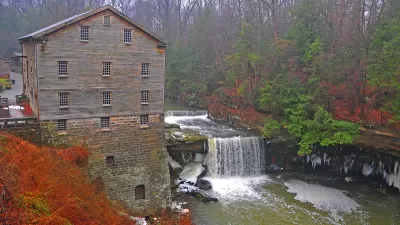
Matt Krupnick writes about the latest examples of cities shrinking in population but embracing the change to "right size" their built environment to the new reality:
A community never wants to be known as a “shrinking city” these days, no matter what the numbers say about how many people have moved away and how many old factories or homes are vacant, weeds and trash having taken over properties that once marked important industrial centers.
Although most US cities in that predicament have gone to great lengths to avoid admitting shrinkage publicly, with many branding themselves as “legacy cities”, some have taken innovative steps to accept the new reality: that they will never return to their former glory and need to adapt to their smaller size.
There are at least 80 cities losing population in the United States, according to Krupnick, and the article surveys Baltimore, Maryland; New Bedford, Massachusetts; and Youngstown, Ohio for case studies on right sizing.
Read the full story: How America's shrinking cities can 'rightsize'

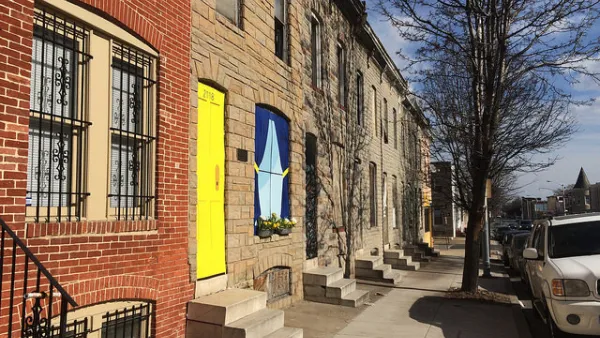
'Supporting Shrinkage': Lessons for U.S. Cities
An excerpt from "Supporting Shrinkage: Better Planning and Decision-Making for Legacy Cities," written by Michael P. Johnson, Justin B. Hollander, Eliza W. Kinsey, and George R. Chichirau and published by SUNY Press.

The Midwest Paces the Nation in Population Loss
Two cities in Illinois are examined as case studies of population decline in the post-industrial economy.

How Some Cities Are Losing People and Staying Prosperous
Population loss doesn't always equate to economic decline. Richard Florida discusses a study examining American metros that are retaining their economic vitality as they shrink.

Planetizen Federal Action Tracker
A weekly monitor of how Trump’s orders and actions are impacting planners and planning in America.

Chicago breaks ground on $3 billion megadevelopment
The new neighborhood, titled Foundry Park, will one day host 3,700 residences.

This MA town is drowning in its own sewage — and residents like it that way
Susan Murcott, a waste water expert, said if Carlisle didn't address their leaking sewage, the problem could turn “deadly.”

Feds to more closely scrutinize proposed Amtrak facility’s environmental impact
The Federal Railroad Administration had initially said the facility qualified for a less extensive environmental review.

Boston is hard to build housing in: its chief of planning wants to keep it that way
Chief of Planning Kairos Shen said she would not make changes to Boston’s affordability requirements for new housing, which critics say have slowed down development.

California plans to bury El Niño’s downpour
If the state plays its cards right, it may be able to store a billion acre-feet of El Niño’s water in aquifers.

FREE Course: Walkable City 1: Why Walkability?
After describing his path towards focusing on walkability as the essence of good planning, Jeff Speck marches through his five principal reasons for making more walkable places.
Reinventing Malls: Planning Alchemy—Turning Gray Fields Into Gold
The course focuses on the opportunities and imperatives that shape reinvention of mall sites.

City of Rosemead
Rutgers University, Edward J. Bloustein School of Planning and Public Policy
One Hundred Miles
Hunter College, City University of New York (CUNY)
The Architects Foundation
University of Cincinnati Online
Montrose County
The Pocatello Development Authority
The Urban Renewal Agency of the City of Pocatello