Real estate and investment experts see more and more urban parking lots as attractive locations for redevelopment—usually for multi-family residential buildings.


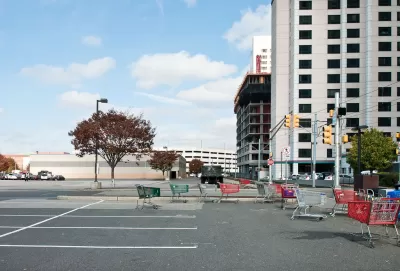
"As local authorities across the world try to curb car numbers in city centers, parking lots are becoming less important in certain areas, while sitting on valuable — and scarce — land. As a result, they have been selling quickly, especially in urban areas," according to an article published by The Investor.
The article cites the expertise of Brandon Roth, senior director of JLL (Jones Lang La Salle) in San Francisco, who sees parking lots converting to multi-family residential as one way for cities to mitigate ongoing housing shortages. In some case, according to Roth, developers don't have many options for redevelopment in urban centers other than parking lots.
The data support Roth's thesis: "Sales of parking lots have risen significantly in the U.S. over the past five years, surpassing 200 transactions in 2016. That’s more than double the amount in 2006 through 2014, when fewer than 100 surface lots a year were sold." Examples of developments rising from former parking lots can be found in Brookly, Boston, and the U.K. Policies in London, Madrid, and New York City are cited as examples of cities trying to move away from auto-dependency, potentially making more room for parking lot redevelopment in the future.
Read the full story: Why multifamily developers are looking to parking lots
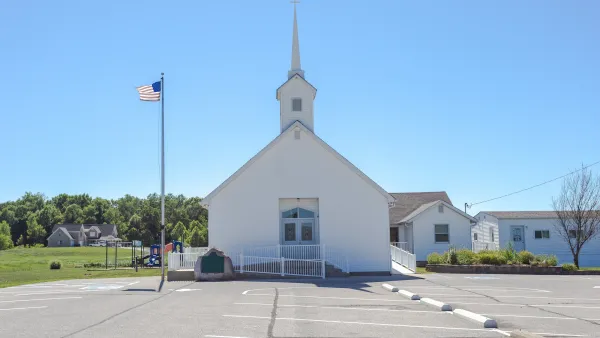
Three Ways to Activate Church Parking Lots Seven Days a Week
Churches need parking, but most of their lots are wasted space six days a week.
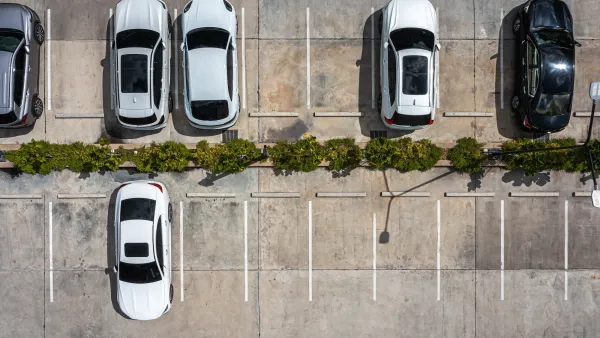
Who Wants to Play SimParkingLot?
The original urban planning game wanted to model real life cities. One grim reality of American urbanism held it back.
Opinion: Cities Must Take Action on Blighted Downtown Parking Lots
Surface parking lots take up as much as a third of downtown land in some cities, dragging down tax revenue and redevelopment prospects.

Planetizen Federal Action Tracker
A weekly monitor of how Trump’s orders and actions are impacting planners and planning in America.

California plans to bury El Niño’s downpour
If the state plays its cards right, it may be able to store a billion acre-feet of El Niño’s water in aquifers.

Desperate measures: Advocates weigh draining Lake Powell to fill Colorado River
Draining the reservoir could reduce evaporation losses by a couple hundred thousand acre-feet.

Mamdani’s pied-à-terre tax survives legal challenge
A panel of judges found that the plaintiffs failed to demonstrate injury as a result of New York City's implementation of the tax.

Eastern Nebraska is running out of electricity
Data centers and electrification are straining eastern Nebraska’s grid, throttling economic development.

Seattle passes record-breaking transit services expansion
Proposition 1 will double the city’s transit tax to add 95,000 more bus trips and preserve 180,000 bus trips annually.

FREE Course: Walkable City 1: Why Walkability?
After describing his path towards focusing on walkability as the essence of good planning, Jeff Speck marches through his five principal reasons for making more walkable places.
Reinventing Malls: Planning Alchemy—Turning Gray Fields Into Gold
The course focuses on the opportunities and imperatives that shape reinvention of mall sites.

City of Rosemead
Rutgers University, Edward J. Bloustein School of Planning and Public Policy
One Hundred Miles
University of Michigan School for Environment and Sustainability (SEAS)
Hunter College, City University of New York (CUNY)
The Architects Foundation
City of Cambridge
Montrose County
The Pocatello Development Authority