The Trump administration last week published its latest attempt to undermine a fair housing rule adopted during the Obama administration.


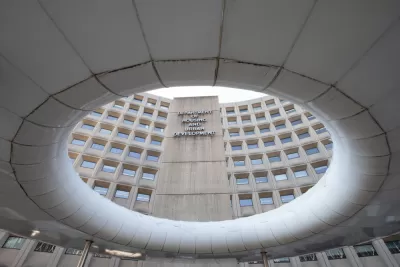
The U.S. Department of Housing and Urban Development (HUD) recently published a proposed rule change that would weaken the Affirmatively Furthering Fair Housing adopted by HUD during the Obama administration in 2015.
Patrick Sisson reports the news of the long-promised rule changes publication, describing the purpose of the Affirmatively Furthering Fair Housing rule as a landmark effort to strengthen the ability of the Fair Housing Act of 1968 to prevent desegregation and discrimination in the housing market:
Obama’s measure required recipients of Community Development Block Grant money, a funding source used by over 1,300 municipalities across the nation, to engage in a formal review process to make sure new developments weren’t contributing to segregation, and then create their own fair housing goals. But it was never fully implemented before being blocked by the Trump administration, which is now aiming to issue its own rules.
Sisson's article includes numerous housing advocates expressing concern about the potential consequences of the Trump administration's proposal, if adopted.
Given the broadly sweeping implications of the proposed rule change, numerous media outlets have covered the news, like Katy O'Donnell providing news coverage for Politico and Lola Fadulu providing news coverage for the New York Times.
Fadulu's explains the rationale for the Trump administration's rule change thusly:
The Trump administration plans to propose a rule next week that will pull back those guidelines, arguing that they are onerous and actually holding back the construction of affordable housing. “Fair housing choice,” the new proposal says, is ensuring that people have the opportunity and option to live “where they choose” as long as there is no “unlawful discrimination.”
O'Donnell describes the rationale with the following:
The regulation as it stands is “too prescriptive in outcomes for jurisdictions,” HUD will say in the new rule, according to a copy of the proposal obtained by POLITICO.
“Since the issuance of the 2015 final rule, HUD has determined that the current regulations are overly burdensome to both HUD and grantees and are ineffective in helping program participants meet their reporting obligations,” the proposal states.
The revised rule would “alleviate the unintended consequences of discouraging the use of federal assistance in communities that need additional help instead of restrictions,” according to the proposal.
Both The Hill and The Washington Post both published opinion pieces opposing the rule changed proposed by the Trump Administration.
For more historical background on Affirmatively Furthering Fair Housing and the Trump administration's efforts to undermine the rule, see Planetizen's tag on the subject. Also note the importance of disparate impact, the legal doctrine upheld by the Supreme Court in 2015 that provides the foundation for Affirmatively Furthering Fair Housing. A previous rule change proposed by the Trump administration, published in August 2019, attempted to weaken disparate impact.
Read the full story: New Trump rule could repeal Obama effort to promote housing desegregation


Outrage Over Trump's Fair Housing Victory Lap
President Trump took to Twitter today to celebrate his administration's decision to rescind the Affirmatively Furthering Fair Housing rule, approved by the Obama administration to strengthen the Fair Housing Act of 1968.
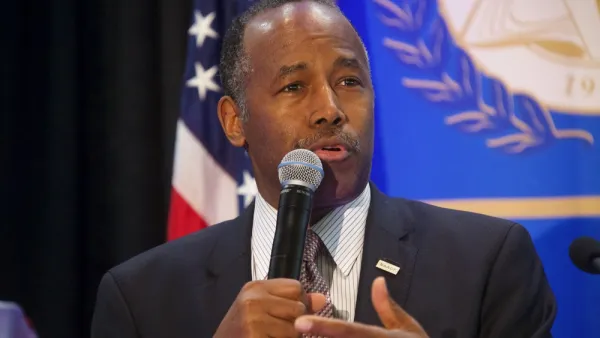
Trump Administration Launches Long-Promised Challenge to Fair Housing Law
A new rule proposed by the U.S. Department of Housing and Urban Development raises the burden of proof in cases of disparate impact, and provides additional defenses for defendants.
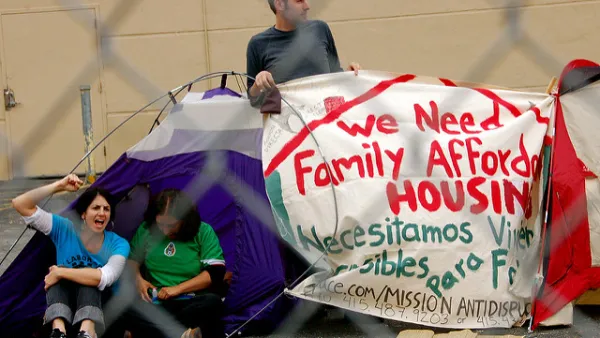
Lessons in Affirmatively Furthering Fair Housing
With HUD seeking comments on a revamped version of the Affirmatively Furthering fair Housing Rule, now is a good time to seek lessons from the one state to attempt to implement the federal rule at the state level.

Planetizen Federal Action Tracker
A weekly monitor of how Trump’s orders and actions are impacting planners and planning in America.

California plans to bury El Niño’s downpour
If the state plays its cards right, it may be able to store a billion acre-feet of El Niño’s water in aquifers.

Chicago breaks ground on $3 billion megadevelopment
The new neighborhood, titled Foundry Park, will one day host 3,700 residences.

California High-Speed Rail Authority CEO resigns after $600,000 scandal
Under Ian Choudri, the authority used taxpayer dollars to fund first class flights and trips to nightclubs.

Want to study the Missouri River? Soon, you may need unanimous approval from 10 states
Legislation would require 10 governors’ permission to study or build projects moving water outside the basin.

Desperate measures: Advocates weigh draining Lake Powell to fill Colorado River
Draining the reservoir could reduce evaporation losses by a couple hundred thousand acre-feet.

FREE Course: Walkable City 1: Why Walkability?
After describing his path towards focusing on walkability as the essence of good planning, Jeff Speck marches through his five principal reasons for making more walkable places.
Reinventing Malls: Planning Alchemy—Turning Gray Fields Into Gold
The course focuses on the opportunities and imperatives that shape reinvention of mall sites.

City of Rosemead
Rutgers University, Edward J. Bloustein School of Planning and Public Policy
One Hundred Miles
Hunter College, City University of New York (CUNY)
The Architects Foundation
University of Cincinnati Online
City of Cambridge
Montrose County
The Pocatello Development Authority