Last night's Democratic candidate debate was held in the nation's second largest city, but like previous debates, it left urban issues largely unaddressed.



Alan Greenblat writes about the fundamental lack of urban representation in presidential campaigns:
With less than two months remaining before the Iowa presidential caucuses, a number of Democrats have been complaining that the early voting states of Iowa and New Hampshire are too white to be representative of the country as a whole.
They could just as easily complain that the states are too rural to reflect either the country or the party's own geographic base.
The largest city in either of the two states is Des Moines. At 215,000 residents, it doesn't make the top 100 most populous cities in the country, notes Greenblat.
There are several ongoing efforts to fill the urban gap during the presidential primary—the National League of Cities "established a 2020 presidential election task force, and last month it released its list of top local issues it wants candidates to address," and the U.S. Conference of Mayors "co-sponsored a presidential forum in Waterloo, Iowa, with mayors interviewing five of the Democratic contenders about local issues"—but there's still a lack of attention paid to cities, according to Greenblat.
What's more, according to Greenblat, an anti-urban partisanship plays out in state legislatures too. Numerous mayors and former mayors, including one running for president, are cited in the article trying to coalesce an urban agenda for presidential campaign politics.
FULL STORY: Why Presidential Candidates Don’t Address Urban Issues

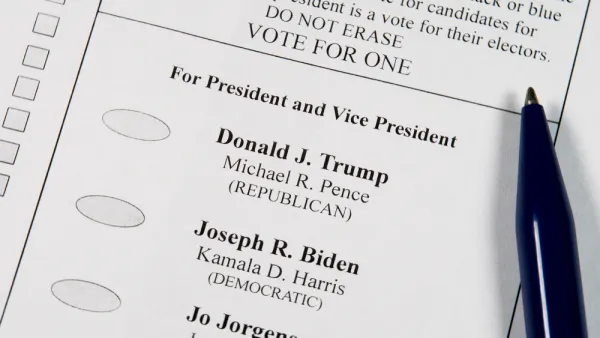
Potential Presidential Election Outcomes for U.S. Transportation Policy
Experts opine on the consequences of the presidential election for U.S. transportation policy.
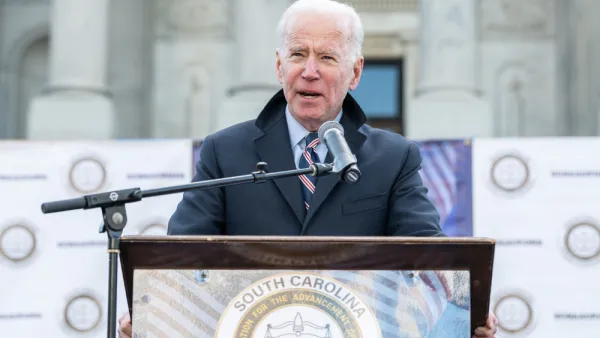
What Could a Joe Biden Presidency Accomplish on Affordable Housing?
Democratic presidential candidates made the housing crisis part of their platforms. What might a President Biden do to ease the shortage?
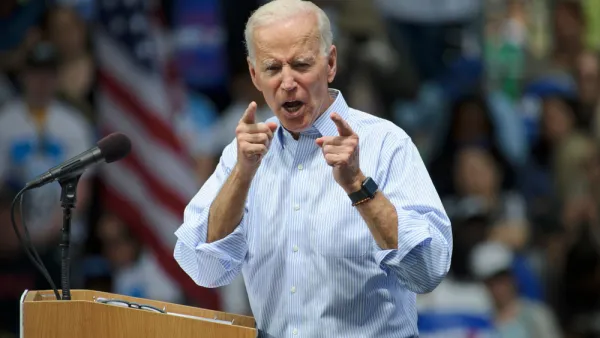
Comparing the Housing Agendas of the Remaining Democratic Frontrunners for President
A deep dive into the statements on official housing policies of Joe Biden and Bernie Sanders in an era of intense housing anxieties.

Planetizen Federal Action Tracker
A weekly monitor of how Trump’s orders and actions are impacting planners and planning in America.

The state-sanctioned urbicide of Austin
People don’t kill cities. Freeways do.

US to reduce Colorado River water deliveries to Mexico
A new Colorado Treaty amendment reduces Mexico’s Colorado River water allocation by 250,000 acre feet.

5 New England states march closer to 800 megawatt wind energy project
Securing federal approval for the project may be complicated under the Trump administration, which has historically been hostile towards domestic wind power.

Baltimore to break ground on $50 million Transit Priority Project
The project will bring faster bus trips, safer streets and better bike connections to Baltimore.

Airbnb launches $250 million 'last-dollar financing' housing accelerator, makes first investment in Austin
The company will put $6.4 million towards affordable housing development in Texas’ capital.

FREE Course: Walkable City 1: Why Walkability?
After describing his path towards focusing on walkability as the essence of good planning, Jeff Speck marches through his five principal reasons for making more walkable places.
Reinventing Malls: Planning Alchemy—Turning Gray Fields Into Gold
The course focuses on the opportunities and imperatives that shape reinvention of mall sites.

Eagle County Government
Harvard University Graduate School of Design
Nashville Planning Department
The Architects Foundation
University of Cincinnati Online
The Pocatello Development Authority
The Urban Renewal Agency of the City of Pocatello
Journal of the American Planning Association