A proposal for a regional entity to oversee homeless services in King County is running into jurisdictional conflicts.


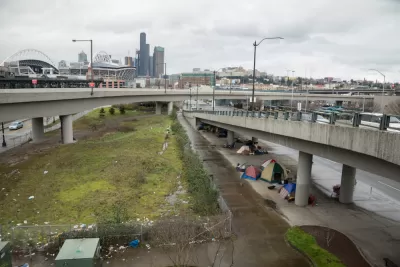
Doug Trumm reports that the King County Council in Washington approved a proposal for a regional authority to coordinate homeless services, but changes to the plan could drive a wedge between Seattle and the surrounding suburbs.
"Under the plan, suburban cities would contribute nothing in the way of funding. However, thanks to a voting majority on the governing body, they would have power to control decisions, such as insisting on a high-barrier service model that doesn’t have a good track record exiting people out of homelessness," says Trumm.
Funding also remains an issue, with King County spending about $200 million a year, half of projected needs. "If the suburban members try to spend Seattle’s money against the wishes of the Seattle City Council, this could be one of the shortest lived regional authorities in history. It’s a strange way to begin. A money imbalance paired with a power imbalance in the opposite direction puts the authority on the diciest of footings," notes Trumm.
FULL STORY: Dream of Regional Homelessness Authority Crashing Into Reality of Tight-Fisted Suburbs


Tax on High Earners Proposed to Fund Homeless Services in Seattle's King County
The Washington State Legislature is proposing a type of tax that the city of Seattle tried, and failed, to implement a few years go.

Amid Opposition, S.F. Homeless Navigation Center Completed
A new facility providing shelter and services to San Francisco’s homeless will open this month, even after a year of community pushback.
When the Federal Government Ties Homeless Funding to Unemployment Rates
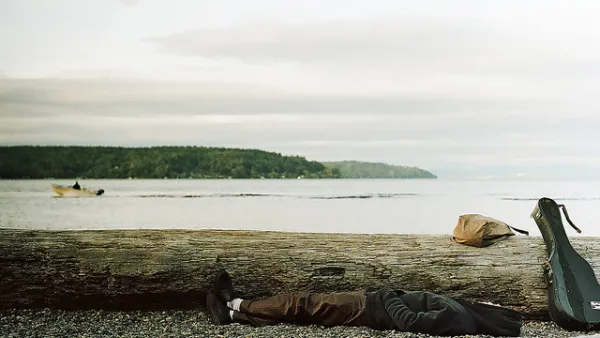
A strong economy can lead to a lack of affordable housing and a lack of affordable housing can lead to higher rates of homelessness. But a stronger economy can also disqualify regions from federal support for homelessness.

The state-sanctioned urbicide of Austin
People don’t kill cities. Freeways do.

US to reduce Colorado River water deliveries to Mexico
A new Colorado Treaty amendment reduces Mexico’s Colorado River water allocation by 250,000 acre feet.

New Jersey’s second-largest city bans standalone data centers
Jersey City will continue to allow co-location facilities, such as those meant for research institutions that store their own data.

Amtrak not solely to blame for New Jersey commuter rail's unreliability, report finds
A new study from the Garden State Initiative found that NJ Transit’s budget grew 20% across a 4 year period, but reliability declined significantly over the same period.

EPA erases limits on planet-warming pollution from power plants
Under Monday’s plan, power plants would still have some limits on how much mercury, arsenic and other contaminants they can emit.

Phoenix announces new on-demand transit service, more frequent RAPID buses
Both new services will launch in October, and are part of Phoenix's Project Effective Access Solutions for Easing Congestion.

FREE Course: Walkable City 1: Why Walkability?
After describing his path towards focusing on walkability as the essence of good planning, Jeff Speck marches through his five principal reasons for making more walkable places.
Reinventing Malls: Planning Alchemy—Turning Gray Fields Into Gold
The course focuses on the opportunities and imperatives that shape reinvention of mall sites.

Eagle County Government
Harvard University Graduate School of Design
Nashville Planning Department
The Architects Foundation
University of Cincinnati Online
The Pocatello Development Authority
The Urban Renewal Agency of the City of Pocatello
Journal of the American Planning Association