After decades of "just-good-enough when it comes to design," now may be the time for Toronto to take steps to upgrade its aesthetics.


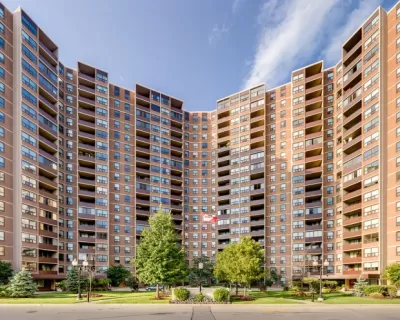
"Why must we put up with a city that is, let's face it, pretty darn ugly?" asks The Toronto Star's Editorial Board. "Especially at this time of year, when the darkness closes in and we collectively brace for the frozen months ahead. Why can't there be more beauty, more colour, more delight to get us through?"
Even though the city is "many years into the biggest building boom in its history," it's not too late to start paying more attention to design, the editorial goes on.
Beginning in the 1960s and 70s, "the city was despoiled by scores of concrete towers that stand as a visual middle finger to the ordinary mortals condemned to dwell among them. Only consciously contrarian architecture critics, with their disdain for such mundane concerns as beauty and harmony, continue to defend these monstrosities."
The editorial praises a recent call from Toronto's city council for ideas on how to beautify the city. "What are city planners for if not to plan a city that is not merely functional, but harmonious, beautiful, uplifting and yes, even surprising and delightful at times?"
FULL STORY: Torontonians deserve a more beautiful city


Expanding the Concept of Transit-Oriented Development: Lessons from Abroad
Keeping transit planning and development siloed can limit opportunities to build affordable housing and vibrant neighborhoods.
A New Model for Community-Led Neighborhood Revitalization
A case study in community-led neighborhood revitalization.
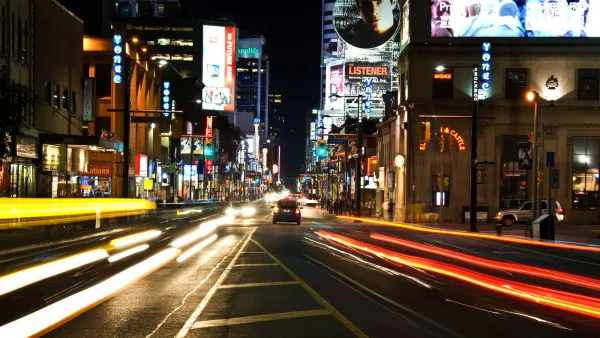
A Pedestrian-Forward Vision for Toronto Roadway
Toronto’s iconic Yonge Street is heavily used by pedestrians, and, according to this article, it's time for a revamp that acknowledges all of the street's users.

Planetizen Federal Action Tracker
A weekly monitor of how Trump’s orders and actions are impacting planners and planning in America.

The state-sanctioned urbicide of Austin
People don’t kill cities. Freeways do.

US to reduce Colorado River water deliveries to Mexico
A new Colorado Treaty amendment reduces Mexico’s Colorado River water allocation by 250,000 acre feet.

5 New England states march closer to 800 megawatt wind energy project
Securing federal approval for the project may be complicated under the Trump administration, which has historically been hostile towards domestic wind power.

Baltimore to break ground on $50 million Transit Priority Project
The project will bring faster bus trips, safer streets and better bike connections to Baltimore.

Airbnb launches $250 million 'last-dollar financing' housing accelerator, makes first investment in Austin
The company will put $6.4 million towards affordable housing development in Texas’ capital.

FREE Course: Walkable City 1: Why Walkability?
After describing his path towards focusing on walkability as the essence of good planning, Jeff Speck marches through his five principal reasons for making more walkable places.
Reinventing Malls: Planning Alchemy—Turning Gray Fields Into Gold
The course focuses on the opportunities and imperatives that shape reinvention of mall sites.

Eagle County Government
Harvard University Graduate School of Design
Nashville Planning Department
The Architects Foundation
University of Cincinnati Online
The Pocatello Development Authority
The Urban Renewal Agency of the City of Pocatello
Journal of the American Planning Association