The city of Toronto needed regulatory permission from the province of Ontario to begin enforcing speed limits with the use of automated camera technology. Photo radar in Ontario is legal as of today.


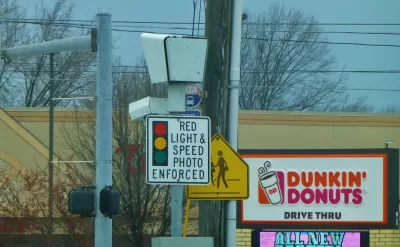
"Photo radar should soon be catching speeding drivers across Toronto — a notable and long-awaited development in the fight against traffic carnage that has claimed the lives of 37 pedestrians so far this year," reports David Rider.
The Ontario Transportation Ministry enabled the use of photo technology for speed enforcement under regulations approved under Safer School Zones Act, which take effect on Sunday, December 1.
"Detailed regulations with rules for use of the “enhanced tools” had not yet been released by late Friday afternoon but the ministry made it clear the decision on whether to employ photo radar will be up to each municipality," according to Rider. "It’s unclear if there are any restrictions about how cities can use the technology."
According to Rider, the news about the new local powers is welcome in Toronto, which has been waiting for the province to clear the way for years. The city already has a plan to operate 50 enforcement cameras.
Read the full story: After long wait, Ontario is set to allow photo radar on Toronto streets

Big Cities Make Pedestrian Safety a Priority
New data released Dec. 19 by NHTSA shows increased safety for those traveling by car, but pedestrian fatalities are 15% higher than in 2009. Plans by San Francisco, Los Angeles, New York, and Chicago to increase ped safety are described by the WSJ.
Data Shows Chicago Speed Cameras Reduce Speeding, Crashes
Countering claims made by the Chicago Tribune that automated enforcement doesn’t improve safety, Streetsblog Chicago lays out the data showing how traffic safety fared in camera zones.
DC’s Traffic Cameras Are Working, but Not a Panacea
Automated enforcement is reducing speeding, but bigger changes to street design and the built environment are needed to make the District’s streets safer and more pleasant for people walking.

Planetizen Federal Action Tracker
A weekly monitor of how Trump’s orders and actions are impacting planners and planning in America.

California plans to bury El Niño’s downpour
If the state plays its cards right, it may be able to store a billion acre-feet of El Niño’s water in aquifers.

Desperate measures: Advocates weigh draining Lake Powell to fill Colorado River
Draining the reservoir could reduce evaporation losses by a couple hundred thousand acre-feet.

Chicago voters approve permanent festival grounds, penalty for vacant property owners
Currently, major summer and fall festivals take over public parks for weeks at a time, drawing criticism from nearby residents

NYC votes to cut outdoor dining red tape, speed up permitting
New York City also voted to allow the Department of Transportation to begin work on urgent projects before notifying elected officials.

California appears to reject Prop. 45
The proposition would have expanded the projects that qualify for a streamlined environmental review, effectively paring down the California Environmental Quality Act.

FREE Course: Walkable City 1: Why Walkability?
After describing his path towards focusing on walkability as the essence of good planning, Jeff Speck marches through his five principal reasons for making more walkable places.
Reinventing Malls: Planning Alchemy—Turning Gray Fields Into Gold
The course focuses on the opportunities and imperatives that shape reinvention of mall sites.

City of Rosemead
Rutgers University, Edward J. Bloustein School of Planning and Public Policy
One Hundred Miles
Hunter College, City University of New York (CUNY)
The Architects Foundation
University of Cincinnati Online
City of Cambridge
Montrose County
The Pocatello Development Authority