2019 was the first year in which New York City's Department of Transportation kept affected bike lanes open during the UN's General Assembly. That should be a sign of things to come, advocates argue.


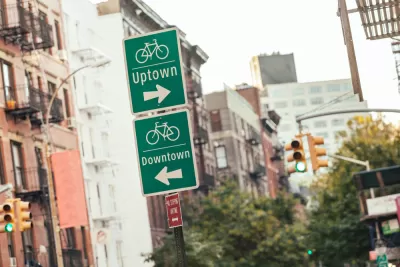
"Every year — until this one — the city shuttered Manhattan's First and Second Avenue protected bike lanes 'in the 40s' during [the] United Nations General Assembly in September," write Laura Shepard and Jon Orcutt of Bike New York. "This year, however, the city maintained bike access on both avenues — by far the most important and heavily used East Side bicycle routes."
"The significance of the change goes well beyond two avenues during a week in September. It's a sign that city government is moving away from its practice of establishing bike lanes and then ignoring them," they continue.
They argue the city should double down on that policy. For example, DOT should consider bike network operation and maintenance a priority on par with street maintenance. And it should deploy a dedicated team to enforce bike access around construction sites.
Finally, DOT needs to provide more notice to cyclists when routes close or conditions change, again on par with what it provides to drivers. "DOT issues dozens of street closure and detour notices for motorists every week; the agency must start thinking about other street users as part of this routine."
Read the full story: Op-Ed: DOT’s Growing Commitment to the Bike Network

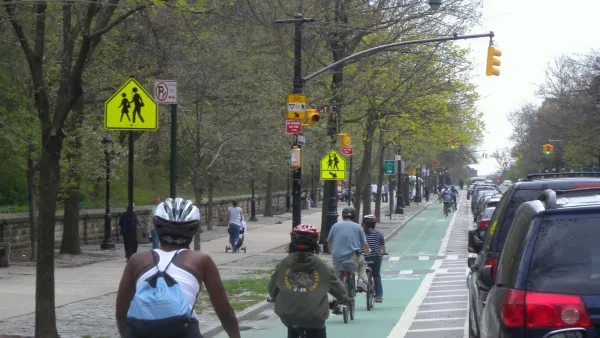
Protected Bike Lanes: How New York City Made It Happen
While resistance to protected bike lanes can be high, the economic and safety paybacks are substantial.
Bike Advocates Form 'Human Bollards' to Protest Lack of Protected Lanes
Protestors are placing their bodies between bike paths and car traffic to make a point about transportation planning.
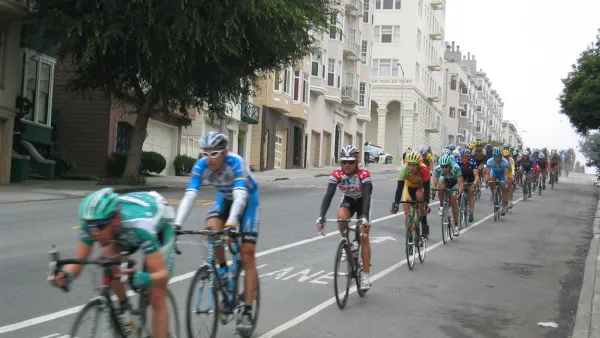
On Bike Infrastructure, Cities Can Do Better
Urban bike infrastructure is plagued by three related problems: design, politics, and security.

Planetizen Federal Action Tracker
A weekly monitor of how Trump’s orders and actions are impacting planners and planning in America.

The state-sanctioned urbicide of Austin
People don’t kill cities. Freeways do.

US to reduce Colorado River water deliveries to Mexico
A new Colorado Treaty amendment reduces Mexico’s Colorado River water allocation by 250,000 acre feet.

Nation's most wind-powered state turns to coal as data centers increase energy demand
For the first time in decades, Iowa has increased its generation of coal power.

NYC cools commuters with city's first rain garden above a bus stop
New York City officials say the plants in the rain garden can absorb 16 gallons of rainwater during heavy storms.

Brightline West’s future may rely on $6 billion federal loan
The company has until Nov. 2 to make a $400 million equity investment into its proposed high-speed rail line.

FREE Course: Walkable City 1: Why Walkability?
After describing his path towards focusing on walkability as the essence of good planning, Jeff Speck marches through his five principal reasons for making more walkable places.
Reinventing Malls: Planning Alchemy—Turning Gray Fields Into Gold
The course focuses on the opportunities and imperatives that shape reinvention of mall sites.

Greater Baltimore Committee
Eagle County Government
Harvard University Graduate School of Design
The Architects Foundation
University of Cincinnati Online
The Pocatello Development Authority
The Urban Renewal Agency of the City of Pocatello
Journal of the American Planning Association