Noise and smeall are the common complaints as more residents of urban areas bring animals to their home to live more sustainably.


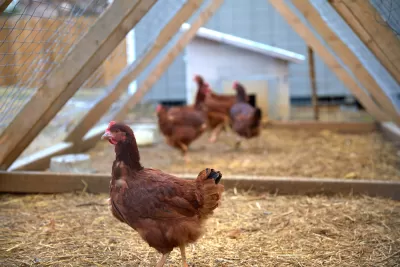
A "pastoral tableau" has become more common in Chicago, "as sustainability-minded residents capitalize on Chicago’s live-and-let-live approach to urban farming," according to an article by Alexia Elejalde-Ruiz.
But some key components of that "urban homestead" lifestyle could face stricter regulations, as the city considers ways to crack down on the number of chickens, roosters, and livestock kept in residential areas.
"An ordinance introduced last month would ban roosters from residential areas in Chicago and allow a household to keep no more than six hens and two livestock animals, defined as four-legged farm creatures such as pigs, sheep and goats," according to the article.
"A $25 annual livestock permit from the city’s Health Department would be required of each household keeping farm animals, and only single-family homes and two-flats would be eligible. Applicants would have to inform all neighbors within 500 feet of their plans, and a permit would be rejected if a majority objects."
Elejalde-Ruiz speaks with supporters of the urban homestead lifestyle to help illuminate the perceived benefits of the lifestyle, and notes that the community is large enough to have rebutted the city's previous attempt, in 2007, at limiting the number of chickens living in residential areas.
Read the full story: Tired of your neighbor’s rooster? Chicago could soon crack down on backyard farm animals.

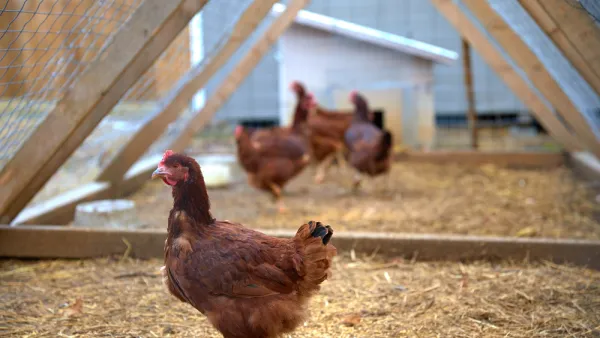
Legalizing Chickens in St. Louis
If passed, St. Louis's new zoning regulations will allow residents of St. Louis to keep up to eight rabbits or chickens, among other animals.
Proposed Ordinance Would Limit Livestock Ownership in Chicago
In an effort to elevate a standard of care for livestock, an ordinance sponsored by Ald. Anthony Napolitano seeks to regulate fowl and livestock animal ownership within city limits.
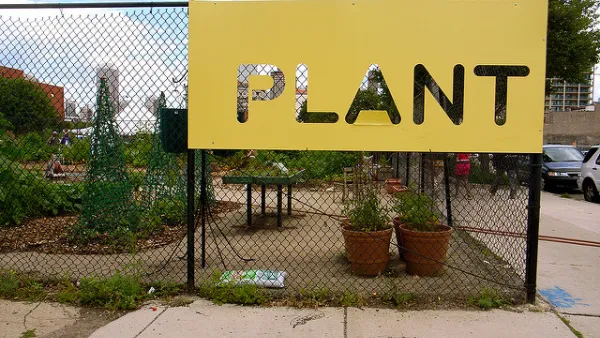
Chicago Zoning Standing in the Way of Some Urban Gardens
It can be easier for Chicago's urban gardeners to grow produce than to sell it.

Planetizen Federal Action Tracker
A weekly monitor of how Trump’s orders and actions are impacting planners and planning in America.

The state-sanctioned urbicide of Austin
People don’t kill cities. Freeways do.

US to reduce Colorado River water deliveries to Mexico
A new Colorado Treaty amendment reduces Mexico’s Colorado River water allocation by 250,000 acre feet.

Brightline West’s future may rely on $6 billion federal loan
The company has until Nov. 2 to make a $400 million equity investment into its proposed high-speed rail line.

LA Metro’s ultimatum: no extra buses for LA28 if federal funding isn’t imminently secured
If Metro does not provide additional buses, LA28 organizers will have to find a new way to manage Olympic traffic. LA28’s budget does not include a line item for transit.

Colorado’s Largest Data Center Could Rise Next to Homes — Without a Public Hearing
The proposed campus would consume 11 times the power of Denver International Airport; as it has across the country, opposition mounts.

FREE Course: Walkable City 1: Why Walkability?
After describing his path towards focusing on walkability as the essence of good planning, Jeff Speck marches through his five principal reasons for making more walkable places.
Reinventing Malls: Planning Alchemy—Turning Gray Fields Into Gold
The course focuses on the opportunities and imperatives that shape reinvention of mall sites.

Eagle County Government
Harvard University Graduate School of Design
Nashville Planning Department
The Architects Foundation
University of Cincinnati Online
The Pocatello Development Authority
The Urban Renewal Agency of the City of Pocatello
Journal of the American Planning Association