The Marchetti Constant, the willingness of people to travel for about a half an hour to get to and from work, explains the size of cities in history, and the metropolitan areas of today.


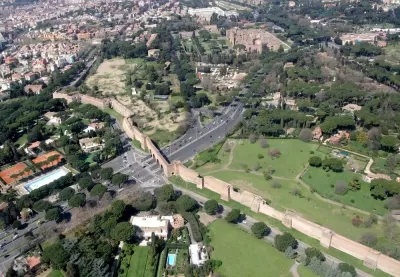
Jonathan English explains the Marchetti Constant:
In 1994, Cesare Marchetti, an Italian physicist, described an idea that has come to be known as the Marchetti Constant [pdf]. In general, he declared, people have always been willing to commute for about a half-hour, one way, from their homes each day.
This principle has profound implications for urban life. The value of land is governed by its accessibility—which is to say, by the reasonable speed of transport to reach it.
English also takes a tour of urban history for examples of how the Marchetti Constant has played out, and how cities have changed as transportation technology has changed and enabled longer commutes. The pattern has repeated, writes English, over and over again, from Ancient Rome to Paris to London to Chicago and, finally, Atlanta.
FULL STORY: The Commuting Principle That Shaped Urban History


Reports of 'Mega-Commutes' Greatly Exaggerated
No one is denying that many Americans endure long, arduous commutes. But the data does not verify reports that "mega-commutes" are on the rise.
Twin Cities Commutes Faster Than Pre-Pandemic
Workers who have returned to in-person jobs are still experiencing less traffic congestion than in 2019.
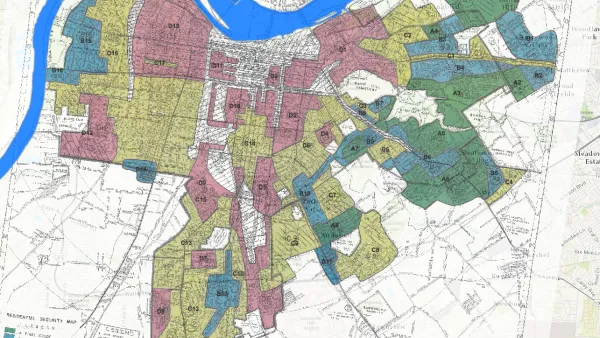
Story Mapping the Racism in Planning History
A Story Map created by the Louisville Metro Office of Planning & Design Services offers a detailed, visual presentation of the history of racism and discriminatory in the planning and zoning of the Louisville and Jefferson County.

Planetizen Federal Action Tracker
A weekly monitor of how Trump’s orders and actions are impacting planners and planning in America.

The state-sanctioned urbicide of Austin
People don’t kill cities. Freeways do.

US to reduce Colorado River water deliveries to Mexico
A new Colorado Treaty amendment reduces Mexico’s Colorado River water allocation by 250,000 acre feet.

5 New England states march closer to 800 megawatt wind energy project
Securing federal approval for the project may be complicated under the Trump administration, which has historically been hostile towards domestic wind power.

Baltimore to break ground on $50 million Transit Priority Project
The project will bring faster bus trips, safer streets and better bike connections to Baltimore.

Airbnb launches $250 million 'last-dollar financing' housing accelerator, makes first investment in Austin
The company will put $6.4 million towards affordable housing development in Texas’ capital.

FREE Course: Walkable City 1: Why Walkability?
After describing his path towards focusing on walkability as the essence of good planning, Jeff Speck marches through his five principal reasons for making more walkable places.
Reinventing Malls: Planning Alchemy—Turning Gray Fields Into Gold
The course focuses on the opportunities and imperatives that shape reinvention of mall sites.

Eagle County Government
Harvard University Graduate School of Design
Nashville Planning Department
The Architects Foundation
University of Cincinnati Online
The Pocatello Development Authority
The Urban Renewal Agency of the City of Pocatello
Journal of the American Planning Association