Lake Michigan has reached historic levels this summer. Properties on the Far North Side are most at risk. Swimmers have already been called back from the shore.


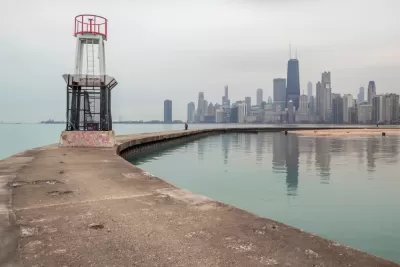
Tony Briscoe reports:
For the second straight month, according to preliminary records, Lake Michigan has crested to its highest mark in over three decades — each time 1 inch shy of record highs set in 1986. It takes roughly 780 billion gallons of water to raise Lake Michigan 1 inch. Since 2013, the lake has risen nearly 6 feet from record lows. And in Chicago, no part of the shoreline has come away unscathed.
This year, the buoyant water has swallowed at least two Chicago beaches entirely and periodically closed others. It has swiped fishermen from piers, swimmers from beaches and submerged jetties, creating hazards for boaters. It has flooded heavily trafficked parts of lakefront bicycle and pedestrian pathways, leaving some stretches underwater and others crumbling.
And there are reasons to believe it's only going to get worse, according to Briscoe. All of those warning signs have come during the calm summer weather. Traditionally, the most powerful storms on the lake come in the fall.
Briscoe provides a lot more anecdotes and evidence about the historic summer on Lake Michigan in the source article.

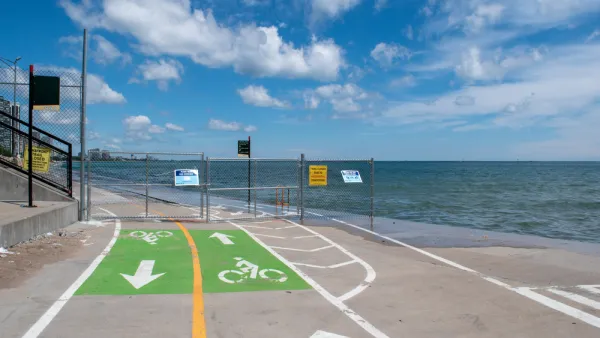
Lessons From the Viral Video of Lake Michigan Taking Out a Bike Commuter
Climate change will only increase the frequency of incidents like the one captured by a television news station in Chicago earlier this week.
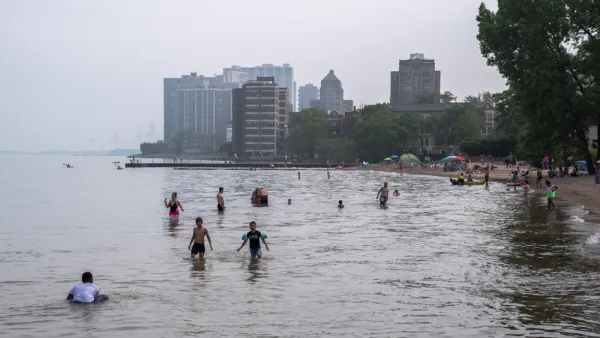
Lake Michigan Continues to Rise, Damaging Property and Infrastructure Along the Way
A tide that began to rise in 2019 hasn't receded, according to local sources along Lake Michigan.

Chicago residents love their 'concrete beach'
A concrete seawall is a popular swimming and sunbathing location for locals.

Planetizen Federal Action Tracker
A weekly monitor of how Trump’s orders and actions are impacting planners and planning in America.

The state-sanctioned urbicide of Austin
People don’t kill cities. Freeways do.

US to reduce Colorado River water deliveries to Mexico
A new Colorado Treaty amendment reduces Mexico’s Colorado River water allocation by 250,000 acre feet.

5 New England states march closer to 800 megawatt wind energy project
Securing federal approval for the project may be complicated under the Trump administration, which has historically been hostile towards domestic wind power.

Baltimore to break ground on $50 million Transit Priority Project
The project will bring faster bus trips, safer streets and better bike connections to Baltimore.

Airbnb launches $250 million 'last-dollar financing' housing accelerator, makes first investment in Austin
The company will put $6.4 million towards affordable housing development in Texas’ capital.

FREE Course: Walkable City 1: Why Walkability?
After describing his path towards focusing on walkability as the essence of good planning, Jeff Speck marches through his five principal reasons for making more walkable places.
Reinventing Malls: Planning Alchemy—Turning Gray Fields Into Gold
The course focuses on the opportunities and imperatives that shape reinvention of mall sites.

Eagle County Government
Harvard University Graduate School of Design
Nashville Planning Department
The Architects Foundation
University of Cincinnati Online
The Pocatello Development Authority
The Urban Renewal Agency of the City of Pocatello
Journal of the American Planning Association