Zoning changes for a potentially transformative, transit-oriented, mixed-use project called "The Central Park" were approved by the Phoenix City Council in July.


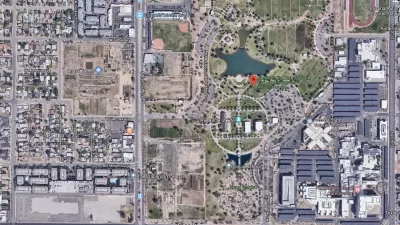
Jessica Boehm reports: "Six high-rise towers may soon replace a long-vacant plot of land at the northeast corner of Indian School Road and Central Avenue in Phoenix — a project that supporters call a first of its kind in Arizona."
The development, called "The Central Park," would add 2 million square feet of development to a 15-acre lot. The development includes apartments, condominiums, office space, a retirement community, and 170,000 square feet of retail, according to Boehm.
The Phoenix City Council approved the zoning changes sought by Phoenix-based developer Pivotal Group at the beginning of July. Construction is expected to begin in 24 months.
Boehm describes more details of the project and digs into the complicate history of the land—part of the reason it's taken so long to develop this light-rail adjacent, large parcel of land.
FULL STORY: $1B development could revive midtown Phoenix, Steele Indian School Park


Atlanta's Quarry Yards Bought for $127 Million by Microsoft; Development Plans Still Secret
Observers can only speculate about the development plans of the new owners of one of the city of Atlanta's largest development opportunities.
Maryland Awards $1.25M in TOD-Related Grants
The state’s DOT is funding projects that prepare sites around transit stations for future mixed-use development and housing.

NYC Zoning Reform: Where Will It Have an Impact?
The zoning reform package dubbed ‘City of Yes’ will likely yield uneven results, with many of the lowest-density neighborhoods exempted from new regulations.

Planetizen Federal Action Tracker
A weekly monitor of how Trump’s orders and actions are impacting planners and planning in America.

The state-sanctioned urbicide of Austin
People don’t kill cities. Freeways do.

US to reduce Colorado River water deliveries to Mexico
A new Colorado Treaty amendment reduces Mexico’s Colorado River water allocation by 250,000 acre feet.

5 New England states march closer to 800 megawatt wind energy project
Securing federal approval for the project may be complicated under the Trump administration, which has historically been hostile towards domestic wind power.

Baltimore to break ground on $50 million Transit Priority Project
The project will bring faster bus trips, safer streets and better bike connections to Baltimore.

Airbnb launches $250 million 'last-dollar financing' housing accelerator, makes first investment in Austin
The company will put $6.4 million towards affordable housing development in Texas’ capital.

FREE Course: Walkable City 1: Why Walkability?
After describing his path towards focusing on walkability as the essence of good planning, Jeff Speck marches through his five principal reasons for making more walkable places.
Reinventing Malls: Planning Alchemy—Turning Gray Fields Into Gold
The course focuses on the opportunities and imperatives that shape reinvention of mall sites.

Eagle County Government
Harvard University Graduate School of Design
Nashville Planning Department
The Architects Foundation
University of Cincinnati Online
The Pocatello Development Authority
The Urban Renewal Agency of the City of Pocatello
Journal of the American Planning Association