Both Bird and Lime have organized boards of experts to conduct research and advise the companies as their micromobility ventures grow.


Sarah Holder reports that the scooter company Lime now has a Public Policy and Safety Advisory Board. "The group, which convened for the first time at a safety summit in San Francisco, is tasked with determining what research and policy initiatives to pursue, what regulations to advocate for, and how to generally smooth the company’s sometimes-bumpy relationships with cities, riders, and riders-to-be."
The board—which includes public safety, consumer safety, and transportation experts—will work on projects to educate riders, provide guidance around local regulations, and increase transportation equity. Holder notes that Bird has had its own Global Safety Advisory Board in place for almost a year.
"Lime’s announcement reflects a growing acknowledgement within the e-scooter rental industry that safety concerns present a major barrier to mass adoption," says Holder. While Lime has already distributed free helmets, upgraded its scooters, and rolled out rider education initiatives, it sees the advisory board as a way to further encourage the shift away from cars to other transportation modes.
FULL STORY: Why Electric Scooters Companies Are Getting Serious About Safety

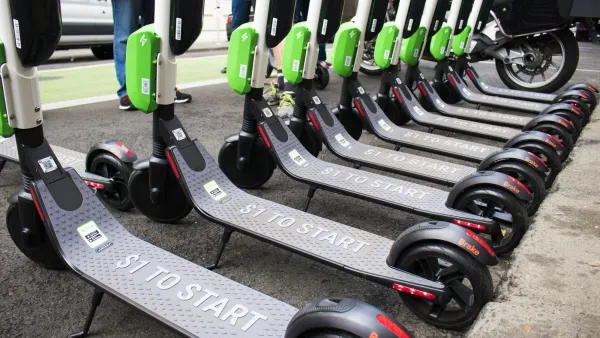
Research Shows Little Consistency in ‘Rules of the Road’ for Micromobility Devices
A new study indicates that cities across the country are defining and regulating personal transportation devices in very different ways.
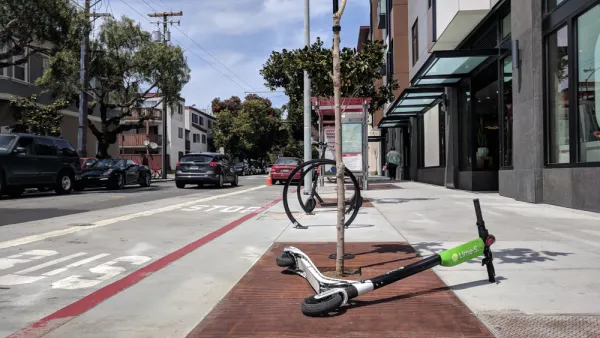
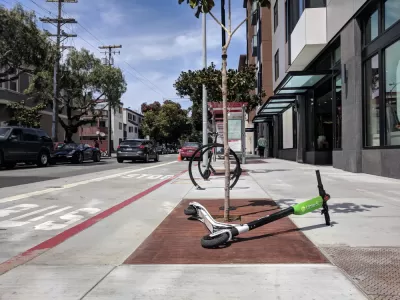
Op-Ed: Cities, Get the Scooters Under Control
Scooters are a useful addition to the mobility landscape, but cities need to address the many safety issues that come along with them.
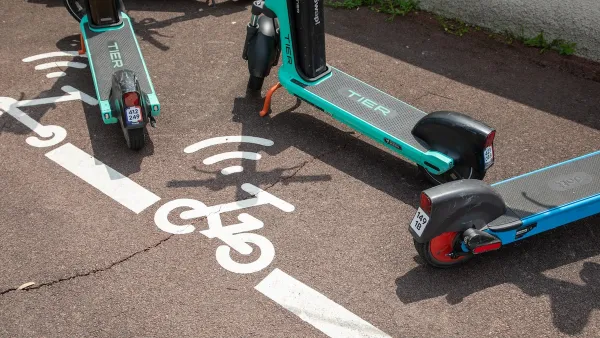
E-Scooter Parking: A Guide
How smart planning — and ample designated parking — can end conflicts over shared scooters.

Planetizen Federal Action Tracker
A weekly monitor of how Trump’s orders and actions are impacting planners and planning in America.

The state-sanctioned urbicide of Austin
People don’t kill cities. Freeways do.

US to reduce Colorado River water deliveries to Mexico
A new Colorado Treaty amendment reduces Mexico’s Colorado River water allocation by 250,000 acre feet.

Mamdani overhauls NYC's Vision Zero plan with 100 new policy goals
The overhaul aims to reduce traffic deaths and make streets safer for pedestrians, cyclists and drivers through lower speed limits, new safety infrastructure and more.

Amtrak not solely to blame for New Jersey commuter rail's unreliability, report finds
A new study from the Garden State Initiative found that NJ Transit’s budget grew 20% across a 4 year period, but reliability declined significantly over the same period.

EPA erases limits on planet-warming pollution from power plants
Under Monday’s plan, power plants would still have some limits on how much mercury, arsenic and other contaminants they can emit.

FREE Course: Walkable City 1: Why Walkability?
After describing his path towards focusing on walkability as the essence of good planning, Jeff Speck marches through his five principal reasons for making more walkable places.
Reinventing Malls: Planning Alchemy—Turning Gray Fields Into Gold
The course focuses on the opportunities and imperatives that shape reinvention of mall sites.

Eagle County Government
Harvard University Graduate School of Design
Nashville Planning Department
The Architects Foundation
University of Cincinnati Online
The Pocatello Development Authority
The Urban Renewal Agency of the City of Pocatello
Journal of the American Planning Association