The Living Cully coalition prioritizes the well-being of long term, lower-income residents with future-building revitalization projects.



Northeast Portland, Oregon’s largest and ethnically diverse Cully neighborhood is the setting for a case study in community-led efforts to fortify the ability lower-income residents to withstand gentrification and displacement. “Many green infrastructure project teams flounder when trying to couple social justice with their environmental goals, but in Cully green infrastructure provision is linked explicitly with wealth building and anti-displacement goals through a coalition called Living Cully,” reports Barbra Brown Wilson, adapting a chapter from her book Resilience for All.
Living Cully, a collective project of Verde, Native American Youth and Family Center, Habitat for Humanity Portland/Metro East, and Hacienda Community Development Center, was formed to address the lack of infrastructure and services available to Cully residents. Central to their mission is investment “in local residents through leadership development and job training that allow lower-income residents to contribute to positive change in their communities, while also building their own capacity to stay as revitalization occurs,” Brown outlines.
Since the coalition’s formation in 2012, partnering organizations have successfully launched initiatives to champion policies to protect renters, supply affordable housing, develop Cully’s transportation infrastructure, provide job training, and improve community safety. The immediate impact of these efforts is felt widely, but it remains to be seen what long-term effects will remain in terms of “adaptive capacity of resident leaders engaging in these organizing and job-training efforts, the culture change beginning when a generation of youth see walking and biking as important to their community, and the impact of young leaders actualizing many new professional techniques to better their community as part of their middle school skills set.”
FULL STORY: When Green Infrastructure Is an Anti-Poverty Strategy


Report: Cities’ Climate Plans Fail to Include Workforce Development
While a few cities have detailed goals and investment strategies for building their green workforce, most U.S. cities fail to address the need for the training and education of a new generation of workers.
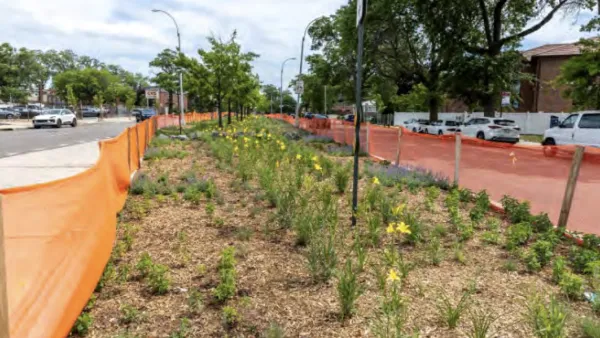
New NYC ‘sponge’ medians will absorb 5 million gallons of stormwater per year
The project will turn three medians in Queens into green infrastructure designed to absorb stormwater.
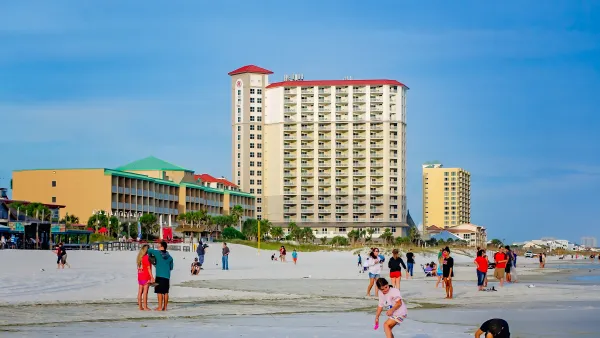
Pensacola to build first ever permanent affordable housing
The Community Land Trust development will use a shared equity model to keep homes affordable for the next 99 years.

Planetizen Federal Action Tracker
A weekly monitor of how Trump’s orders and actions are impacting planners and planning in America.

The state-sanctioned urbicide of Austin
People don’t kill cities. Freeways do.

US to reduce Colorado River water deliveries to Mexico
A new Colorado Treaty amendment reduces Mexico’s Colorado River water allocation by 250,000 acre feet.

5 New England states march closer to 800 megawatt wind energy project
Securing federal approval for the project may be complicated under the Trump administration, which has historically been hostile towards domestic wind power.

Baltimore to break ground on $50 million Transit Priority Project
The project will bring faster bus trips, safer streets and better bike connections to Baltimore.

Airbnb launches $250 million 'last-dollar financing' housing accelerator, makes first investment in Austin
The company will put $6.4 million towards affordable housing development in Texas’ capital.

FREE Course: Walkable City 1: Why Walkability?
After describing his path towards focusing on walkability as the essence of good planning, Jeff Speck marches through his five principal reasons for making more walkable places.
Reinventing Malls: Planning Alchemy—Turning Gray Fields Into Gold
The course focuses on the opportunities and imperatives that shape reinvention of mall sites.

Eagle County Government
Harvard University Graduate School of Design
Nashville Planning Department
The Architects Foundation
University of Cincinnati Online
The Pocatello Development Authority
The Urban Renewal Agency of the City of Pocatello
Journal of the American Planning Association