There are more than 90,000s dams in the U.S.; many will never be visited by federal or state inspectors.


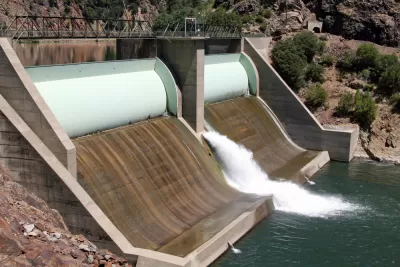
Climate change poses serious challenges to dams all over the world. In the United States, there are about 91,000 dams and a backlog of related maintenance projects. The Association of State Dam Safety Officials estimates those projects would cost 71 billion dollars to complete. “And scientists say the likelihood of dam failures — which not only threaten lives but also release toxic sediments trapped in reservoirs behind many dams — will increase as extreme precipitation events become more frequent in a warming world,” Jacques Leslie reports in Yale Environment 360.
Civil engineers offer a similarly bleak perspective. "Largely as a result of the funding shortfall, in its latest infrastructure report card, in 2017, the American Society of Civil Engineers (ASCE) gave the nation’s 91,000-plus dams a D grade, the same grade they have received in every ASCE report card since the first one was issued in 1998," Leslie writes.
Regulators have a difficult task in accessing the safety of dams. On average there is only one state inspector for every 200 dams, but because states vary greatly, some states have more available labor to devote to inspections than others. "Oklahoma, for example, employs just three full-time inspectors for its 4,621 dams; Iowa has three inspectors for its 3,911 dams. Largely because of its legislators’ distrust of regulation, Alabama doesn’t even have a safety program for its 2,273 dams," Leslie reports. High-hazard dams, that could threaten human lives if they fail, are supposed to be inspected every two and a half years, but many go much longer than that.
Read the full story: In an Era of Extreme Weather, Concerns Grow Over Dam Safety
Rebuilding America's Backbone: A Call for Resilient Infrastructure
How sustainable investments in infrastructure made today can secure the future.

Climate Resilience for an Aging Nation with Danielle Arigoni: The Planning Commission Podcast
Author and livability expert Danielle Arigoni talks about her new book with the Planning Commission Podcast.
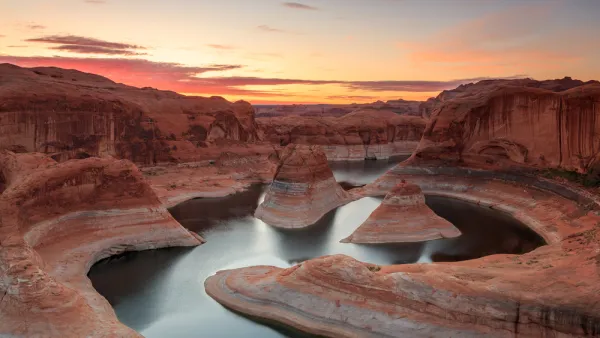
Lake Powell's Houseboat Launches Running Dry
Record low water levels are sinking Lake Powell's houseboat industry as climate change threatens water supplies in the West.

Planetizen Federal Action Tracker
A weekly monitor of how Trump’s orders and actions are impacting planners and planning in America.

California plans to bury El Niño’s downpour
If the state plays its cards right, it may be able to store a billion acre-feet of El Niño’s water in aquifers.

Desperate measures: Advocates weigh draining Lake Powell to fill Colorado River
Draining the reservoir could reduce evaporation losses by a couple hundred thousand acre-feet.

Chicago voters approve permanent festival grounds, penalty for vacant property owners
Currently, major summer and fall festivals take over public parks for weeks at a time, drawing criticism from nearby residents

NYC votes to cut outdoor dining red tape, speed up permitting
New York City also voted to allow the Department of Transportation to begin work on urgent projects before notifying elected officials.

California appears to reject Prop. 45
The proposition would have expanded the projects that qualify for a streamlined environmental review, effectively paring down the California Environmental Quality Act.

FREE Course: Walkable City 1: Why Walkability?
After describing his path towards focusing on walkability as the essence of good planning, Jeff Speck marches through his five principal reasons for making more walkable places.
Reinventing Malls: Planning Alchemy—Turning Gray Fields Into Gold
The course focuses on the opportunities and imperatives that shape reinvention of mall sites.

City of Rosemead
Rutgers University, Edward J. Bloustein School of Planning and Public Policy
One Hundred Miles
Hunter College, City University of New York (CUNY)
The Architects Foundation
University of Cincinnati Online
City of Cambridge
Montrose County
The Pocatello Development Authority