Beyond station closures, the Regional Transportation Agency of Oregon is looking to create new bus-only lanes, and possibly a new stretch of subway under Portland’s downtown to increase transit speed.


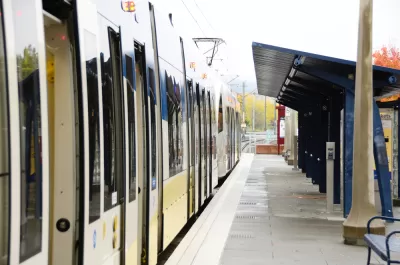
The Portland area may lose three train stations, but the regional transit agency hopes that will increase the speed of trips downtown. Stations being considered for closure are: Kings Hill/Southwest Salmon Street Station, Mall/SW Fourth Avenue and Mall/SW Fifth Avenue stations. Initially, TriMet also considered a fourth station at Skidmore but, after public pushback, the agency decided not to pursue that option.
Agency officials argue that TriMet train stations are too close together and that closing the stations would speed up travel for most riders. Critics argued that the closures might put some commuters in danger by making them walk farther, impacting riders less able to walk long distances. Doug Kelsey, General Manager of TriMet, argued that those most disadvantaged by long transit times are disproportionately people of color, who are more likely to live further from the city’s center. In Kelsey’s view, speeding up the train has positive impacts from an equity standpoint as those who live beyond the closed stations stand to benefit from reduced travel times.
TriMet is also looking to speed up travel for bus riders, with more bus-only lanes in the city. There is also discussion of an expansion of train service downtown with new subway service, but that proposal is still in the planning stages, and if the expansion were to happen, it would not take place in the near future.
Read the full story: TriMet prioritizes faster transit service
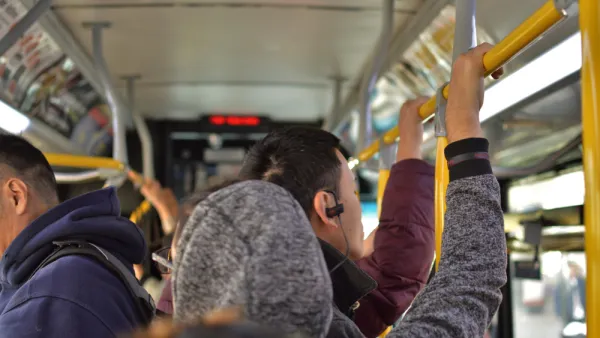
Report: Improved Service Key to Growing Bus Ridership
A NACTO report highlights the importance of bus-friendly policies and infrastructure for boosting ridership numbers and reducing urban congestion and pollution.
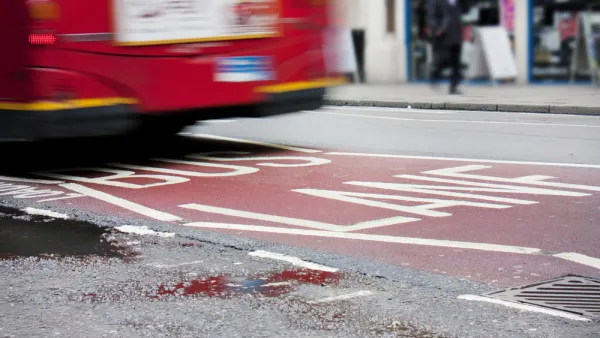
Pandemic Bus Lanes Show Promise as Permanent Solutions
As cities streamline approval processes for bus-only lanes during the pandemic, transit experts hope the projects will lead to lasting change.
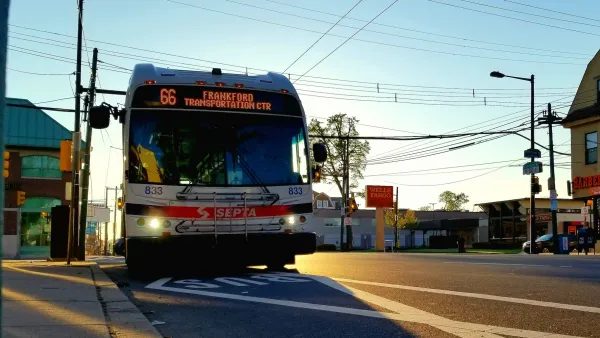
SEPTA's bus-mounted lane enforcement cameras cut travel times by up to 6%
The AI-assisted cameras have issued nearly 200,000 citations to drivers blocking bus lanes.

Desperate measures: Advocates weigh draining Lake Powell to fill Colorado River
Draining the reservoir could reduce evaporation losses by a couple hundred thousand acre-feet.

Eastern Nebraska is running out of electricity
Data centers and electrification are straining eastern Nebraska’s grid, throttling economic development.

Move over, LA: St. Louis gears up for Olympics, invests millions in downtown redevelopment
The Missouri city will host the 2028 Olympic soccer group stage and knockout matches.

Maryland’s $15 billion bridge project gains key approval
The Maryland Transit Authority said the project will create over 60,000 jobs and add $23 billion to the local economy.

‘No clear next steps’ for Chicago's permanent festival grounds
Eleventh Ward Ald. Nicole Lee has suggested Soldier Field as a possible location for the permanent event space.

California, Hawaii, Rhode Island approve housing propositions
Hawaii and Rhode Island each approved their sole proposition, while California approved two of its three.

FREE Course: Walkable City 1: Why Walkability?
After describing his path towards focusing on walkability as the essence of good planning, Jeff Speck marches through his five principal reasons for making more walkable places.
Reinventing Malls: Planning Alchemy—Turning Gray Fields Into Gold
The course focuses on the opportunities and imperatives that shape reinvention of mall sites.

City of Rosemead
Rutgers University, Edward J. Bloustein School of Planning and Public Policy
One Hundred Miles
University of Michigan School for Environment and Sustainability (SEAS)
Hunter College, City University of New York (CUNY)
The Architects Foundation
City of Cambridge
Montrose County
The Pocatello Development Authority