After a decade of skyward expansion, even more skyscrapers are on the horizon in Manhattan.


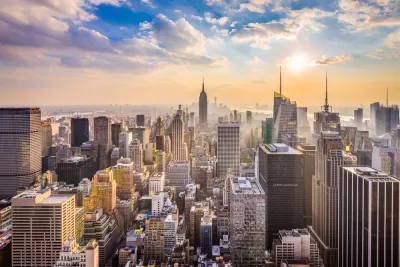
Stefanos Chen reports on the next wave of skyscrapers expected to transform the New York City skyline, following a high-rise building boom that has added numerous luxury condo towers to the city in recent years.
"There are currently nine completed towers in New York that are over 1,000 feet tall, and seven of them were built after 2007. Nearly twice that many — another 16 such towers — are being planned or are under construction, according to the Council on Tall Buildings and Urban Habitat, a Chicago-based nonprofit that tracks high-rise construction," according to Chen.
Chen describes the wave of construction as unprecedented, and also writes that the city's skyline "looks starkly different than it did a decade ago, redrawn by the massive Hudson Yards project on the West Side of Manhattan; a profusion of towers on and around Billionaires’ Row in Midtown; and the revitalization of Lower Manhattan, with One World Trade Center leading the way."
The article includes images of Lower Manhattan from 1925, 1980, 2001, and 2019; the East Side of Manhattan from 1931, 1960, and 2019; and the West Side of Manhattan from 1931, 1984, and 2019. The article places the plans for new skyscrapers in context of the technological innovations that enabled new building heights, and the cultural importance of skyscrapers to the popular imagination of the city.
In a follow up article, Ryan Deffenbaugh examines five examples of skyscrapers that will leave a lasting mark on the city's skyline in the near future: Tower Fifth, Central Park Tower, 111 West 57th Street, JPMorgan Headquarters, and One Vanderbilt.
FULL STORY: New York City’s Evolving Skyline

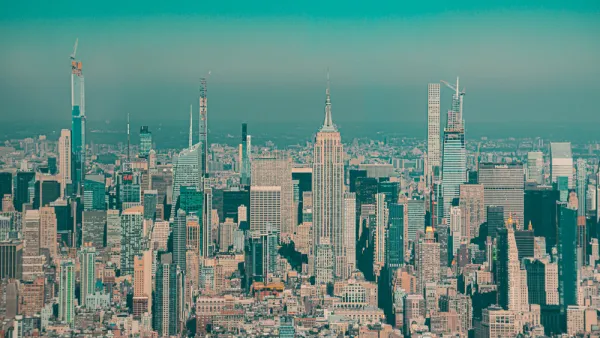
Vote for New York City's 'Building of the Year'
New York is still a place of bold architecture.
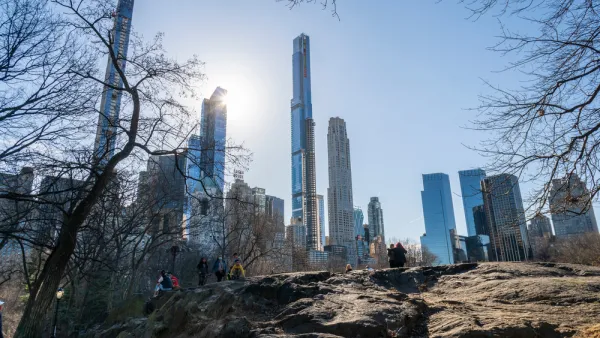
World's Tallest Residential Building Nears Completion in Manhattan
Central Park Tower, coming soon to New York City's "Billionaires' Row" was designed by Adrian Smith + Gordon Gill architecture.
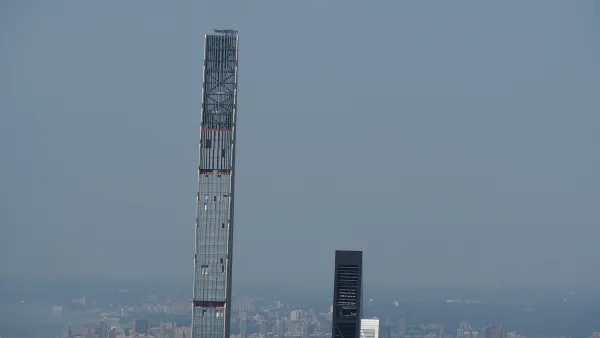
World's Skinniest Skyscraper Complete in New York City
111 West 57th Street, a residential supertall tower with multiple global distinctions, completed construction recently in New York City.

Planetizen Federal Action Tracker
A weekly monitor of how Trump’s orders and actions are impacting planners and planning in America.

The state-sanctioned urbicide of Austin
People don’t kill cities. Freeways do.

US to reduce Colorado River water deliveries to Mexico
A new Colorado Treaty amendment reduces Mexico’s Colorado River water allocation by 250,000 acre feet.

5 New England states march closer to 800 megawatt wind energy project
Securing federal approval for the project may be complicated under the Trump administration, which has historically been hostile towards domestic wind power.

Baltimore to break ground on $50 million Transit Priority Project
The project will bring faster bus trips, safer streets and better bike connections to Baltimore.

Airbnb launches $250 million 'last-dollar financing' housing accelerator, makes first investment in Austin
The company will put $6.4 million towards affordable housing development in Texas’ capital.

FREE Course: Walkable City 1: Why Walkability?
After describing his path towards focusing on walkability as the essence of good planning, Jeff Speck marches through his five principal reasons for making more walkable places.
Reinventing Malls: Planning Alchemy—Turning Gray Fields Into Gold
The course focuses on the opportunities and imperatives that shape reinvention of mall sites.

Eagle County Government
Harvard University Graduate School of Design
Nashville Planning Department
The Architects Foundation
University of Cincinnati Online
The Pocatello Development Authority
The Urban Renewal Agency of the City of Pocatello
Journal of the American Planning Association