A cleanup of nuclear weapons waste at Washington State's Hanford Site was first outlined in 1989. But now, as state officials wrangle with the federal government, deadlines set in 2016 may still not be met.


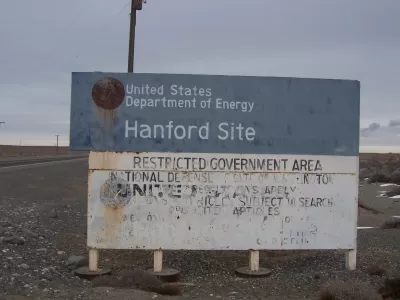
Washington's Hanford Site once played host to the Manhattan Project. Over the past several decades, it's been the site of one of the nation's largest nuclear cleanup efforts. But as Ralph Vartabedian reports, delays abound.
"Two multibillion-dollar industrial facilities intended to turn highly radioactive sludge into solid glass at the Hanford nuclear site have been essentially mothballed. Construction was halted in 2012 because of design flaws and Energy Department managers have foundered in finding alternatives," Vartabedian writes. Meanwhile, the storage of 56 million gallons of radioactive waste so close to the Columbia River has raised environmental concerns.
According to the state, "federal officials have taken repeated unilateral actions that will make their cleanup unlikely to meet critical deadlines set up in a 2016 consent decree in federal court." Part of that stems from cost issues. In February, a new estimate expanded the projects likely bill "from $110 billion to as much as $660 billion, a cost increase that has staggered Congress and has fueled sentiment to cut short the cleanup goals."
State officials are preparing for further legal wrangling to get the project back on track.
FULL STORY: Nation’s most ambitious project to clean up nuclear weapons waste has stalled at Hanford

How Nuclear Energy Could Impact the Water Supply
Releasing contaminated water into the ocean or other water bodies could have severe, long-term impacts on drinking water supplies and aquatic life.
First West Coast LNG Export Facility Gets Critical Federal OK
On Sept. 30, the Federal Energy Regulatory Commission approved the final environmental impact statement for a contentious $7.5 billion Liquefied Natural Gas export facility, pipeline, and power plant in Coos Bay, Ore. More approvals are still needed.
Selling the Nation's Strategic Assets to Fund Road Construction
What happened to the "strategic" in the nation's Strategic Petroleum Reserves? As Politico reveals, heretofore these oil reserves have only been sold when the nation's oil supply was threatened. Republicans leaders now view the SPR as a cash cow.

Planetizen Federal Action Tracker
A weekly monitor of how Trump’s orders and actions are impacting planners and planning in America.

The state-sanctioned urbicide of Austin
People don’t kill cities. Freeways do.

US to reduce Colorado River water deliveries to Mexico
A new Colorado Treaty amendment reduces Mexico’s Colorado River water allocation by 250,000 acre feet.

5 New England states march closer to 800 megawatt wind energy project
Securing federal approval for the project may be complicated under the Trump administration, which has historically been hostile towards domestic wind power.

Baltimore to break ground on $50 million Transit Priority Project
The project will bring faster bus trips, safer streets and better bike connections to Baltimore.

Airbnb launches $250 million 'last-dollar financing' housing accelerator, makes first investment in Austin
The company will put $6.4 million towards affordable housing development in Texas’ capital.

FREE Course: Walkable City 1: Why Walkability?
After describing his path towards focusing on walkability as the essence of good planning, Jeff Speck marches through his five principal reasons for making more walkable places.
Reinventing Malls: Planning Alchemy—Turning Gray Fields Into Gold
The course focuses on the opportunities and imperatives that shape reinvention of mall sites.

Eagle County Government
Harvard University Graduate School of Design
Nashville Planning Department
The Architects Foundation
University of Cincinnati Online
The Pocatello Development Authority
The Urban Renewal Agency of the City of Pocatello
Journal of the American Planning Association