A new 25-year transit planning process for Allegheny County will allow the flexibility to keep up with technological advances.



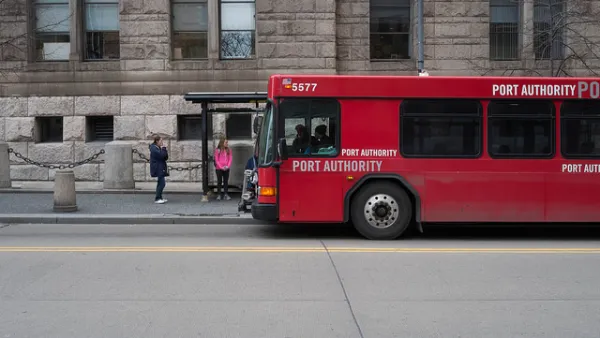
The Port Authority of Allegheny County is embarking on a new 25-year transit plan, reports Ed Blazina.
The Pittsburgh-area transit authority will spend 18 months devoted to deciding plan where the agency should provide service, rather than deciding which mode of service will be used, according to Blazina's explanation of the process.
"With new modes of transportation arriving every few years — self-driving vehicles and shared services such as Uber and Lyft were just forward-thinking ideas five years ago — the agency can pick the vehicle to follow the transit road map when the time comes," writes Blazina.
The Port Authority last produced a transit plan for the country in 2006, working with the nine counties represented in the Southwestern Pennsylvania Commission. "This plan will consult other counties so it is compatible with their plans and services and will go to the SPC for approval […] but it will concentrate on Allegheny County," according to Blazina.
Read the full story: Envisioning the future: Port Authority to develop 25-year transit plan

Systemwide Evaluation of Bus Stops Underway in the Pittsburgh Region
The Port Authority of Allegheny County is evaluating how to make improvements at

New Orleans Weighs Regional Transit Plan
A new proposal would improve wait times for area buses and bring more households within walking distance to transit stops.

Post-Pandemic Transit Plan Announced in San Francisco
The recently announced post-COVID plan for public transit in San Francisco looks a lot different than the pre-COVID days.

Planetizen Federal Action Tracker
A weekly monitor of how Trump’s orders and actions are impacting planners and planning in America.

California plans to bury El Niño’s downpour
If the state plays its cards right, it may be able to store a billion acre-feet of El Niño’s water in aquifers.

Desperate measures: Advocates weigh draining Lake Powell to fill Colorado River
Draining the reservoir could reduce evaporation losses by a couple hundred thousand acre-feet.

In Texas, data centers are swallowing promised parkland
Residents who moved to Taylor, Texas for a rural community now have to contend with three data centers in their backyard.

How a Chicago-sized wind farm beat the odds and powered on
The project spanned five presidential administrations and a standoff with a U.S. military base.

MTA gives itself 30 days to transform pit into basketball court
The site has been under construction since 2022; the city originally estimated it would finish the court in 2024.

FREE Course: Walkable City 1: Why Walkability?
After describing his path towards focusing on walkability as the essence of good planning, Jeff Speck marches through his five principal reasons for making more walkable places.
Reinventing Malls: Planning Alchemy—Turning Gray Fields Into Gold
The course focuses on the opportunities and imperatives that shape reinvention of mall sites.

City of Rosemead
Rutgers University, Edward J. Bloustein School of Planning and Public Policy
One Hundred Miles
Hunter College, City University of New York (CUNY)
The Architects Foundation
University of Cincinnati Online
City of Cambridge
Montrose County
The Pocatello Development Authority