More coastal cities and communities are turning to the "soft" solutions of living shorelines—relying on "a combination of oyster reefs, oyster shells, rocks, marsh plants, and other natural materials can be an effective alternative to seawalls."


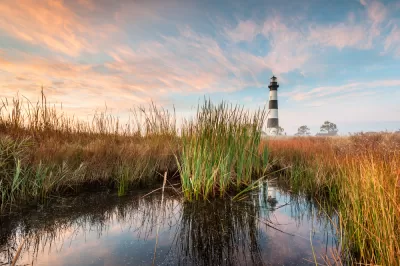
Anne N. Connor explains some of the lessons learned from the destruction wrought by Hurricane Florence on the Carolina coastline in 2018:
While the areas with “hard” solutions — seawalls — sustained damage and significant erosion, a section of coastline with a “soft” solution, called a “living shoreline,” fared much better. According to the National Oceanic and Atmospheric Administration, the Beaufort Living Shoreline oyster reef and marsh was “intact after the storm, with minimal erosion.”
According to Connor, living shorelines are an increasingly common climate change adaptation tactic. There are more than 120 living shorelines around the country, an approach to coastal storm protection that proves both more effective and less expensive than seawalls.
The idea now has federal support as well, after America's Water Infrastructure Act of 2018 was signed into law by President Donald Trump. The law "requires the United States Army Corps of Engineers (USACE) to consider soft solutions such as living shorelines when planning to protect the coast against flooding."
Read the full story: Why you want oysters and a salt marsh between you and a hurricane

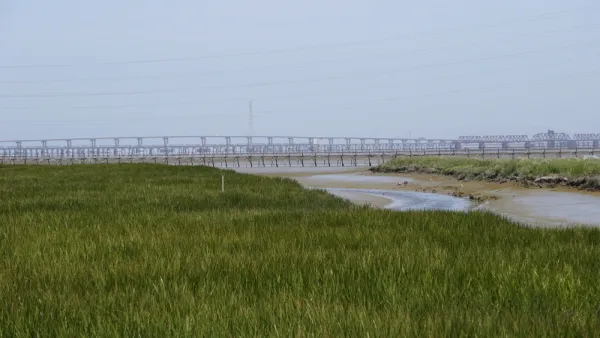
A New Plan for Sea Level Rise in the San Francisco Bay Area
The San Francisco Bay has 400 miles of shoreline, and a dire need for a new approach to dealing with the effects of rising water levels. An estimated $100 billion in potential property damage is at risk.
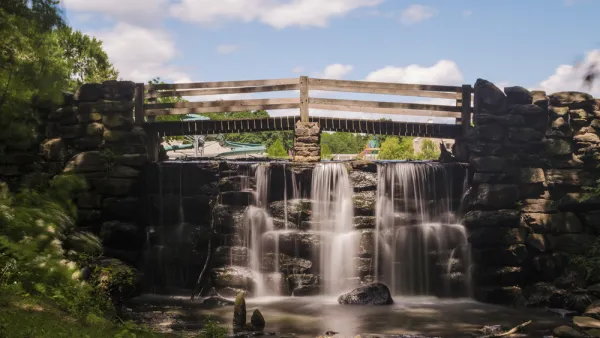
'Daylighting' Project to Restore Nature in the Big Apple
More cities are returning waterways to a more natural state—in some cases unearthing them from subterranean pipes in a process known as "daylighting." A new example can be found, perhaps surprisingly, in New York City.
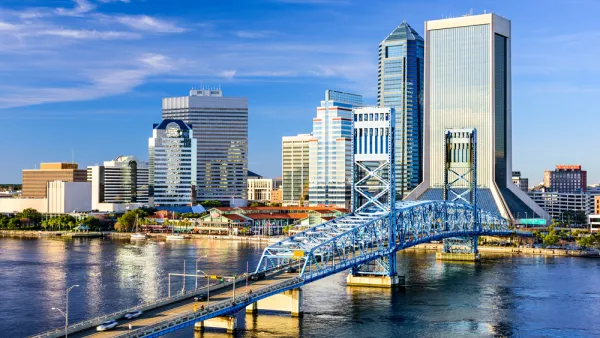
An Interview With Jacksonville's New Chief Resiliency Officer
The city of Jacksonville's new resiliency department will evaluate the city's long-term needs and coordinate with various stakeholders to implement systems adaptable to extreme climate events.

Planetizen Federal Action Tracker
A weekly monitor of how Trump’s orders and actions are impacting planners and planning in America.

California plans to bury El Niño’s downpour
If the state plays its cards right, it may be able to store a billion acre-feet of El Niño’s water in aquifers.

Desperate measures: Advocates weigh draining Lake Powell to fill Colorado River
Draining the reservoir could reduce evaporation losses by a couple hundred thousand acre-feet.

Chicago Avenue bridge construction delays enrages city leaders
The bridge has been closed since 2025. The city originally aimed to re-open it in December, and now expects to finish construction in 2027.

NYC bus network redesign speeds up Queens buses
Rush routes have seen a 4.6% speed increase after the redesign.

California High-Speed Rail Authority picks trainset manufacturer
The California High-Speed Rail Authority aims to start servicing passengers by 2033.

FREE Course: Walkable City 1: Why Walkability?
After describing his path towards focusing on walkability as the essence of good planning, Jeff Speck marches through his five principal reasons for making more walkable places.
Reinventing Malls: Planning Alchemy—Turning Gray Fields Into Gold
The course focuses on the opportunities and imperatives that shape reinvention of mall sites.

City of Rosemead
Rutgers University, Edward J. Bloustein School of Planning and Public Policy
One Hundred Miles
Hunter College, City University of New York (CUNY)
The Architects Foundation
University of Cincinnati Online
City of Cambridge
Montrose County
The Pocatello Development Authority