Two SoHo residents argue that outdated zoning holds the Manhattan neighborhoods back, requiring special permits or variances for many current residential and commercial uses.


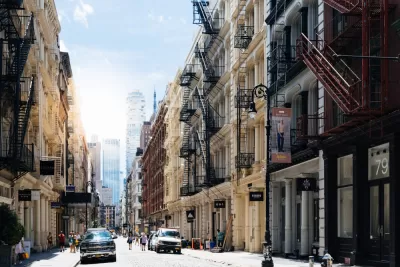
A co-op owner and an art gallery owner, both residents of SoHo, make the case for an overhaul to the present zoning of SoHo and NoHo. "Our zoning hasn't been updated in almost 50 years, but the neighborhood has clearly changed," they write. "As a result, the majority of residents and small businesses must have special permits or variances. This is no way to bolster a district."
The last commercial zoning overhaul took place in the 1970s, "when wholesale textile and manufacturing companies were already on their last legs. Ground-floor retail is largely illegal without a special permit." Residents who aren't certified artists also require special permitting.
The authors make a case that brick-and-mortar retail businesses need all the help they can get. But onerous permitting requirements make it difficult for them to operate in SoHo and NoHo. "To support this existing economic engine, we must create a fair, straightforward environment. In this difficult time for retailers, business owners need flexibility."
Read the full story: Outdated regulations shackling SoHo and NoHo

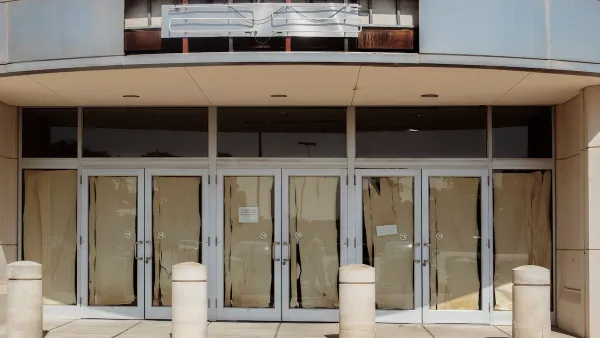
How to Repurpose Vacant Storefronts
Loosening restrictions on clean light manufacturing can revive dormant storefronts and revitalize communities.
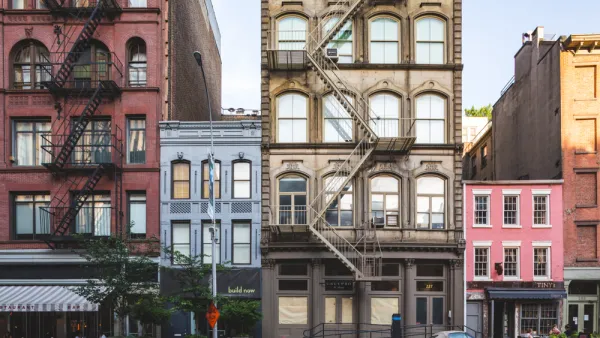
NoHo and SoHo Rezoning Controversies, Amplified
One of the big questions of planning is up for debate with a proposed rezoning in the SoHo and NoHo neighborhoods of New York City: Can upzoning be an effective tool for affordability?
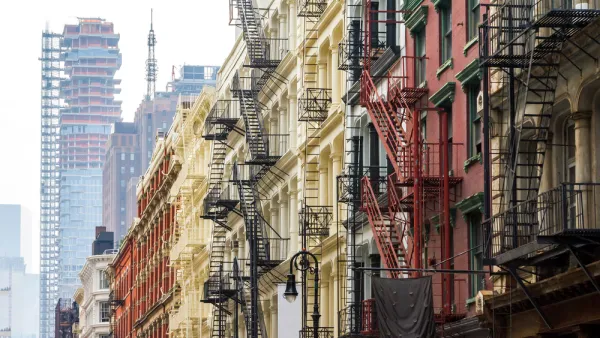
Advocating for Upzoning in Two of New York's Wealthiest Neighborhoods
The New York City Department of City Planning is expected, very soon, to release a rezoning proposal for the neighborhoods of SoHo and NoHo in New York City.

Planetizen Federal Action Tracker
A weekly monitor of how Trump’s orders and actions are impacting planners and planning in America.

California plans to bury El Niño’s downpour
If the state plays its cards right, it may be able to store a billion acre-feet of El Niño’s water in aquifers.

Chicago breaks ground on $3 billion megadevelopment
The new neighborhood, titled Foundry Park, will one day host 3,700 residences.

Satanic place names
From streams and lakes to valleys and canyons, I mapped more than 1,000 places named after the Devil.

California High-Speed Rail Authority CEO resigns after $600,000 scandal
Under Ian Choudri, the authority used taxpayer dollars to fund first class flights and trips to nightclubs.

Want to study the Missouri River? Soon, you may need unanimous approval from 10 states
Legislation would require 10 governors’ permission to study or build projects moving water outside the basin.

FREE Course: Walkable City 1: Why Walkability?
After describing his path towards focusing on walkability as the essence of good planning, Jeff Speck marches through his five principal reasons for making more walkable places.
Reinventing Malls: Planning Alchemy—Turning Gray Fields Into Gold
The course focuses on the opportunities and imperatives that shape reinvention of mall sites.

City of Rosemead
Rutgers University, Edward J. Bloustein School of Planning and Public Policy
One Hundred Miles
Hunter College, City University of New York (CUNY)
The Architects Foundation
University of Cincinnati Online
City of Cambridge
Montrose County
The Pocatello Development Authority