With bills on the table to update its zoning code, Philadelphia may be poised to slow the pace of its housing construction.


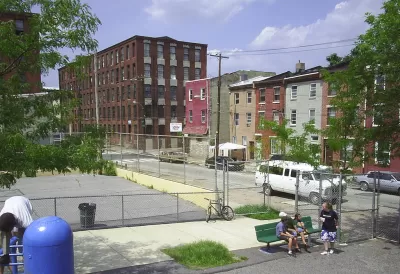
"There is little doubt that Philadelphia's relentless housing boom (fueled by the 10-year property tax abatement) has run roughshod over some neighborhoods, destroying cherished architecture, driving up prices, and pushing out the poor and elderly," Inga Saffron writes.
In response, City Council President and "longtime density skeptic" Darrell Clarke has introduced two bills that could put in check a construction spree dating to a 2011 update of Philly's zoning code. "The more significant of Clarke's bills would create a Council-controlled commission to review and update the zoning code" once again.
Hardcore urbanists, Saffron writes, "fear that Clarke, who once boasted that he drives everywhere — even to the corner store — is determined to impose a suburban vision on Philadelphia." On the other hand, "the 2011 zoning code has been much more generous to developers and private interests than to the overall public good. Construction quality is so poor — even for so-called luxury housing — that it often seems like we are building the slums of tomorrow."
Saffron concludes with an argument that the real problem lies with the planning commission's lack of authority. Fixing that, she says, will let the city better negotiate big projects rather than leaving the task to volunteer-run Registered Community Organizations.
Read the full story: Is Philadelphia getting too crowded? City Council president wants fewer apartments and more parking.

Philadelphia's downtown parking lots are a 'valuable, untapped resource'
Over two dozen city-owned parking lots could be developed into housing or other uses.

Austin Could Reduce Minimum Lot Sizes
In an effort to increase housing production and bring down housing costs, the city council approved a resolution calling for reduced lot sizes and higher density in single-family neighborhoods.

Boise Approves First Zoning Code Update in 60 Years
A comprehensive update of the city’s zoning code aimed at making housing more affordable and promoting sustainable growth received unanimous support from the city council.

Planetizen Federal Action Tracker
A weekly monitor of how Trump’s orders and actions are impacting planners and planning in America.

California plans to bury El Niño’s downpour
If the state plays its cards right, it may be able to store a billion acre-feet of El Niño’s water in aquifers.

Chicago breaks ground on $3 billion megadevelopment
The new neighborhood, titled Foundry Park, will one day host 3,700 residences.

Satanic place names
From streams and lakes to valleys and canyons, I mapped more than 1,000 places named after the Devil.

California High-Speed Rail Authority CEO resigns after $600,000 scandal
Under Ian Choudri, the authority used taxpayer dollars to fund first class flights and trips to nightclubs.

Want to study the Missouri River? Soon, you may need unanimous approval from 10 states
Legislation would require 10 governors’ permission to study or build projects moving water outside the basin.

FREE Course: Walkable City 1: Why Walkability?
After describing his path towards focusing on walkability as the essence of good planning, Jeff Speck marches through his five principal reasons for making more walkable places.
Reinventing Malls: Planning Alchemy—Turning Gray Fields Into Gold
The course focuses on the opportunities and imperatives that shape reinvention of mall sites.


City of Rosemead
Rutgers University, Edward J. Bloustein School of Planning and Public Policy
One Hundred Miles
Hunter College, City University of New York (CUNY)
The Architects Foundation
University of Cincinnati Online
City of Cambridge
Montrose County
The Pocatello Development Authority