CityLab asked readers in carless households with kids about how they get around and the challenges they face.


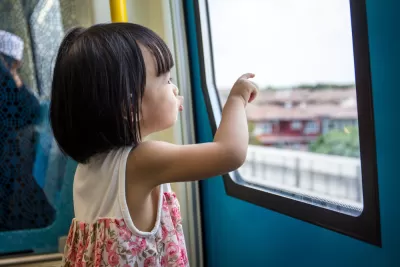
In a survey of readers, CityLab asked for details about what life with kids is like for a carless household:
For some of you, being carless with kids is a privilege. You have gone to great lengths to design your lives around your choice, including the accessible neighborhood where you chose to live. For others, of course, being carless is a financial necessity—or at least, in many cases, a cost-saving decision. And many of you helped us to expand our definition of "carless" to incorporate "car-light" families.
Some readers said they went multimodal, adding transit, ridesharing, carsharing, and biking to the mobility mix. Others said they had to find the right bike or stroller to meet their transportation needs. Several noted that their ability to go car-free depended on geography: in cities with good transit and biking infrastructure, not having a car was doable.
One reader in Porto Alegre, Brazil, just gave up on transit and bought a car. "After waiting more than an hour in the rain, Rachel finally caught a bus, then walked the final stretch home juggling Alex, both their bags, and an umbrella. She got in soaked and demoralized, and a serious reevaluation of our commitment to public transportation ensued."
Read the full story: What It Takes for These City Parents to Live Car-Free

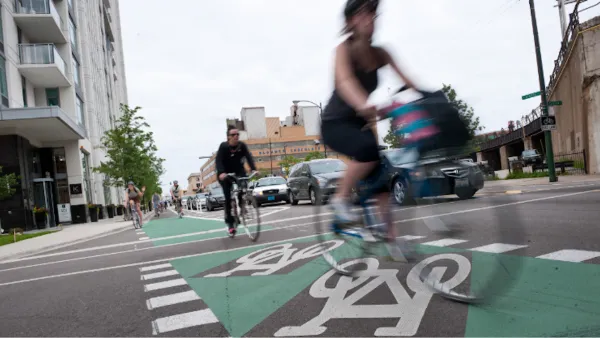
Growing up Car-Free in Chicago
One Chicago youth recounts their experience growing up in a car-free household.
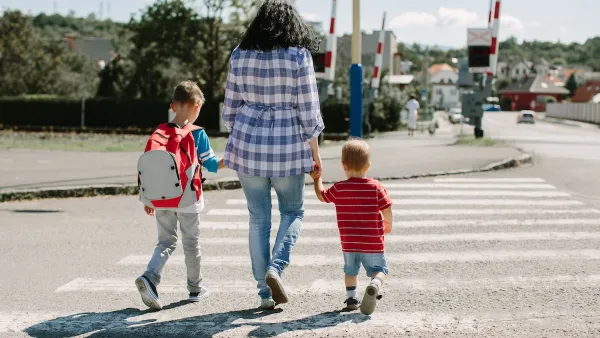
How Urban Design Can Benefit Parents and Kids
Designing thoughtful, child-friendly public spaces can ease the burdens of modern parenting and offer safe spaces for children to learn self-reliance and resilience.
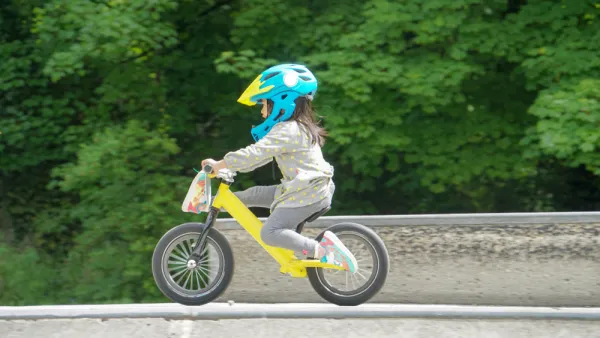
Opinion: Car-Centric Cities Hurt Kids
Designing neighborhoods with children in mind could reduce traffic fatalities and improve the health and well-being of kids.

Planetizen Federal Action Tracker
A weekly monitor of how Trump’s orders and actions are impacting planners and planning in America.

The state-sanctioned urbicide of Austin
People don’t kill cities. Freeways do.

US to reduce Colorado River water deliveries to Mexico
A new Colorado Treaty amendment reduces Mexico’s Colorado River water allocation by 250,000 acre feet.

Nation's most wind-powered state turns to coal as data centers increase energy demand
For the first time in decades, Iowa has increased its generation of coal power.

NYC cools commuters with city's first rain garden above a bus stop
New York City officials say the plants in the rain garden can absorb 16 gallons of rainwater during heavy storms.

Brightline West’s future may rely on $6 billion federal loan
The company has until Nov. 2 to make a $400 million equity investment into its proposed high-speed rail line.

FREE Course: Walkable City 1: Why Walkability?
After describing his path towards focusing on walkability as the essence of good planning, Jeff Speck marches through his five principal reasons for making more walkable places.
Reinventing Malls: Planning Alchemy—Turning Gray Fields Into Gold
The course focuses on the opportunities and imperatives that shape reinvention of mall sites.

Greater Baltimore Committee
Eagle County Government
Harvard University Graduate School of Design
The Architects Foundation
University of Cincinnati Online
The Pocatello Development Authority
The Urban Renewal Agency of the City of Pocatello
Journal of the American Planning Association