Two proposed bills would roll back a statewide prohibition on rent control in Massachusetts. The city of Cambridge, how of the anti-rent control movement in the state, is now a poster child for the housing crisis.


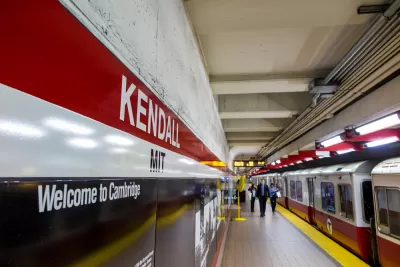
A debate about rent control is gaining steam in Cambridge as well as the rest of the state Massachusetts, according to an article by Tim Logan. The issue hasn't gotten traction since 1994, when "Massachusetts voters narrowly outlawed restrictions on what landlords could charge tenants," explains Logan.
Cambridge's formerly strict rent control laws provided some of the inspiration for the statewide ballot measure in 1994, and the city has transformed radically since Massachusetts voters approved that law. "A study by three economists at the Massachusetts Institute of Technology in 2014 found that ending rent control boosted the value of residential real estate in Cambridge by about $2 billion over a decade, even after accounting for broader growth in the city’s economy and housing market," according to Logan.
Now faced with those skyrocketing property values, a growing chorus of voices is calling for rent control to ease the burden of housing costs. Two bills proposed in the State Legislature would undo the 1994 law, though according to Logan the prognosis for those bills is unclear.
FULL STORY: Rent control gets a second look in Cambridge


Rent Control for New York City Could Spillover Effect to the Rest of the State
The housing crisis isn't the same in every corner of New York State, but new rent control measures in the state legislature could apply solutions intended for the New York City rental market to the entire state.
New York Residents Support Affordable Housing, Survey Says
Contrary to the dominant narrative about the negative perceptions of affordable housing projects among the public, a recent survey reveals widespread support for affordable housing in the New York-New Jersey-Connecticut metropolitan region.

Rent Control Debated in the Nation's Capital
District council members and local tenant advocates are engaged in a bit of tug of war about how far the District should go to limit the amount landlords can raise rents.

Planetizen Federal Action Tracker
A weekly monitor of how Trump’s orders and actions are impacting planners and planning in America.

The state-sanctioned urbicide of Austin
People don’t kill cities. Freeways do.

US to reduce Colorado River water deliveries to Mexico
A new Colorado Treaty amendment reduces Mexico’s Colorado River water allocation by 250,000 acre feet.

5 New England states march closer to 800 megawatt wind energy project
Securing federal approval for the project may be complicated under the Trump administration, which has historically been hostile towards domestic wind power.

Baltimore to break ground on $50 million Transit Priority Project
The project will bring faster bus trips, safer streets and better bike connections to Baltimore.

Airbnb launches $250 million 'last-dollar financing' housing accelerator, makes first investment in Austin
The company will put $6.4 million towards affordable housing development in Texas’ capital.

FREE Course: Walkable City 1: Why Walkability?
After describing his path towards focusing on walkability as the essence of good planning, Jeff Speck marches through his five principal reasons for making more walkable places.
Reinventing Malls: Planning Alchemy—Turning Gray Fields Into Gold
The course focuses on the opportunities and imperatives that shape reinvention of mall sites.

Eagle County Government
Harvard University Graduate School of Design
Nashville Planning Department
The Architects Foundation
University of Cincinnati Online
The Pocatello Development Authority
The Urban Renewal Agency of the City of Pocatello
Journal of the American Planning Association