Poor households in Philadelphia are spending nearly much on housing as wealthy residents. And while costs for the wealthy are going down, costs for the poor continue to rise.


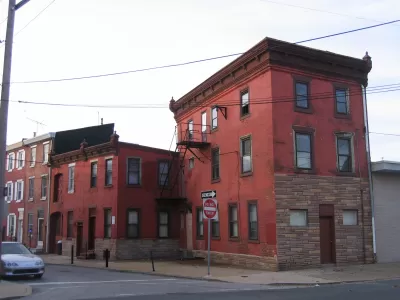
New research in the Philadelphia region finds that housing costs are increasing for low-income residents while decreasing for those with higher incomes, such that households that make less money aren't spending substantially less on housing.
Both a lack of affordable housing and growing income inequality are driving this trend, researchers at real-estate firm Apartment Life found.
In 2008, the region's wealthiest residents earned more than 12 times its poorest, Aaron Moselle reports in Plan Philly; in 2017, it was 17 times. Moreover, between 2007 and 2018, housing costs grew by 8 percent for households earning less than the national median income—but not at all for households earning more, as prices dropped in Philly's luxury apartment market.
Read the full story: Philly housing costs rising faster for poor and middle class than for the wealthy

When Rents Rise But Wages Don't
Renters in smaller metropolitan areas are struggling to deal with the realities of rising rent and stagnant wages. At least wages have increased in high-priced areas.

Housing Not Keeping Pace With Employment in the Twin Cities
The Twin Cities provide a case study for the role of the housing market in regional employment markets.
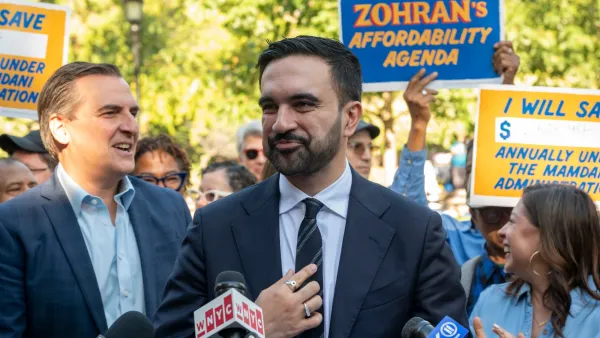
NYC Mayor Mamdani Backs Down on Expanded Rental Assistance Program, Citing $7 Billion Deficit
The new mayor had promised to expand the CityFHEPS rent assistance program to an additional 47,000 households.

Planetizen Federal Action Tracker
A weekly monitor of how Trump’s orders and actions are impacting planners and planning in America.

California plans to bury El Niño’s downpour
If the state plays its cards right, it may be able to store a billion acre-feet of El Niño’s water in aquifers.

Desperate measures: Advocates weigh draining Lake Powell to fill Colorado River
Draining the reservoir could reduce evaporation losses by a couple hundred thousand acre-feet.

40 years after approval, Chicago breaks ground on new park
The park honors Jean Baptiste Point du Sable, the city’s first permanent non-native settler.

‘Hoodwinked:’ New Mexico bill aimed at microgrids paves way for data center development
In an interview with High Country News, Padilla said the legislation “ignited” New Mexico's economy.

California’s ‘unrecognizable’ water plan may go down the drain
After four years of regulatory processes, water agencies say the plan to overhaul how cities and farms take water from the Sacramento-San Joaquin Delta has changed dramatically.

FREE Course: Walkable City 1: Why Walkability?
After describing his path towards focusing on walkability as the essence of good planning, Jeff Speck marches through his five principal reasons for making more walkable places.
Reinventing Malls: Planning Alchemy—Turning Gray Fields Into Gold
The course focuses on the opportunities and imperatives that shape reinvention of mall sites.

City of Rosemead
Rutgers University, Edward J. Bloustein School of Planning and Public Policy
One Hundred Miles
Hunter College, City University of New York (CUNY)
The Architects Foundation
University of Cincinnati Online
City of Cambridge
Montrose County
The Pocatello Development Authority