Barcelona is planning to expand on its initial superblock experiment in an attempt to ease the stranglehold of car congestion and air pollution gripping the dense city.


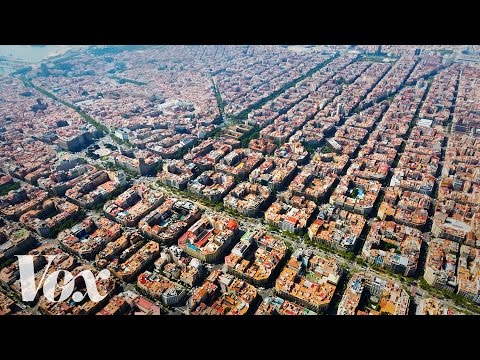
"Barcelona's urban plan is the most ambitious thing going," according to this article by David Roberts. Those ambitions are defined on a global scale, and they center around a widespread expansion of the superblock concept that the country has been testing since 2016.
With this article, Roberts is launching a five-part series on the Urban Mobility Plan of Barcelona. Here's how Roberts describes the significance of the plan in the first article from the series:
The plan, which contains not only superblocks but comprehensive programs for green space, bicycle and bus networks, and much more, will not eliminate cars in the city, or deny one to anyone who needs one. But it will radically reduce their prevalence, the amount of space they occupy, and demand for their services. If it is fully implemented (a task that could take multiple administrations, even multiple generations), it could make Barcelona the first plausibly “post-car” major city in the world — a place where most streets are not for cars and most people don’t have one.
According to Roberts, Barcelona's new urban plan is a result of advocacy work and research by Salvador Rueda, founder of the Urban Ecology Agency of Barcelona, and planner working in Barcelona in some capacity for 40 years. "Now his vision for the city has found its way into an urban plan that has the backing of the current municipal administration. It is currently being implemented, with the audacious goal of replicating Barcelona’s five existing superblocks, ahem, 495 more times," according to Roberts.
The article frames Barcelona's plan to expand its superblocks as a process of reclaiming the city from cars—a task that will challenge and likely revise the plan's ambitions on the way to completion. Similar significance has been discussed as a response to the idea of implementing forms of congestion pricing in Manhattan and other cities around the country. Still, this is a local story, and Barcelona unique situation could enable it to become the first post-car city, according to Roberts.
FULL STORY: Cars dominate cities today. Barcelona has set out to change that.

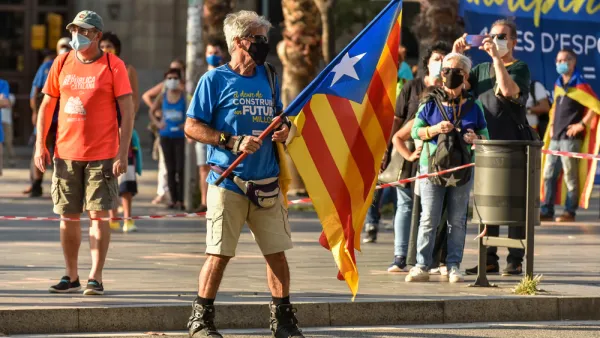
Barcelona's Long-Term, Pedestrian-First Plan Continues with the 'Barcelona Superblock'
Mayor Ada Colau announced the next step in Barcelona's plan to convert the city center into a "new city for the present and the future."
What Would Cities Look Like if They Were Designed by Women?
Cities are built by men, and so too often urban design does not reflect the needs, perspectives, and realities of women.
Barcelona Needs Swift Action Against Pollution
The capital of Catalunya is suffering from persistent high pollution due to car density and the largest number of motorcycles in Europe. City administrators, aware of the situation, have been unwilling to take any action that would upset drivers.

Planetizen Federal Action Tracker
A weekly monitor of how Trump’s orders and actions are impacting planners and planning in America.

The state-sanctioned urbicide of Austin
People don’t kill cities. Freeways do.

US to reduce Colorado River water deliveries to Mexico
A new Colorado Treaty amendment reduces Mexico’s Colorado River water allocation by 250,000 acre feet.

Mamdani overhauls NYC's Vision Zero plan with 100 new policy goals
The overhaul aims to reduce traffic deaths and make streets safer for pedestrians, cyclists and drivers through lower speed limits, new safety infrastructure and more.

Amtrak not solely to blame for New Jersey commuter rail's unreliability, report finds
A new study from the Garden State Initiative found that NJ Transit’s budget grew 20% across a 4 year period, but reliability declined significantly over the same period.

EPA erases limits on planet-warming pollution from power plants
Under Monday’s plan, power plants would still have some limits on how much mercury, arsenic and other contaminants they can emit.

FREE Course: Walkable City 1: Why Walkability?
After describing his path towards focusing on walkability as the essence of good planning, Jeff Speck marches through his five principal reasons for making more walkable places.
Reinventing Malls: Planning Alchemy—Turning Gray Fields Into Gold
The course focuses on the opportunities and imperatives that shape reinvention of mall sites.

Eagle County Government
Harvard University Graduate School of Design
Nashville Planning Department
The Architects Foundation
University of Cincinnati Online
The Pocatello Development Authority
The Urban Renewal Agency of the City of Pocatello
Journal of the American Planning Association