A small town success story in Montana is indicative of a larger trend in the Western United States. Meanwhile, small towns in the rest of the country struggle.


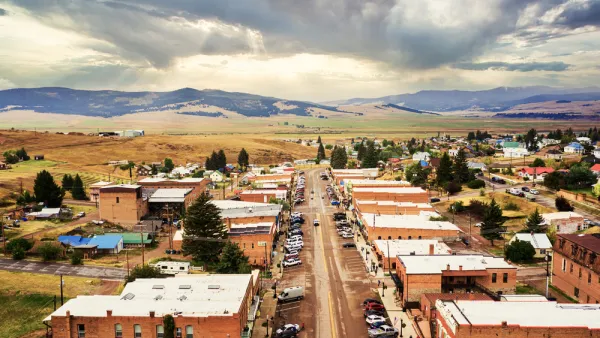
David J. Lynch provides a dispatch from Hamilton, Montana, where the town of 4,728 people is growing in population and economic might while small towns decline in other parts of the country.
Lynch is making a larger point that Hamilton's success of reflective of small towns around the western United States. "Western towns with fewer than 5,000 residents grew by an average of nearly 8 percent from 2010 to 2017, according to the Census Bureau, while similar-sized communities in the Northeast and Midwest shrank. Those in the South grew barely 1 percent."
In what must seem like insult to injury to the small towns on the other end of the spectrum, Lynch writes that Hamilton "offers no obvious formula for success" to transfer to struggling small towns around the United States. "Hamilton’s endurance instead only highlights the challenges confronting the nation’s endangered small towns," writes Lynch.
FULL STORY: Small towns are dying everywhere but here


Dairy Queen and Rural Third Places
Dozens of Dairy Queen restaurants across Texas are closing, taking a critical community space with them.
Rural Population Grew Again in 2024
Americans continued to move to smaller towns and cities, resulting in a fourth straight year of growth in rural areas.
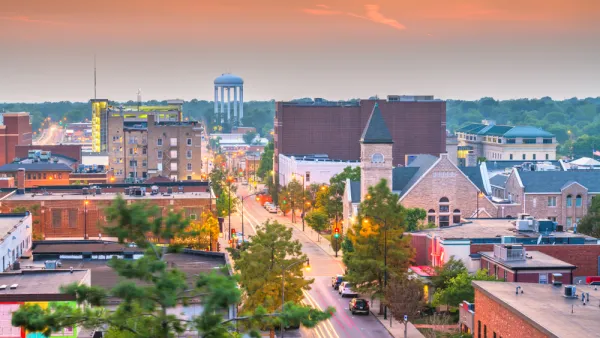
Small Towns Grow Faster Than Cities for First Time in Decades
Cities of 4 million or more people lost 600,000 residents to domestic migration.

The state-sanctioned urbicide of Austin
People don’t kill cities. Freeways do.

US to reduce Colorado River water deliveries to Mexico
A new Colorado Treaty amendment reduces Mexico’s Colorado River water allocation by 250,000 acre feet.

New Jersey’s second-largest city bans standalone data centers
Jersey City will continue to allow co-location facilities, such as those meant for research institutions that store their own data.

Amtrak not solely to blame for New Jersey commuter rail's unreliability, report finds
A new study from the Garden State Initiative found that NJ Transit’s budget grew 20% across a 4 year period, but reliability declined significantly over the same period.

EPA erases limits on planet-warming pollution from power plants
Under Monday’s plan, power plants would still have some limits on how much mercury, arsenic and other contaminants they can emit.

Phoenix announces new on-demand transit service, more frequent RAPID buses
Both new services will launch in October, and are part of Phoenix's Project Effective Access Solutions for Easing Congestion.

FREE Course: Walkable City 1: Why Walkability?
After describing his path towards focusing on walkability as the essence of good planning, Jeff Speck marches through his five principal reasons for making more walkable places.
Reinventing Malls: Planning Alchemy—Turning Gray Fields Into Gold
The course focuses on the opportunities and imperatives that shape reinvention of mall sites.

Eagle County Government
Harvard University Graduate School of Design
Nashville Planning Department
The Architects Foundation
University of Cincinnati Online
The Pocatello Development Authority
The Urban Renewal Agency of the City of Pocatello
Journal of the American Planning Association