There is no shortage of autonomous shuttle services operating around the United States, which means there are plenty of lessons to be learned.


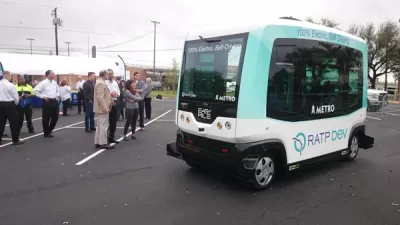
Chris Teale surveys the landscape of automated shuttle pilots around the United States and finds a significant number of case studies to choose from.
"Cities including Detroit, Denver, Columbus, OH and Las Vegas have already piloted autonomous shuttle buses, which typically carry 10 people or less on a fixed route through a section of their downtowns," according to Teale.
"Meanwhile, the likes of Providence, RI, Orlando, FL and New York City are set to launch their own service in the coming months, with companies like May Mobility and Optimus Ride among the partners to provide the shuttle technology."
According to Teale, the adoption of autonomous shuttles is widespread enough to start evaluating for lessons on the impact of the services on public transit, the broader urban transportation system, and public perception of autonomous vehicles.
Teale also notes that many autonomous shuttle programs have encountered challenges. "Las Vegas’ pilot program garnered some negative publicity after a minor accident when a delivery truck backed into one of its shuttles," for instance, and "Denver struggled with one of those winter storms just a few months after its Regional Transportation District (RTD) transit agency and its partners launched the shuttle near a commuter rail station and a new development."
Teale also visits the example of Ann Arbor, where autonomous shuttles operates on campus at the University of Michigan. The university already released a report on how to launch a driverless shuttle with lessons specifically about the city's streets and transportation system.
FULL STORY: How autonomous shuttles are changing city transportation

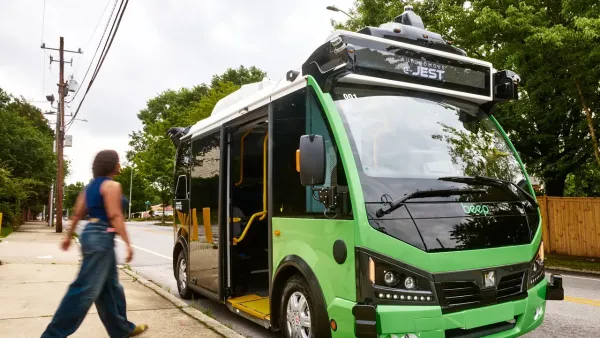
Atlanta launches autonomous Beltline shuttle
The ATL Spoke service connects the Beltline to a MARTA rail station.
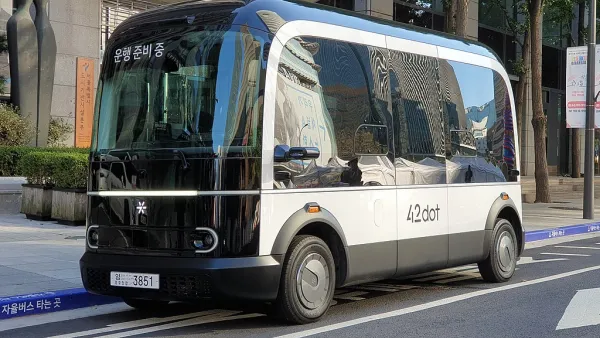
Are We There Yet? AV Shuttles Not Ready for Transit Service, Report Says
According to an assessment of two North Carolina pilot projects, low-speed autonomous shuttles have too many limitations to deploy as a public transit option.
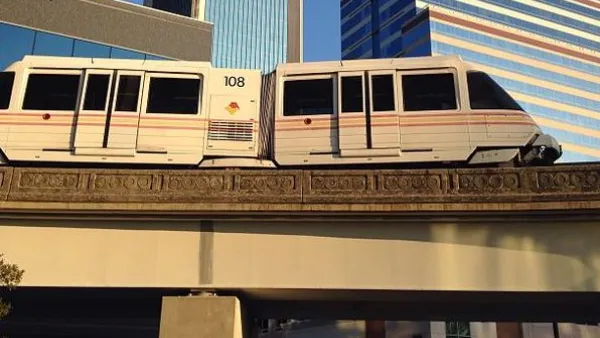
Jacksonville To Replace Monorail With Autonomous Shuttles
The city’s aging monorail system will be repurposed as part of an expanded 10-mile shuttle system.

Planetizen Federal Action Tracker
A weekly monitor of how Trump’s orders and actions are impacting planners and planning in America.

The state-sanctioned urbicide of Austin
People don’t kill cities. Freeways do.

US to reduce Colorado River water deliveries to Mexico
A new Colorado Treaty amendment reduces Mexico’s Colorado River water allocation by 250,000 acre feet.

5 New England states march closer to 800 megawatt wind energy project
Securing federal approval for the project may be complicated under the Trump administration, which has historically been hostile towards domestic wind power.

Baltimore to break ground on $50 million Transit Priority Project
The project will bring faster bus trips, safer streets and better bike connections to Baltimore.

Airbnb launches $250 million 'last-dollar financing' housing accelerator, makes first investment in Austin
The company will put $6.4 million towards affordable housing development in Texas’ capital.

FREE Course: Walkable City 1: Why Walkability?
After describing his path towards focusing on walkability as the essence of good planning, Jeff Speck marches through his five principal reasons for making more walkable places.
Reinventing Malls: Planning Alchemy—Turning Gray Fields Into Gold
The course focuses on the opportunities and imperatives that shape reinvention of mall sites.

Eagle County Government
Harvard University Graduate School of Design
Nashville Planning Department
The Architects Foundation
University of Cincinnati Online
The Pocatello Development Authority
The Urban Renewal Agency of the City of Pocatello
Journal of the American Planning Association