Drone footage and 3d models reveal the stakes in an ongoing legal controversy surrounding the Trump administration's attempt to undo the Obama administration's use of the Antiquities Act to create the Bears Ears National Monument.


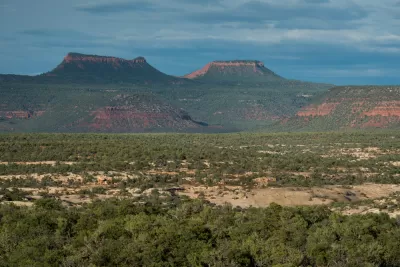
A Washington Post investigative team, Joe Fox, Lauren Tierney, Seth Blanchard, and Gabriel Florit, has published a large, interactive feature investigation into the Trump administration's 2017 decision to reduce the size of Bears Ears National Monument in Utah by more than 1.1 million acres.
Some Utah lawmakers and local residents the Trump administration's decision to reduce the size of Bear's Ears National Monument by 85 percent, but the decision "also followed a uranium firm’s concerted lobbying, an effort led by Andrew Wheeler, who now heads the Environmental Protection Agency."
Given the dubious motivations behind the decision, the Post team uses drone footage of to investigate whether the Trump administration kept its promise to protect the "important objects of scientific or historic interest" in the area surrounding the reduced national monument. In fact, the investigation finds many such "important objects of scientific or historic interest" in the areas located outside of the revised boundaries.
The interactive feature includes 3D models created from the drone footage to show Pueblo cliff dwellings built 1,000 years ago. The back and forth with the federal government, still unresolved, poses additional threats to the architectural record found in the area as detailed in the story. There's the environmental risk posed by the potential of developers seeking to extract the oil, coal, and uranium deposits that would be accessible if the Trump administration's actions hold up in court, as detailed in 2017 coverage by Laris Karklis, Bonnie Berkowitz, and Tim Meko.
FULL STORY: What Remains of Bears Ears

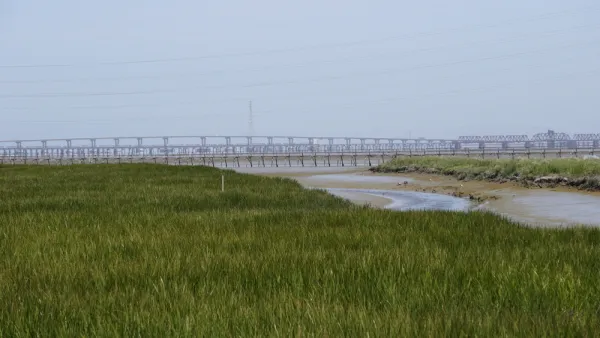
EPA and Army Corps of Engineers Propose Revision of Wetlands Definition
Fulfilling a promise he made as a candidate, the Trump administration proposed a redefinition of what is classified as a wetland, with the result being the loss of federal protection of millions of acres of waterways and wetlands.

'Affordable Clean Energy Rule' Proposed to Replace Clean Power Plan
On Tuesday, EPA released its new rule to regulate emissions from existing power plants, essentially leaving it to the states to determine appropriate emissions levels rather than setting actual standards each state has to meet like the current rule.
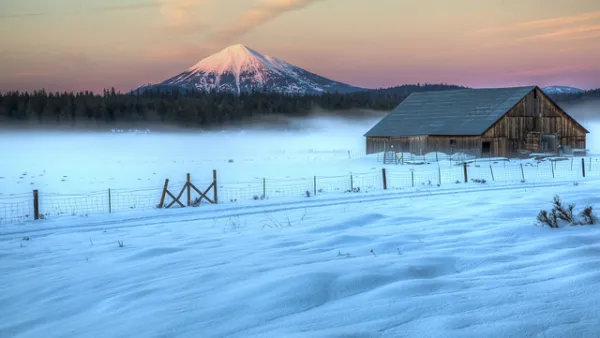
Surprise: Department of Justice Fights for an Expanded National Monument in Oregon
The U.S. Department of Justice is fighting a lawsuit that would overturn a decision by the Obama Administration to expand the Cascade-Siskiyou National Monument in Southern Oregon.

Planetizen Federal Action Tracker
A weekly monitor of how Trump’s orders and actions are impacting planners and planning in America.

The state-sanctioned urbicide of Austin
People don’t kill cities. Freeways do.

US to reduce Colorado River water deliveries to Mexico
A new Colorado Treaty amendment reduces Mexico’s Colorado River water allocation by 250,000 acre feet.

5 New England states march closer to 800 megawatt wind energy project
Securing federal approval for the project may be complicated under the Trump administration, which has historically been hostile towards domestic wind power.

Baltimore to break ground on $50 million Transit Priority Project
The project will bring faster bus trips, safer streets and better bike connections to Baltimore.

Airbnb launches $250 million 'last-dollar financing' housing accelerator, makes first investment in Austin
The company will put $6.4 million towards affordable housing development in Texas’ capital.

FREE Course: Walkable City 1: Why Walkability?
After describing his path towards focusing on walkability as the essence of good planning, Jeff Speck marches through his five principal reasons for making more walkable places.
Reinventing Malls: Planning Alchemy—Turning Gray Fields Into Gold
The course focuses on the opportunities and imperatives that shape reinvention of mall sites.

Eagle County Government
Harvard University Graduate School of Design
Nashville Planning Department
The Architects Foundation
University of Cincinnati Online
The Pocatello Development Authority
The Urban Renewal Agency of the City of Pocatello
Journal of the American Planning Association